


Prostate Cancer Awareness Month
What is the prostate?
You might not know where your prostate is, or what it does.
The prostate is a small gland, about the size of a walnut, located below the bladder. People who have a prostate include men, trans (transgender) women and people assigned male at birth.
The prostate produces a fluid that mixes with sperm from the testicles to make semen.
It also makes a protein called prostate-specific antigen (PSA). This helps make semen more watery. Some PSA leaks into the blood and can be measured in a blood test. This is called a PSA test.
What is prostate cancer?
Prostate cancer starts when prostate cells multiply in an abnormal way and grow out of control. Over time, these cells can grow into a lump called a tumour.
Prostate cancer often grows slowly. Symptoms may not develop for many years. Symptoms usually happen when the cancer is large enough to press on the tube you pee through (the urethra).
The prostate can also become enlarged due to a non-cancerous condition called benign prostatic hyperplasia (BPH).
What symptoms do I need to be aware of?
The symptoms of benign prostate conditions and prostate cancer are similar. Some people will have both BPH and prostate cancer.
Most prostate problems are not cancer but if you have any of these symptoms, it is important to have them checked by your GP:
- needing to pee more often than usual, especially at night
- difficulty peeing – for example, a weak flow or having to strain to start peeing
- feeling like you have not completely emptied your bladder
- an urgent need to pee • blood in your urine - sometimes this can only be found by a urine test
- blood in your semen
- pain when peeing or ejaculating – this is rare.
Can you have prostate cancer with no symptoms?
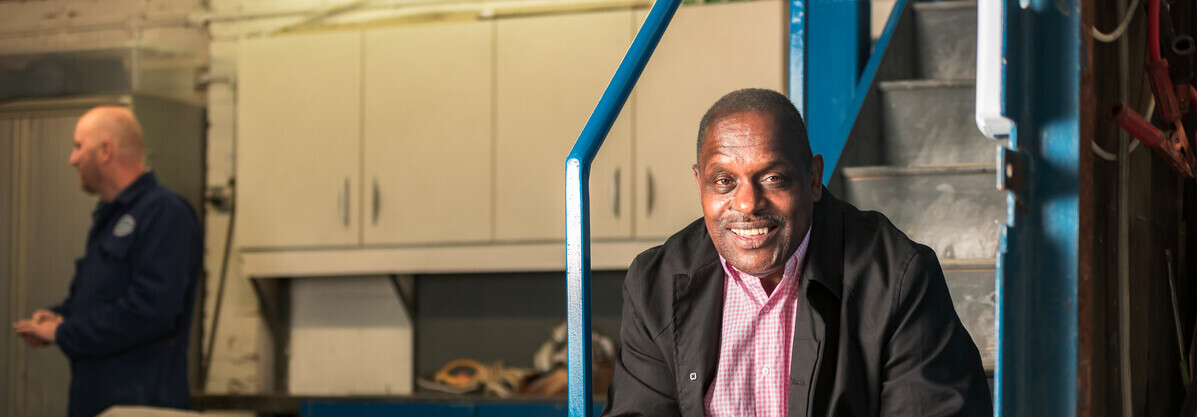
Yes, that is what happened to Errol. He didn't have any symptoms. He went to the doctors in 2010 about his snoring and picked up a leaflet about prostate cancer. He decided to book an appointment for a PSA blood testand he was diagnosed with prostate cancer.
Watch 'Getting checked can feel daunting. But knowing your risk and taking action could save your life.'
Raising awareness within the Black community - Paul shares his story
If you are Black, you have a much higher risk of developing prostate cancer. The reason for this is not clear, but it may be because of genetic factors . If you are Black, you are also more likely to develop prostate cancer at a younger age.
Paul was diagnosed with prostate cancer at the age of 49.
"Navigating the healthcare system proved challenging for me, feeling at times as if I were invisible. Having encountered disparities in treatments and wading through a sea of misinformation, I became acutely aware of the need for advocacy.."
Since his diagnosis, Paul went on to be the CEO of Cancer Black Care, a charity supporting the Black community affected by cancer.
Read Paul's story and learn why he is passionate about making sure people know about the risk factors around prostate cancers and that the cancer risk is higher with Black men.
Will treatment affect my sex life or bladder?
Many men worry about treatment side effects.
Elvin was diagnosed with prostate cancer in 2016. He had surgery and is now cancer free. But he has had many side effects that have affected his sex life.
"I was so uneducated about prostate cancer and the treatment available, plus the potential side effects that include loss of erections, reduced libido and bladder and bowel problems.
Boys should be taught at school about the prostate, what it does and why it should be treated with respect whilst you are blessed with it. Also, the quicker men appreciate and fully understand the very real danger of prostate cancer the better."
More resources
You can read more about prostate cancer treatment and side effects.
"The key thing is knowing where support is and that you can use it when you want it.” - Jon, living with advanced prostate cancer
Support for people with prostate cancer
Whether you’re worried, waiting for tests, or have been diagnosed, help is available:
- Call the Macmillan Support Line for free on 0808 808 00 00, 8am to 8pm, 7 days a week. You can request an interpreter or information in other formats.
- Chat online with a Cancer Information Specialist about tests, symptoms, treatment, or side effects.
- Online Community – Join our forums to talk to people affected by prostate cancer. Share experiences, ask questions, and get support from people who understand.
- Local groups and services – Find face-to-face or online groups in your area. They provide peer support, practical advice, and guidance from trained volunteers and professionals. Search for local services in your area.