

National Grief Awareness Week
National Grief Awareness Week is a UK campaign happening from 2 to 8 December 2026. It aims to raise awareness of the support available for people experiencing grief and bereavement.
What is National Grief Awareness Week?
Founded in 2014 by The Good Grief Trust, National Grief Awareness Week aims to raise awareness of grief, and to help to normalise conversations around it.
It takes place on Tuesday 2 December to Monday 8 December 2025. It is marked on the same dates each year regardless of the day of the week.
The theme for 2025 is 'Growing with Grief'. The aim is to highlight how grief is an ending in many ways, but can also be the beginning of something new. The growth people may experience from grief doesn't erase the pain, but can help people to become more present, compassionate and aware of what matters in life.
Grief affects people in different ways. If your partner, relative or friend has died, you may find it hard to cope with your emotions and the practical things you have to do. We have information and support to help.
What is grief?
Grief is a word for some of the feelings you may have after the death of someone close to you.
There is no right or wrong way to grieve. Some people describe being overcome or frightened by their feelings, others say they feel numb.
The thoughts and feelings you have will vary. Sometimes, they may be very intense and stop you doing things. At other times, they may be in the background and you can still do your day-to-day activities.
How you feel and react may depend on different things, such as:
- the relationship you had with the person who died
- if the death was expected
- how they died
- any previous experience of death you have had.
Your feelings may change day-to-day or even hour to hour. It is quite normal to have ups and downs.
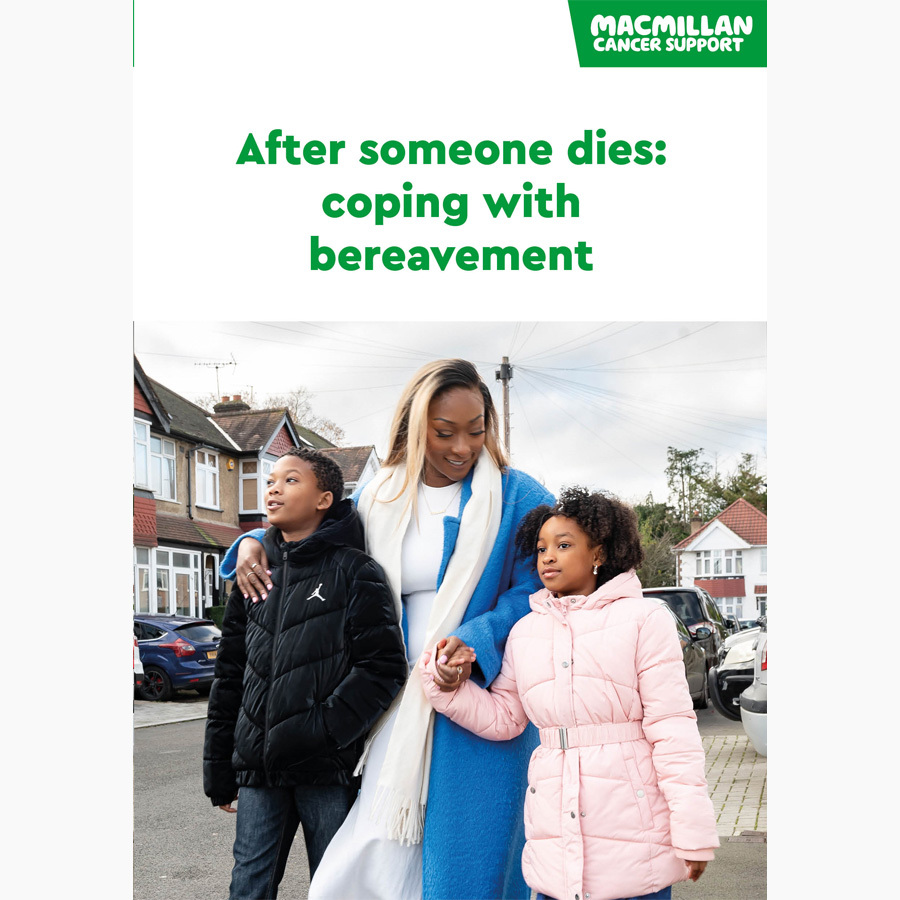
We have more information and support on our coping with bereavement hub including support with grief.
If you are finding things difficult, it is important to get support. You can talk to your GP. Or you can find a local bereavement service through organisations such as Cruse Bereavement Support or a local Maggie’s centre. You can also call the Macmillan Support Line for free on 0808 808 00 00 to discuss ways to get counselling, open 7 days a week from 8am to 8pm.

Macmillan Memories
Macmillan Memories offers an online space for remembrance and reflection. You can leave a dedication in memory of someone special to you.
Where can I get support for bereavement and grief?
-
Support groups
There are local support groups across the UK. They offer people a chance to talk about anything that is affecting them. Some groups are for people who have lost someone close to them.
You can find support services near you using our postcode look up tool.
-
Financial support
You may have questions about money or managing costs after someone close to you has died.
We have information about:
- bereavement benefits for people whose husband, wife or civil partner has died
- planning and paying for a funeral
- wills and probate.
Read our information about cost of living and the help that is available.
-
Online support from Macmillan
The Online Community is a place to chat to others who know what you are going through.
If someone close to you has died, you may find support on one of our Online Community forums:
You'll also find useful blogs such as:
-
Macmillan Support Line
Our Support Line offers confidential support 7 days a week (8am to 8pm). You can contact the support line for free on 0808 808 0000.
If you prefer, you can also chat with us online or email us.
We also have information in other languages and formats.
-
Support from other organisations
The organisations below also offer information and support:
- Cruse Bereavement Support - offers support and information including in person and online support.
- The Good Grief Trust - useful information, helplines, advice and encouraging stories from others.
- AtaLoss - an organisation helping bereaved people find support and wellbeing.
- Mind - information on bereavement, where to go for support, and suggestions for helping yourself and others through grief.
- NHS - information about grief and bereavement. And information about support if you need urgent mental health support.
Related resources
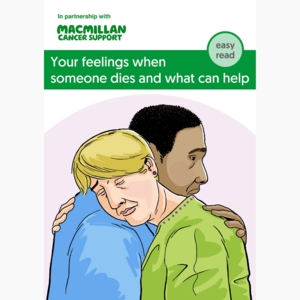
Your experiences

Shakaila