


Follow-up after thyroid cancer treatment
After your treatment for thyroid cancer you will have follow-up appointments. Your doctor or nurse will explain about any tests you may need.
Your follow-up care
Your follow-up care depends on different things, including the treatment you had.
In the first year, you usually have check-ups every few months. Eventually they are reduced to every 6 months or yearly. Some follow-up appointments might be with a specialist nurse or by phone.
At your face-to-face appointments, your doctor will examine you and you will have blood tests. They will explain if you need any other tests.
Your appointments are a good time to talk to your doctor or specialist nurse about any concerns you have.
You can ask about any symptoms you should be aware of, and what you can do to help with your recovery. If you notice any new symptoms between appointments, contact your doctor or specialist nurse for advice.
This information is about follow-up for papillary and follicular thyroid cancers. We have other information about medullary thyroid cancer (MRC) and anaplastic thyroid cancer.
Related pages
Follow-up tests
Thyroglobulin blood test
When your thyroid gland has been removed and you have had radioactive iodine, your body should no longer make thyroglobulin. There will be thyroglobulin in your blood if:
- a small amount of thyroid tissue is left
- there are still some thyroid cancer cells in your body.
The thyroglobulin blood test is a useful way to find any remaining papillary or follicular cancer cells. You will have this blood test regularly as part of your follow-up care.
Stimulated thyroglobulin test or sensitive thyroglobulin test
This test is done 9 to 12 months after your thyroid gland has been removed and you have had radioactive iodine (RAI) treatment. It is used to see if you need further treatment.
Sometimes you may need to stop taking your thyroid hormone replacement some weeks before the blood test. You will not need to stop taking them if you are given recombinant human thyroid-stimulating hormone (rhTSH) before your blood test.
Your doctor or specialist nurse can give you information about this.
Ultrasound scan of the neck
You may have an ultrasound scan of your neck. This is usually done 9 to 12 months after radioactive iodine (RAI) treatment or after surgery if you have not had RAI. Your cancer team will talk to you about how often you will have scans.
Radioactive iodine scan
If you had treatment with radioactive iodine you might have a RAI scan 6 to 12 months after treatment. This will depend on the risk of the thyroid cancer coming back. The scan checks for any remaining thyroid cancer cells in the body. Your doctors can tell you if you need this scan.
This test uses radioactive iodine, which you take as capsules you swallow or as an injection into a vein in the arm. After about 20 minutes, you lie on a couch and a machine called a gamma camera is placed over your neck. The scan is painless.
To make the scan as accurate as possible, you may be given a drug called recombinant human thyroid-stimulating hormone (rhTSH). Or you may be asked to stop taking your thyroid replacement tablets. You also need to have a low-iodine diet for a few weeks before your scan.
Your doctor or nurse can give you more information about this test if you need it.
Other scans
If your thyroglobulin level is high, or if your scan shows any abnormal areas, you may have further tests. These may include:
- a CT scan
- an MRI scan
- a PET-CT scan.
Wellbeing and recovery
Most people with papillary and follicular thyroid cancer can be cured with treatment. But it can take some time after treatment before you feel fit and well again.
Some people have treatment side effects that slowly improve over time, while others may have ongoing side effects. Instead of having specific treatment side effects, you may have a range of other effects, such as:
- trouble sleeping
- weight gain
- feeling weaker and more tired than usual.
It is important not to put yourself under any pressure. Recovery can take time and you need to do things at a pace that feels right for you. Taking good care of yourself and making even some small lifestyle changes can help.
Eat well and keep to a healthy weight
Having a healthy, balanced diet is one of the best choices you can make for your overall health. It can also help to keep you to a healthy weight.
It can also help reduce the risk of new cancers and other diseases, such as heart disease, diabetes and strokes.
A well-balanced diet should include:
- lots of fruit and vegetables – at least 5 portions a day
- plenty of starchy foods (carbohydrates) – choose wholegrain types such as wholemeal bread, rice, pasta, noodles, couscous and potatoes
- some protein-rich foods, such as lean meat, poultry, fish, tofu, nuts, eggs and pulses (beans and lentils)
- some milk and dairy foods, such as cheese and yoghurt.
- plenty of water, or other non-alcoholic fluids.
Try to reduce your intake of:
- red meat and animal fats
- alcohol
- salted, pickled and smoked foods.
Before making major changes to your diet, it is a good idea to talk to your specialist or a dietitian at the hospital.
If you are thinking of taking any food supplements or over the counter vitamins, it is important to talk to your cancer doctor or specialist nurse first. This is because some of these may affect your thyroid blood test results.
Related pages
Booklets and resources
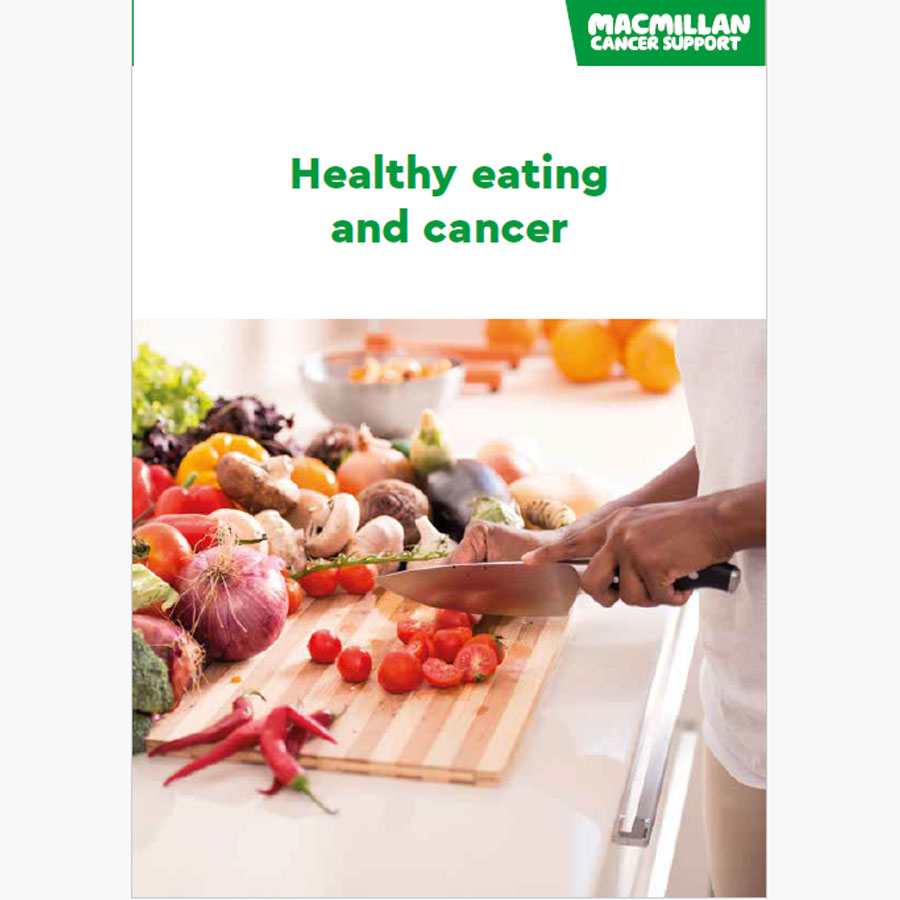
Stop smoking
If you smoke, speak to your doctor or call a stop-smoking helpline for further advice. They can tell you where your local stop-smoking service is.
Stopping smoking has many health benefits and reduces your risk of other diseases such as heart disease and stroke.
Get physically active
You can start gently and build up the amount of physical activity you do. There are different types of exercise you can try, such as:
- walking
- hiking
- cycling
- swimming.
Do not drink too much alcohol
NHS guidelines suggest you should:
- not regularly drink more than 14 units of alcohol in a week
- spread these units over 3 or more days in a week
- try to have several alcohol-free days every week.
Reduce stress
There are different ways to reduce stress. Different people find different things helpful, but you could try the following:
- be more physically active
- make time to do things you enjoy
- complementary therapies, such as meditation or yoga
- talk to someone about your feelings or have counselling
- painting or drawing
- write a journal or online blog.
Get involved in your healthcare
Being involved in your healthcare means:
- taking any medicines as instructed
- going to your follow-up appointments
- being aware of the symptoms of the cancer coming back
- telling your doctor or specialist nurse what is important to you.
Getting support
We are here if you need someone to talk to. You can:
- Call the Macmillan Support Line for free on 0808 808 00 00.
- Chat to our cancer information specialists online.
- Visit our Online Community thyroid cancer forum to talk to people who have been affected by thyroid cancer, share your experience, and ask an expert your questions.
About our information
-
References
Below is a sample of the sources used in our thyroid cancer information. If you would like more information about the sources we use, please contact us at cancerinformationteam@macmillan.org.uk
British Medical Journal. Best Practice Guidelines, Thyroid cancer. 2020.
European Society Medical Oncology (ESMO): Thyroid cancer, Clinical Practice Guidelines for Diagnosis, Treatment and Follow-up. 2019.
National Institute for Health and Care Excellence (NICE). TA535: Lenvatinib and Sorafenib for treating differentiated thyroid cancer after radioactive iodine. 2018. www.nice.org.uk/guidance/ta535 [accessed May 2021].
-
Reviewers
This information has been written, revised and edited by Macmillan Cancer Support’s Cancer Information Development team. It has been reviewed by expert medical and health professionals and people living with cancer. It has been approved by Senior Medical Editor, Professor Nick Reed, Consultant Clinical Oncologist.
Our cancer information has been awarded the PIF TICK. Created by the Patient Information Forum, this quality mark shows we meet PIF’s 10 criteria for trustworthy health information.
The language we use
We want everyone affected by cancer to feel our information is written for them.
We want our information to be as clear as possible. To do this, we try to:
- use plain English
- explain medical words
- use short sentences
- use illustrations to explain text
- structure the information clearly
- make sure important points are clear.
We use gender-inclusive language and talk to our readers as ‘you’ so that everyone feels included. Where clinically necessary we use the terms ‘men’ and ‘women’ or ‘male’ and ‘female’. For example, we do so when talking about parts of the body or mentioning statistics or research about who is affected.
You can read more about how we produce our information here.
Date reviewed


Our cancer information meets the PIF TICK quality mark.
This means it is easy to use, up-to-date and based on the latest evidence. Learn more about how we produce our information.