‘Bowel cancer wasn’t on my radar’: Sarah’s story

Story
Published: 05 November 2026
Sarah was 38 when she was diagnosed with stage 4 bowel cancer. Looking back, there always seemed to be a logical explanation for her symptoms. She never imagined cancer could be the cause of her stomach pain and sickness.

Meet Sarah

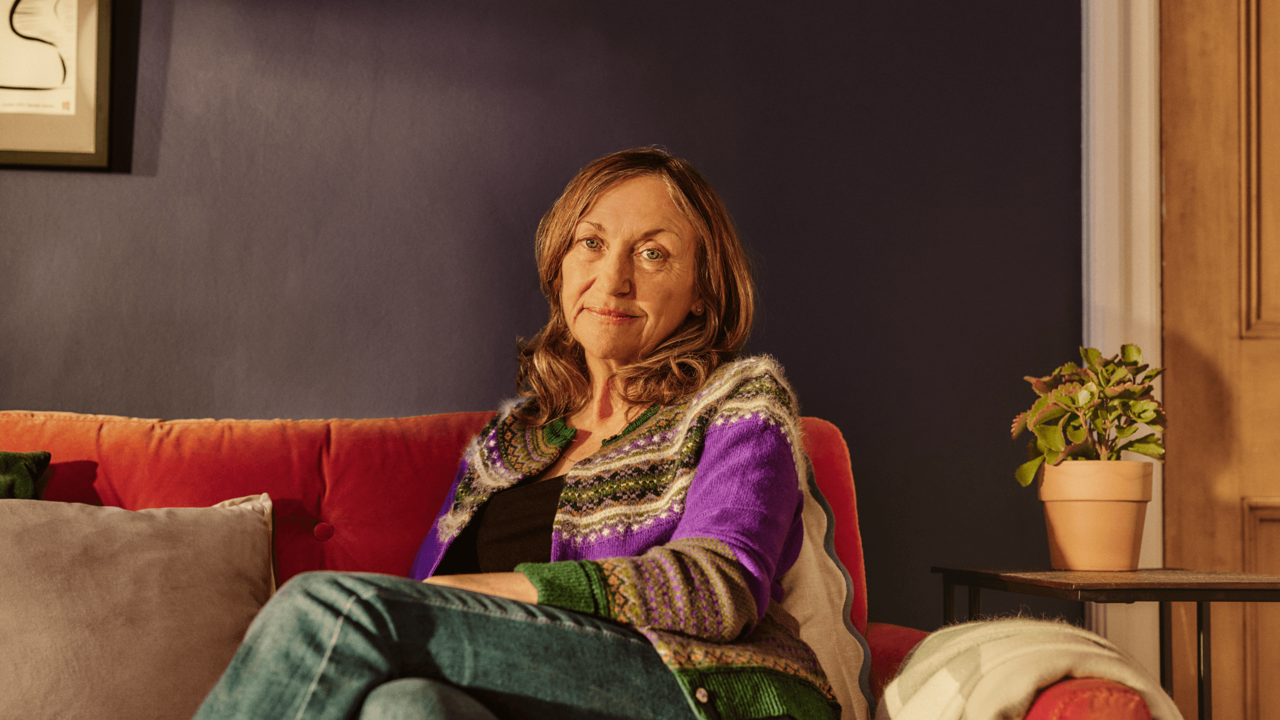
A white lady with shoulder length brown hair, jumper and jeans.
 

I didn't really have any symptoms that I noticed, or perhaps I wasn't very good at listening to my body.

Some people have blood in their stools or feel really tired. I didn't think anything was up. I've got three kids, so I'm often tired. I thought perhaps that's it. Cancer wasn't on my radar.

The first symptom I got was excruciating stomach pain and sickness. I ended up in A&E because it was so painful. They gave me some morphine, and I sat there for three hours before thinking, this is silly. I've just got a stomach bug. So, I went home.

A month later, I was on a ferry to a Hebridean island for work when I was sick and had stomach pains again. I thought it was travel sickness. It was my first time on the ferry, and we all had a laugh about it in the office. Again, there was a logical explanation.

Over the following months, the stomach pain and sickness became more frequent. Eventually, I could not eat anything other than soup without being in pain.

I went back to A&E and had a CT scan. Crohn's disease was investigated and a FIT test came back very high. My GP arranged a colonoscopy and when I woke up afterwards, I thought I was finally going to find out what was wrong.

That was when they asked, "Is your husband around?" I knew there was something else going on.

The diagnosis that changed everything

More tests followed. I still could not eat properly because I had a blockage in my bowel and I had lost a lot of weight.

When the pain became severe again, I called my Macmillan nurse, who told me to come in. I was admitted to hospital and told I needed surgery.

On the morning of the operation, the consultant confirmed it was cancer.

In the space of a couple of hours, I learned I had cancer and met the stoma nurse. It was such a whirlwind.

0In some ways, that helped because I did not have time to overthink anything. I just got on with it.

I had a right hemicolectomy. When I woke up, I immediately checked to see if I had a stoma. I didn't as they had managed to find enough healthy bowel tissue.

My consultant managed to reconnect my bowel, which was amazing. At that point, I expected I would need chemotherapy, but I still did not know what stage the cancer was.

The hardest day of my life

Six weeks later, I met with my oncologist. I have a really good relationship with her and I really trust her, which is important for me.

She told me the cancer had spread to my lymph nodes and that I would need around six months of chemotherapy. I had already prepared myself for that.

After my first round of treatment, my oncologist noticed that my tumour marker was still high and arranged a PET scan.

The appointment where I got the results was probably the hardest day of my life.

The scan showed the cancer had spread to my liver. I also found out I had a BRAF mutation, which meant the cancer is aggressive. This was a double-edged sword as it also meant I could access to targeted treatment.

I left that appointment in complete shock. I remember walking out of the hospital and breaking down in the corridor.

My mum was there at the appointment and asked me if I wanted to know the prognosis. I didn't really know, I don’t think I knew what that word meant.

I said yes and the oncologist said to me two to three years. That was a shock. But really nobody can tell you how long you will live for, or how you will respond to treatment. We are individual human beings not a statistic. I found focusing on this helpful!

I have three children. My youngest was 8 at the time and my oldest had her GCSEs approaching. I just remember thinking, how is she going to do her GCSEs without me?

Finding something to focus on

A lady with shoulder length brown hair having chemotherapy.

I started intensive chemotherapy with three drugs through a portacath. which is one of the best things I've done, because I'm not very easy to cannulate. Once I started the treatment, I felt a bit better because I was doing something.

I had incredible support from friends, family and our local church. People brought food, sent notes and flowers, and showed so much kindness. One friend's son shaved his head to raise money for us to do some nice things together as a family. That support helped keep us going, as did my faith. It gave me a real sense of peace when there was uncertainty.

I also decided to use my chemotherapy sessions as a time to be positive. My degree was in printmaking, but I hadn’t done much art for years because I work in marketing.

I thought, I've got a day where I'm sitting in a ward, I'm going to take my sketchbook and start to draw. And so that's what I did. I found that it brought some positivity and gave me hope.

Three months later, I had more scans and saw the oncology nurse, which I thought was a bit strange as I tended to see the oncologist. She said, I've got some really good news for you. The scans have come back completely clear. I had achieved a metabolic response to the treatment and everything in my liver had disappeared. It felt like a miracle.

I carried on with chemo and gradually we reduced the drugs I was taking. Each time I had a clear scan. In September 2025, I came off the last drug, which was the 5-FU pump.

Living with uncertainty

I felt a mixture of relief that I'd finished treatment, but I also felt anxious about coming off it. When you are on treatment you are surrounded by nurses and appointments. My chemo nurses had become my cheerleading team. I became a bit obsessed with my tumour marker. Every time I had a blood test, I asked what it was.

At the beginning of December, it started to creep up and in the back of my mind, I knew something was up. I found out the cancer had come back in my liver. I wanted to get back on treatment, but my multidisciplinary (MDT) team decided that surgery was the right option. On New Year's Eve, I had a liver resection but there was still some cancer left behind. I had chemotherapy and I needed another liver resection in May 2026.

I had to be off treatment for a while as I was on Avastin which stops wounds healing. Unfortunately, at the beginning of the summer, I found out I had another metastasis in my liver.

At times, it has been tricky managing everything. I work part time, which helps. For me, carrying on working has given me focus when I'm not having chemotherapy. My work has been incredibly supportive. Working from home helps because I'm not worried about infection and it's brought some normality.

Overall, I've tolerated treatment fairly well. I lost my hair the first-time round, I am likely to lose that again. I've had some peripheral neuropathy, which is hard because I love to draw. I started to draw on my iPad with a pen, which has helped.


You can see more of Sarah's artwork on her wild joy website.

My kids have been a real tonic

Children are incredibly resilient. We've tried to keep life as normal as possible and have had support from charities including Something To Look Forward To and the Osborne Trust. Even on difficult days, my children have given me determination to keep going.

There's something about when you come back from your chemo session and you're feeling grotty and then your 10 year old says, mum, can you make me a snack? And you think that this is real life. Someone gave me some good advice early on. They said kids ask questions at the level that they can understand the answers. If they're not asking the question, that might be because they're not ready for the answer yet.

As they've asked things, I've just tried to be as honest as possible with them. Obviously, there's stuff that they don't really understand or need to know.

A friend in the chemo ward said it's like cancer becomes the extra member of your family. You sort of invite it onto the sofa with you and you invite it into your conversations, and it becomes something that's quite normal to talk about. Treatments and blood tests start blending in with everyday life and it becomes your new normal.

You can have normal life around cancer and it doesn't mean everything changes.

Finding the joy in everyday things

I've got a cocker spaniel, called Lanta and he's got so much energy and is a bit anxious. When I came back from the hospital with my pump attached, he sat in front of me on the sofa guarding me. He's very protective. I think I'm his therapy human and he's my therapy dog, that's what we say.

Art has helped so much. I love pen and ink, I do a bit of mixed media collage and watercolour. I love poetry and words and so drawing around that brings me joy.

Last year, I put some of the artwork I created during chemotherapy on a website and sold prints to raise money for Macmillan.

I raised about £1000, which I was really pleased with. It was nice to give back a bit because I have felt really supported by Macmillan.

A black and white image when i say all is known help me say all is held so i never believe all is lost.

A black and white image with the words simply reach within your soul to the place where instincts meet and there you'll find this hope growing wild, growing deep.

My Macmillan nurse has been wonderful

I always feel relieved when I see my Macmillan nurse, Sam. She's brilliant at advocating for me and remembering the little things we've talked about. She's visited me on the chemo ward a couple of times and I can ask her any questions.

You can’t always speak to your oncologist, so having someone you can contact in between appointments makes a huge difference. She's good at not making me feel stupid for asking question and calming me if I get hyper fixated on something.

Raising awareness about bowel cancer

I would like younger people to know cancer can be a real possibility and that catching it early, can make all the difference.

I think there can be times when we don’t listen to our bodies very well. We fill our lives with busyness and are not always aware when something doesn’t feel right. This was certainly true for me.

It would be great if people understood more about healthy eating. One of the things my oncologist rightly told me was to not make huge diet changes to the point where you lose so much weight that you can't tolerate treatment. I've been very conscious of that.

I have tried to cut out sugar and focus on having plenty of protein and vegetables in my diet. Exercise is important too and helps me mentally and helps me tolerate treatment.

With breast cancer, conversations about checking your breasts are much more common. I think we need to get to that point with bowel cancer too.

We need to not be afraid to talk about poo and bowels. It can be something we get embarrassed about or laugh about. It’s just normal bodily stuff that we need to talk about.

If you have questions about bowel cancer

More stories like this