


Macmillan Cancer Support and Social Investment
That’s why Macmillan is investing in better ways to deliver care. By using an approach called social investment, we’re helping change how services are funded so more people get the support they deserve.
For over a decade, we've worked with Social Finance to test and refine innovative models of care, including shifting support from hospitals into communities.
Our goal is simple: to make personalised, flexible care accessible to everyone.
What is Social Investment?
Social investment provides funding upfront to test new ways of delivering care. The funding is only paid back if the project achieves agreed results and goals, such as shifting care from hospitals to community settings, combining a social purpose with a financial return.
There are no interest charges, and the partner organisation will never repay more than the amount they received.
The Neighbourhood Transformation Fund - Our blueprint for national change
Note: When we say ‘neighbourhood’, we mean care designed and delivered closer to where people live, by local teams who understand the community, co-produced alongside people with lived experience.
Our latest social investment initiative, the Neighbourhood Transformation Fund (NTF), aligns with NHS neighbourhood health principles and focuses on local community strengths and needs.
Our work is creating a major milestone in the evolution of healthcare funding, offering a model for change which could be used nationwide. It’s not just about funding differently; it’s about thinking differently and putting people and their community at the heart of their care.
What the Neighbourhood Transformation Fund will deliver
Reduce inequities:
- Support neighbourhoods to design care around the communities with the poorest outcomes
- Strengthen partnerships with organisations and community groups
- Ensure services are shaped with local people and respond to what matters to them
Support people with long-term conditions:
- Enable joined-up neighbourhood teams to deliver proactive, person-centred care
- Improve support for people living with multiple and complex needs
- Reduce fragmentation so people experience smoother, more coordinated care
Reduce unwarranted variation:
- Support consistent, high-quality care across neighbourhoods
- Enable shared best practice, learning, and improvement across local teams
- Improve coordination so people receive the right support at the right time
How the Fund will support this:
- Provide multi-year investment to give neighbourhoods time to deliver real impact
- Unlock additional investment to support neighbourhood transformation
- Strengthen neighbourhood partnerships across the NHS, local government and community
West Hertfordshire – A groundbreaking model and partnership
At the heart of the initiative is the Neighbourhood Transformation Fund, focused on supporting older people with multiple health conditions in South and West Hertfordshire. It aims to tackle deep-rooted health inequities by strengthening neighbourhood-led care and improving access to complete culturally appropriate support.
Traditional funding models often trap patients in cycles of reactive, hospital-based treatment. This new model flips that, investing in neighbourhood-led, proactive care that supports people before they reach crisis point.
This is the first partnership of its kind in the UK and supports the Government’s 10-Year NHS Plan and tackling rising demand for care with a long-term, preventative approach.
Dorset – creating impact at scale
In Dorset, Macmillan is supporting the development of Integrated Neighbourhood Teams (INTs) to deliver more proactive, coordinated care for people living with serious illnesses. The model brings health, social care, and voluntary sector partners together across local communities to identify needs earlier, prevent crises, and reduce reliance on emergency care.
Macmillan’s work is funding an Implementation Team to support the rollout of 18 INTs across the county. Working alongside people with lived experience, the programme focuses on closing gaps in support and investing in approaches that improve access, experience and outcomes; laying the foundations for a more connected, compassionate care system.
More Neighbourhood Transformation Fund sites are on the way, including a new team based in Lincolnshire. These sites will offer personalised, community-based support that boosts people’s health, wellbeing, and confidence, whilst helping ease pressure on urgent care services. Still to come...
Our work to date - The End of Life Care Fund
Building on the success of the Care and Wellbeing Fund, we launched the End of Life Care Fund in 2021 in partnership with Social Finance and provided £36 million to transform adult end-of-life care services.
In the UK, a lack of good, end-of-life-care can result in people reaching a crisis point, with too much time spent in busy hospitals, in pain or dying in places they didn’t choose. At the same time our health care systems are under a huge strain as they try to reduce waiting lists and manage budget deficits. But it doesn’t have to be this way. We know that with good end-of-life care services and health and social care teams working together, people can get the support they need, in the right place and at the right time.
This investment supports new or enhanced services that aim to:
- Improve patient choice: Help people get care in the place of their choosing, often at home.
- Reduce unplanned hospital admissions: Shift care from hospitals to the community.
- Enhance coordination: Ensure seamless support across different healthcare providers and charities.
- Drive sustainable change: Support the development of models that local health systems can sustain long-term.
Transforming Care in Key Locations
The Macmillan End of Life Care Fund has funded transformative projects in the following areas:
Oxfordshire and South Northamptonshire: RIPEL Service
This project, which began in 2022, is a unique partnership with Oxford University Hospitals, Sobell House Hospice, Macmillan, and Social Finance. RIPEL provides enhanced integrated care and support for adults with advanced life limiting illnesses who live in Oxfordshire and South Northamptonshire. This service includes four interlinked services: Home Hospice, Hospital Rapid Response, Palliative Care Hub and Hospice Outreach. It aims to reduce unplanned hospital admissions for people in their last year of life by:
- Providing Home Hospice Services
- Facilitating Hospital Rapid Response
- Expanding a Palliative Care Hub
- Delivering Hospice Outreach
The RIPEL Service has now achieved funding from the local health system, and Macmillan has received outcome repayments enabling further investment into other services.
Find out more about the RIPEL Service
Harrogate, North Yorkshire
The Harrogate End of Life Planning and Support Service (HELPSS) has been enabled by the fund. Harrogate first launched their service in July 2024. HELPSS is designed to identify and ensure patients approaching the end of life across the Harrogate locality receive high-quality, proactive, and well-coordinated care. The fund is led by Harrogate and District NHS Foundation Trust in partnership with Saint Michael's Hospice and Airedale NHS Foundation Trust. HELPSS aims to:
- Improve the identification of patients in their last year of life
- Increase access to advance care planning.
- Provide access to Goldline, a 24/7 telephone service for patients and their carers.
This collaborative action empowers individuals to make informed choices about their end-of-life care.
Highland, Scotland
In the Highlands, the fund is improving the end of life experience by enabling more people to be cared for and die in their preferred place. By collaborating with local care providers, the services aim to:
- Proactively identify people who need end of life care – like Liz’s story featured below.
- Provide 24/7 access to support and advice.
- Pilot a Palliative Care Response Service that can respond in an emergency, often faster than A&E.
This investment helps shift care from hospitals to the community, leading to better outcomes for patients and more efficient use of resources for NHS Highland.
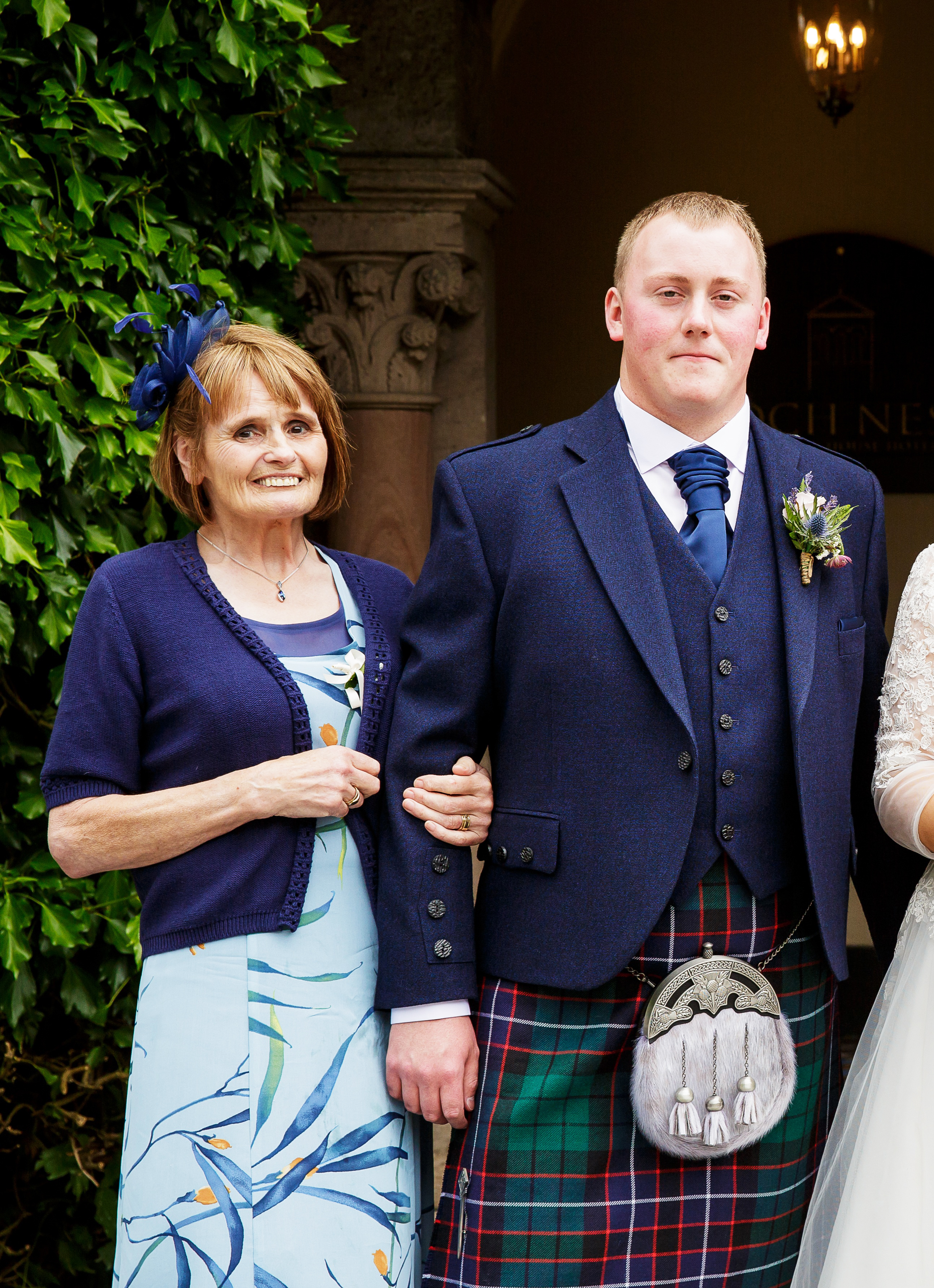
Liz’s Story: Care on her own terms
Through her GP, Liz was referred to the Palliative Care Response Service. The team provided home visits and 24/7 support, helping her stay in control of her care. Her grandson Craig says: “We’re hugely grateful… Nana was able to stay at home, just as she wanted. She was independent until the end and died with dignity, in her own home.”
The service made sure Liz could keep doing what mattered most to her; from laughing with carers to being able to get out of bed with help from a wheelchair delivered by the team. Their support allowed her family to focus on being with her, not caring for her, in her final months.
London
The Haemato-Oncology Palliative Care Service (HOPS), launched in April 2025 at The Royal Marsden NHS Foundation Trust, is improving care for people with complex haematological conditions. The service supports people with myeloma, those undergoing or being considered for stem cell transplant, and those receiving CAR-T therapy.
Living with these conditions can involve intensive treatment, uncertainty and frequent hospital stays. HOPS provides holistic palliative care alongside active treatment. This care helps people manage symptoms, plan for the future and feel supported throughout their care journey.
Through this service, patients will:
- Avoid non-elective crisis admissions and spend less time in hospital.
- Experience better co-ordination between teams and services.
- Receive earlier support with end-of-life care planning.
Cardiff & Vale
The Integrated Supportive & Palliative Care Service in Cardiff and Vale began in August 2025 and is transforming how people in their last year of life are identified and supported. The service enables earlier palliative care input, particularly for people attending emergency departments.
By expanding supportive care services, strengthening community palliative care and introducing specially trained Palliative Care Paramedics, the service aims to provide timely, compassionate support when people need it most.
The service aims to:
- Reduce inequity in access to supportive and palliative care, by ensuring there is earlier support for people with cancer.
- Provide a timely response for people experiencing a crisis.
- Improve co-ordination across end-of-life care services, enhancing patient experience and system efficiency.
- Work with people with lived experience to shape and improve care.
- Foster a culture of collaboration across the health and care system.
Cornwall & Isles of Scilly
In Cornwall and the Isles of Scilly, the Integrated Palliative and End of Life Care Service is expanding services to better support people nearing the end of life. Delivered by Cornwall Partnership NHS Foundation Trust, in partnership with NHS Cornwall and Isles of Scilly Integrated Care Board, the service combines preventative and rapid response care.
For people at the end-of-life, avoiding a crisis can mean staying in familiar surroundings, with the people they love. When crises do occur, the service provides timely support to help people remain in their preferred place of care and works to ensure a rapid discharge from hospital when time is precious.
The service includes two key elements:
- 24/7 palliative and end of life care at home, including rapid community response, a telephone advice line and hospice at home (Ward 9).
- A community end of life support service.
Service delivery began in October 2025, with a phased rollout of the full integrated service planned by March 2026.
Birmingham & Solihull
The SPUR (Specialist Palliative Urgent Response) Service is a new overnight service delivered by Birmingham Hospice in partnership with Birmingham & Solihull Integrated Care Board. It provides urgent specialist support for people experiencing palliative care crises, at a time when options have historically been limited.
Operating from 8pm to 8am, seven days a week, SPUR offers a single point of access for advice, reassurance and rapid home visits within two hours. This helps prevent unnecessary A&E visits and provides continuity at a time of uncertainty.
SPUR aims to:
- Help people remain in their preferred place of care.
- Reduce avoidable hospital admissions through timely, wraparound support.
- Improve experiences for patients, families and professionals needing urgent palliative care input.
The service went live in January 2026.
Mid Nottinghamshire
The Integrated End of Life Care (EOLC) Hub in Mid Nottinghamshire is designed to simplify access to care at a time when speed, clarity and compassion matter most. Delivered by Beaumond House in partnership with NHS Nottingham and Nottinghamshire Integrated Care Board, the service provides proactive support for people at the end-of-life.
The hub helps patients, families and professionals navigate the Fast Track process, ensuring care packages are put in place quickly and reflect individual needs and preferences.
The Integrated EOLC Hub will:
- Assess needs and arrange personalised care at home or in care homes.
- Ensure the right support is delivered at the right time and in the right place.
- Reduce delays and stress for patients and those supporting them.
The service went live in December 2025.
Waltham Forest
COMPASS (Community Palliative Care & Support Service) is bringing together and strengthening palliative and end-of-life care in Waltham Forest. Delivered by North East London NHS Foundation Trust in partnership with NHS North East London Integrated Care Board, the service expands community support for people in their last year of life.
For patients and families, knowing who to contact and being able to access help quickly can bring reassurance at a time of uncertainty. COMPASS provides proactive, coordinated support and will offer acute community palliative care seven days a week (8am–8pm) by April 2026.
The service aims to provide:
- Enhanced community palliative care support.
- Flexible use of resources based on individual need.
- Strong collaboration across organisations delivering end of life care.
- Equitable access to services for all patients.
- Improved experiences through earlier, proactive care.
To find out more about any of the above, please contact Macmillan’s expert team on: systeminvestments@macmillan.org.uk.