

EMBARGOED: 00.01 Saturday 10 October
- An estimated 14 million people in the UK struggle to talk to someone they know with cancer, new Macmillan research reveals.
- The charity is warning that thousands of people with cancer across the UK could be experiencing ‘cancer ghosting’ causing pain, hurt and heartbreak when people in their life stop contact after a diagnosis.
- Macmillan is urging people not to go quiet when cancer shows up, offering information online to help people talk about cancer and a range of services and support so that no one has to face cancer alone.
THE UK'S CANCER CONVERSATION GAP
An estimated14 million people across the UK say they struggle to talk to someone living with cancer, new research finds.The UK’s leading cancer care charity, Macmillan Cancer Support, is urging people not to go quiet as it warns that ‘cancer ghosting’ could be affecting thousands of people with cancer across the UK, causing pain, hurt and heartbreak when people in their life go quiet.
Macmillan’s new data reveals that one in four people in the UK (26%) - representing more than 14 million people - have found it hard to communicate with someone they know who has cancer [1]. This includes struggling to know what to say, avoiding the subject of the person’s cancer, seeing or speaking to them less, or in some cases even completely losing touch altogether.[2]
Among those surveyed who said they found it hard to communicate, the most common reasons were:
-
I was worried about saying the wrong thing (59% of those who find it hard to communicate about cancer gave this as a reason)
-
I just couldn't find the words (46%)
-
I didn't want to upset them (42%)
Macmillan’s latest survey, carried out with YouGov, also shows that one in six people in the UK (16%) have wanted to help someone with cancer but didn’t know what to do.
Among the survey respondents who are living with cancer themselves, almost one in 10 (9%) said they have experienced ‘cancer ghosting’ – when one or more of their family or friends has chosen to reduce or stop contact with them[3]. These experiences are also shared by people with cancer in Macmillan’s Online Community forum and its Cancer Voices Community, who talk about the impact this can have on their lives. The charity’s research also highlights the difference that people’s support can make, with one in five (22%) of those with cancer in the new survey saying their diagnosis has made them realise who their real friends are[4].
“THEY JUST STOPPED TALKING TO ME AND DISAPPEARED FROM MY LIFE, LIKE I MEANT NOTHING.”
After facing five cancer diagnoses in the last ten years, Lisa from Edinburgh endured the loss of close friendships she’d had for decades.
“I had people withdraw from me that I never thought would. Friends I’d known since school and others I had known for years, people I had spoken to two or three times a day. They just stopped talking to me and disappeared from my life, almost as though I meant nothing. It really affected me. I kept asking myself what I had done wrong and whether the friendship had ever been as genuine as I thought it was... and that was incredibly painful. But I’ve also learned that the people who truly matter are the ones who stay, even when they don’t know what to say, even when things are difficult, and even when you’re not the easiest person to be around. I would have much rather someone said, “I don’t know what to say, but I’m here for you,” than say nothing at all."
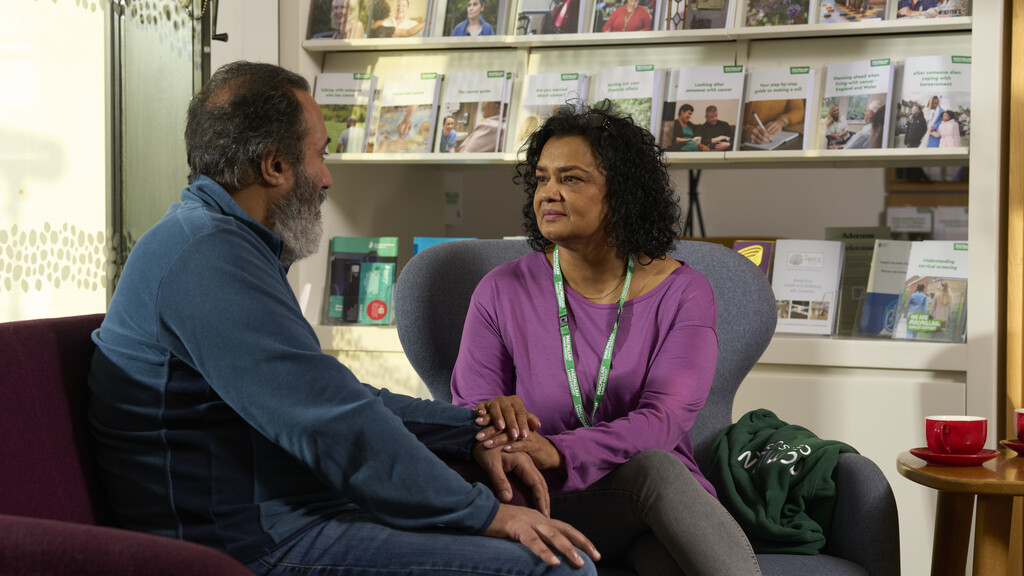
Mev was diagnosed with endometrial cancer in 2018. This has since spread to her ovaries, peritoneal area, vagina, bladder and lungs and is now incurable. As a South Asian woman, Mev feels passionate about sharing her experience, talking about cancer and raising awareness on a topic that is still often treated as taboo within her community. While Mev has shared that her diagnoses "broke all of us as a family, but it also brought us much closer as well", she has also faced other people withdrawing from her life:
"I’ve had quite a few people withdraw from me since my diagnosis, and I’ve lost some really close friendships because of it. In the beginning, I found that incredibly difficult. I was hurt, confused and didn’t understand why somebody who had been so important to me could suddenly step away when I was going through something so huge. But over time, I’ve come to realise that their decision to withdraw wasn’t necessarily about me. I don’t know what was going on for them or why they couldn’t be there, but ultimately, I had to concentrate on myself. I was fighting to survive, and I still am!
“Sometimes, cancer shows you who your people really are. Alongside the people I’ve lost, there have been people I wasn’t particularly close to before my diagnosis who have completely stepped up for me. Some of those relationships have become incredibly special, and we’ve become so much closer. There was never any expectation from me that they had to do that, which is probably why it has meant so much. They’ve simply chosen to be there. I’ve come to a place where I’m at peace with the people who have walked away. Cancer has taught me that I can’t control who stays and who leaves. What I can control is where I put my energy. I have limited energy, and I want to spend it on the people who choose to be there".
WHEN CANCER SHOWS UP, DON’T GO QUIET
As part of its Fair Cancer Care campaign, which aims to highlight and fix unfair gaps in cancer care, Macmillan is urging people not to go quiet when cancer shows up.
Macmillan is calling on family, friends and loved ones to take small, practical steps to show up for someone who has cancer — whether that means sending a message, checking in regularly, supporting someone at an appointment or simply being at the other end of the phone on the good days and the bad.
Sian Robinson-Brown, a Service Knowledge Specialist on Macmillan’s Support Line said:
“Finding the right words to talk about cancer isn’t easy. But showing you care really matters. Cancer is one of the most challenging things many people will go through, and it shouldn’t be made harder by people feeling they have to face it alone.
“There isn’t one perfect thing to say. What matters most is listening with empathy, taking the lead from the person with cancer and showing up consistently, even when conversations feel difficult.”
Macmillan offers free online information, developed with healthcare professionals and people living with cancer, to help people feel more confident talking about cancer and supporting someone they care about. Anyone unsure what to say or how to help can visit Macmillan’s website for practical advice on finding the words and showing they care.
For people living with cancer, Macmillan offers a range of services and support to help making accessing support as easy as possible, so that no one has to face cancer in silence. Find support in a way that works for you including the Macmillan Support Line, 1:1 WhatsApp emotional support service, Online Community, Macmillan Buddies or through local community support in your area.
- ENDS -
Notes to editor
How to talk about cancer:
Macmillan’s services and support:
- A free Support Line service available 365 days a year 8am – 8pm, where trained advisors, including cancer information specialist nurses, can provide emotional support and practical information about all aspects of cancer – for people living with cancer or supporting a loved one.
- New for 2026, Macmillan’s 1 to 1: WhatsApp support service offers weekly check-ins and emotional support from trained Macmillan advisors for up to 8 weeks. The service is available for people who have had a cancer diagnosis in the last 5 years.
- The Macmillan Online Community – a forum that brought together over 350,000 people living with cancer in 2025, sharing experiences and offering support for people in similar situations[5].
- Macmillan Buddies – a volunteer-led service that connects people with cancer with a telephone buddy for up to 8 weeks of supported phone conversations. This service provided more than 17,000 sessions of emotional support to almost 4,000 people with cancer in 2025[6].
- Care closer to home - Macmillan is working with partners across the UK to bring cancer support into the communities where people live, led by organisations who know their communities best. Together, we’re helping people find others who understand what they’re going through, raising awareness and breaking down taboos. Find cancer support services in your area.
References
Media enquiries and interview requests
Interviews with our storytellers can be arranged on request, subject to availability. We can also provide experts from Macmillan including trained advisors on our Support Line.
Macmillan Cancer Support has spent more than 100 years helping people living with cancer. We know that cancer can disrupt your whole life. And it can be made worse simply because of who you are and where you live. But we’re here to change that.
The number of people diagnosed with cancer is growing, and every one of them needs the best support to meet their unique needs. That's why we'll do whatever it takes to help everyone living with cancer across the UK get the support they need right now and transform cancer care for everyone who will be diagnosed in the future.
To donate, volunteer, raise money or campaign with us, call 0300 1000 200 or visit macmillan.org.uk
Read more
-
News and stories 20 Feb 2026The idea of a neighbourhood health service seems to be mentioned everywhere. But what does it mean and why does it matter to Macmillan?
-
News and stories 02 Apr 2026Macmillan’s new campaign highlights how cancer affects people unfairly in the UK. It’s a call for everyone to help ensure every person with cancer gets personalised, fair care.
-
News and stories 03 Jun 2026With the dawn of a new Senedd term comes the opportunity to turn the tide of cancer treatment and care once and for all.