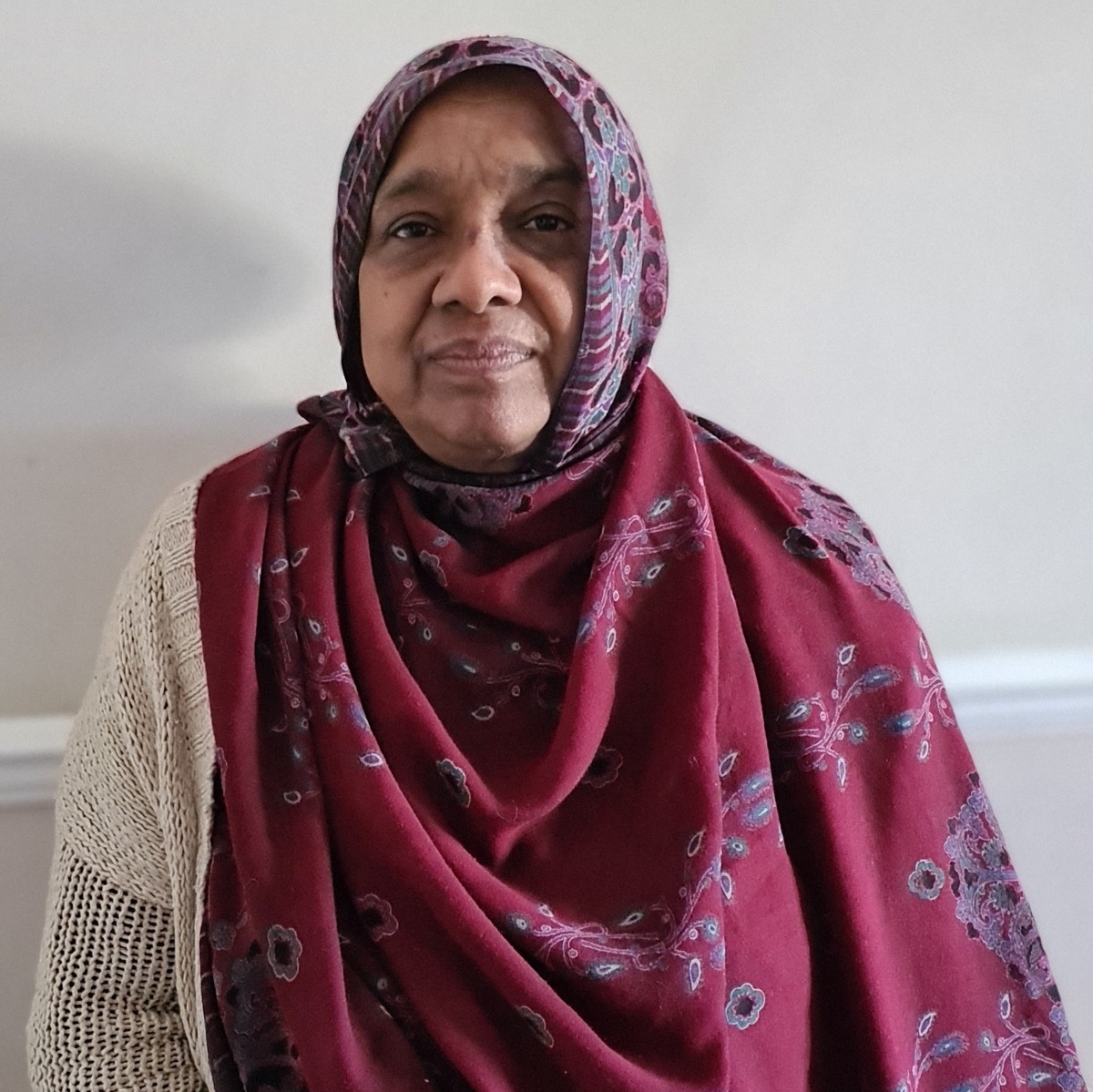
Meet Pragati
I am 55 and I was diagnosed with breast cancer in 2020. What stays with me most isn’t just the diagnosis, but how it was delivered.
I was referred to Tameside Hospital, where I had a mammogram and biopsy on the same day. I got my diagnosis that day.
When the consultant told me, he spoke mostly to the nurse and used medical jargon. He didn’t really talk to me directly. He just said, “You’ve got breast cancer.” For him, it may have been routine. For me it was life changing.
I’d always thought of myself as healthy. I exercised and followed a vegetarian diet. I never thought cancer would happen to me. It was scary.
Life was already complicated
At the time of my diagnosis, my family were already dealing with a lot.
My husband had suffered a subarachnoid haemorrhage after an aneurysm burst in his brain. He spent 18 months in hospital. During that time, the hospital became like my second home.
I would drop the children to school, go to our shop, go to the hospital, stay there until eight, come back and help with homework.
When my husband was discharged, life didn’t return to normal. He was living with memory loss and personality changes. I found myself managing finances, caring responsibilities and supporting two young children, while trying to process my own cancer diagnosis.
“I thought having help from Macmillan meant I was going to die”
I first went to the Macmillan Centre during one of my hospital visits for monthly Denosumab injections. The treatment helps protect my bones as I have metastatic breast cancer.
It was my first time. I didn’t know where to go. I felt anxious and overwhelmed. I was worried because they didn't tell me much, you know, about what stage it was or how things would go.
I remember thinking, “I’m going to die now.” My shoulders were slumped, I felt defeated.
That was when I met David.
He asked if I was OK. I said I was fine, just waiting. He asked if it was my first time and that’s how the conversation started.
When he said he was from Macmillan, I thought, “That’s the confirmation, I am going to die.” I thought Macmillan support was only for people at the end of their lives.
The help that changed everything
David asked simple questions about how things were at home and if everything was ok. When I mentioned that my boiler wasn’t working properly and I hadn’t had time or energy to sort it, he said he could help.
Within a week the boiler was changed. I was in tears.
He also helped me apply for a bus pass, which made it easier to attend appointments at a time when I didn’t feel able to drive.
That was the beginning. Macmillan stepped in when I couldn’t manage everything alone.
David kept checking in and gently encouraged me to try activities at the centre. My confidence was very low. Medication had changed my skin tone. I am Indian and it had become almost black. I struggled to recognise myself. I hated looking in the mirror.
At a make-up session at the centre, I learned how to use products that were suitable for my skin. They had different tones and things that would not be harmful for my skin. It was a nice experience.
I went back a few times. Slowly, my confidence started to come back.