Living with Lymphoma - real experiences
You may recognise some of your own questions or concerns in their stories. While everyone's experience is different, hearing from people who have been through something similar can sometimes help you feel less alone.
Diagnosis and beyond
Toby's experiences
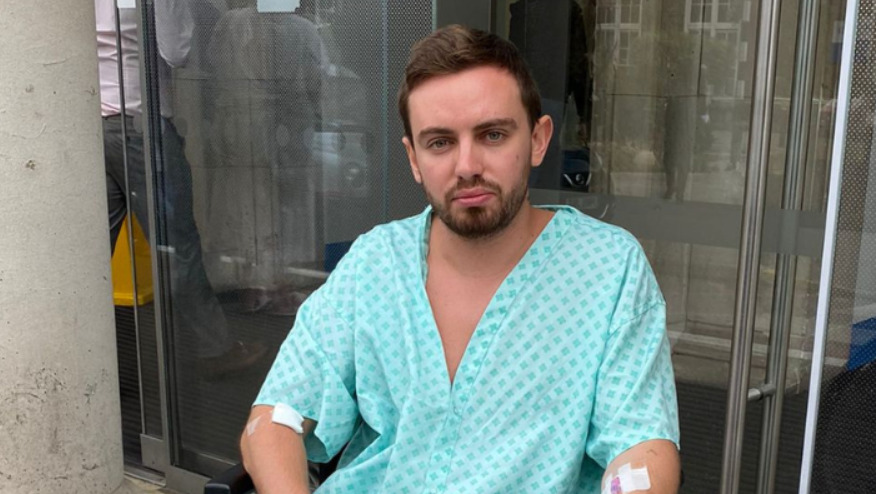
I was diagnosed when I was 19, going on 20, with Hodgkin’s lymphoma.
I had a huge swollen neck on one side and went to see my GP, which eventually led to a biopsy.
I began ABVD treatment, responded really well and after 6 doses was placed into remission. About 12 months later, a PET scan picked up 2 tiny lumps and I was devastated to be facing treatment again. I began ESHAP, which was much tougher, but it was successful and I was back in remission. I then had BEAM treatment and a stem cell transplant at UCLH, and after about 10 days I was able to leave hospital.
Alison was my Macmillan nurse at East Surrey Hospital and was a big help throughout my whole treatment. She was always available to be an extra friendly smile, offered advice and support, and helped explain to my parents what I might be going to face.
Five years after my second experience of Hodgkin’s, I was discharged from my doctors at the end of 2016, which brought its own challenges as I prepared to ‘move on’.
Since cancer, I’ve cycled to Paris, run marathons, travelled and used my theatre show to connect with people who have experienced cancer.
Treatment and Recovery
Mike's experiences
Between September 2013 and May 2017, I spent 108 days in hospital, had 45 radiotherapy sessions, 800+ hours of chemotherapy and 2 Allo stem cell transplants. I also experienced infections, sepsis, GvHD and two trips to ICU. What a journey :)
My consultant described an Allo stem cell transplant as going through a boxing match and running a marathon every day, without doing any training. And I did it twice.
Recovery was hard. Fatigue was extreme and I lost a lot of muscle strength. For three months I needed walking sticks, I couldn't drive and sometimes needed a wheelchair to get to clinic.
I tried to stay active when I could. During chemotherapy I would take my two chemo pumps, Laurel and Hardy, for walks around the ward. Gradually I built my strength back up.
The risk of infection also meant long periods away from busy places and from my granddaughters. The isolation was difficult.
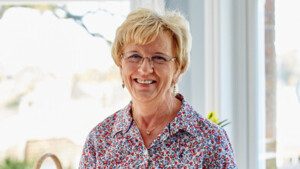
Support made a huge difference. Family and friends kept in touch, visited us, cut the grass and brought meals. I also completed Maggie's 'Where Now?' course, which helped me deal with everything I had collected in my emotional "rucksack", including guilt about surviving when a good friend did not.
My wife and I are glass-half-full people. Whenever we got bad news, we would say: "What's next? There is always a what next."
Relationships, family and everyday life
Jacqueline's experience
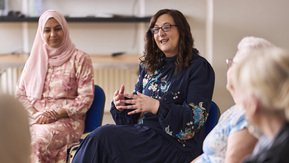
Lymphoma affected many parts of Jacqueline's life. Alongside treatment, she was supporting her family, managing day-to-day responsibilities and coming to terms with what cancer meant for her future. She shares what helped her talk to the people closest to her and the support she received along the way.
"Before I received my formal cancer diagnosis like many if not all, I Google searched, symptoms, life expectancy, chemotherapy and then I came across Macmillan. I found myself sending an email, which in retrospect must have been an incoherent, babble of raw emotions.
The next morning I received a call from Max a Macmillan nurse. I spoke to Max about my deepest fears, about how I would tell my children I have cancer, how I would navigate work and what I could expect moving forward. The wonderful Max, alongside my incredible CNS Katie have supported me every step of the way through my cancer journey.
During a half term, I had the opportunity to bring my sons with me to show them my hospital and the Macmillan centre.
My youngest had asked me repeatedly what it was like? and if he could visit? and I felt it was important to be as honest with them as possible. While I had my PICC Line removed by a nurse, they sat with my mum in the waiting room. We then went downstairs to the Macmillan centre. We had tea and biscuits while the boys coloured in. Maxine was also at UCLH that morning and I was able to introduce her to my son’s. I cannot truly express how emotional that meeting was and the feeling of closure that washed over me."
Living with the effects of lymphoma treatment
Sophie's experience
Sophie is a married young woman from Essex, who was previously extremely fit and active.
She experienced nine months of worsening symptoms before being diagnosed with Non-Hodgkins Lymphoma in 2020. She had rounds of chemotherapy and radiotherapy as part of her cancer treatment.
After treatment, Sophie experienced ongoing fatigue and changes to her health. She shares what it was like adjusting to life after lymphoma and finding ways to manage the challenges she faced.
"For years, I have navigated life with significant late effects. My quality of life has been poor. Physically and emotionally, cancer didn’t end when treatment did.Every day is a negotiation with symptoms, fatigue and limitation. I have had to grieve the life I thought I would return to and learn to survive in a body that feels unpredictable."
More information about lymphoma
The 2 main types are Hodgkin lymphoma (HL) and non-Hodgkin lymphoma (NHL).
- Hodgkin lymphoma (HL) - Learn more about the symptoms, diagnosis, and treatment of Hodgkin lymphoma.
- Non-Hodgkin lymphoma (NHL) - Learn more about the different types of NHL, how it is diagnosed and treatments for NHL.
If you are worried about symptoms
The most common symptom of lymphoma is a painless swelling or lump in the neck, armpit or groin. This is caused by lymphoma cells building up in the lymph nodes, which makes them bigger.
There are different causes of swollen lymph nodes. But if you notice a painless, swollen lymph node, it is important to get it checked by your GP.
More stories like this
-
Stories 24 Feb 2025A cancer diagnosis can be life changing. However, detecting it early can make all the difference. Read the personal stories of individuals whose early diagnoses gave them a better chance at treatment...
-
Stories 20 Feb 2025Mason was diagnosed with a brain tumour in 2022. He shares the dating profile he would have created after his cancer diagnosis.
-
Stories 05 Aug 2024When you finish cancer treatment you may feel a range of different emotions. On this page storytellers share their experiences of life after cancer treatment.