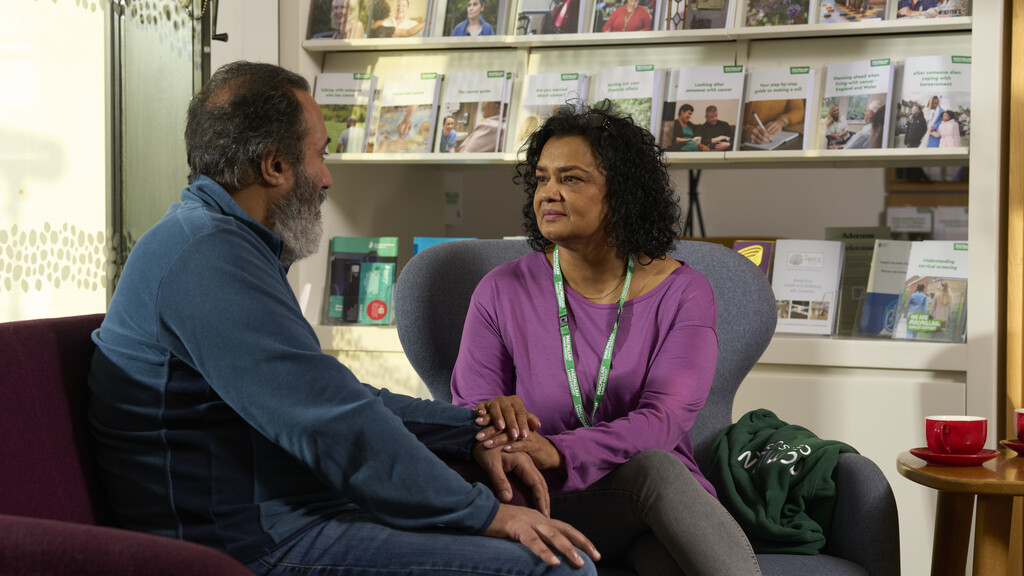

“Friends I always thought would be by my side were nowhere to be seen”: Macmillan warns of ‘cancer ghosting’ as 1 in 3 people in Northern Ireland struggle to talk to someone with cancer
An estimated half a million people in Northern Ireland struggle to talk to someone they know with cancer, new Macmillan research reveals.

THE CANCER CONVERSATION GAP
- An estimated half a million people in Northern Ireland struggle to talk to someone they know with cancer, new Macmillan research reveals.
- People in Northern Ireland are twice as likely to avoid talking to someone they know about cancer compared to UK average.
- The charity is warning that thousands of people with cancer across the UK could be experiencing ‘cancer ghosting’ causing pain, hurt and heartbreak when people in their life stop contact after a diagnosis.
- Macmillan is urging people not to go quiet when cancer shows up, offering information online to help people talk about cancer and a range of services and support so that no one has to face cancer alone.
An estimated half a million people in Northern Ireland say they struggle to talk to someone living with cancer, new research finds.
The UK’s leading cancer care charity, Macmillan Cancer Support, is urging people not to go quiet as it warns that ‘cancer ghosting’ could be affecting thousands of people with cancer across the UK, causing pain, hurt and heartbreak when people in their life go quiet.
Macmillan’s new data has revealed that one in three people in Northern Ireland (32%) - representing almost half a million people - have found it hard to communicate with someone they know who has cancer[1]. This includes struggling to know what to say, avoiding the subject of the person’s cancer, seeing or speaking to them less, or in some cases even completely losing touch altogether[2].
The research also shows that people in Northern Ireland who know someone with cancer are twice as likely to avoid talking to them about their diagnosis compared to the UK average (16% compared to 8%)[3].
Across the UK, among those surveyed who said they found it hard to communicate, the most common reasons were:
The UK’s leading cancer care charity, Macmillan Cancer Support, is urging people not to go quiet as it warns that ‘cancer ghosting’ could be affecting thousands of people with cancer across the UK, causing pain, hurt and heartbreak when people in their life go quiet.
Macmillan’s new data has revealed that one in three people in Northern Ireland (32%) - representing almost half a million people - have found it hard to communicate with someone they know who has cancer[1]. This includes struggling to know what to say, avoiding the subject of the person’s cancer, seeing or speaking to them less, or in some cases even completely losing touch altogether[2].
The research also shows that people in Northern Ireland who know someone with cancer are twice as likely to avoid talking to them about their diagnosis compared to the UK average (16% compared to 8%)[3].
Across the UK, among those surveyed who said they found it hard to communicate, the most common reasons were:
- I was worried about saying the wrong thing (59% of those in the UK who find it hard to communicate about cancer gave this as a reason)
- I just couldn't find the words (46%)
- I didn't want to upset them (42%)
Among the UK survey respondents who are living with cancer themselves, almost one in 10 (9%) said they have experienced ‘cancer ghosting’ – when one or more of their family or friends has chosen to reduce or stop contact with them[4]. These experiences are also shared by people with cancer in Macmillan’s Online Community forum and its Cancer Voices Community, who talk about the impact this can have on their lives. The charity’s research also highlights the difference that people’s support can make, with one in five (22%) of those with cancer in the new survey from across the UK saying their diagnosis has made them realise who their real friends are[5].
“THE FRIENDS I THOUGHT WOULD ALWAYS BE BY MY SIDE WERE NOWHERE TO BE SEEN… IT WAS HEARTBREAKING”
Nicky is a mum of two from Belfast, who was diagnosed with multiple myeloma and the rare disease amyloidosis in August 2022. Nicky found it incredibly difficult to open up and share her diagnosis with others, partly due to the rarity of her condition and not knowing what that meant for the future. However, since telling more people, she also has felt ghosted by people in her life.
“The friends I thought would always be by my side were nowhere to be seen, which was heartbreaking - and the people I never expected to be around, turned up. My life was taken over with hospital appointments and side effects from my treatment, so that acted as a distraction, but I was very hurt."
On the advice she would give to someone whose friend, family member or colleague had recently been diagnosed with cancer, Nicky said:
"Cancer changes your identity, but treat them as you always have. Help out without asking or waiting to be asked as otherwise you will often wait a long time. And remember it’s not your news to share, unless you’ve had that conversation with the person diagnosed first."
WHEN CANCER SHOWS UP, DON’T GO QUIET
Navigating a cancer diagnosis can be an incredibly lonely and isolating time, and barriers such as cultural stigma, certain beliefs or taboos around cancer can make this even harder.
As part of its Fair Cancer Care campaign, which aims to highlight and fix unfair gaps in cancer care, Macmillan is urging people not to go quiet when cancer shows up.
Macmillan is calling on family, friends and loved ones to take small, practical steps to show up for someone who has cancer — whether that means sending a message, checking in regularly, supporting someone at an appointment or simply being at the other end of the phone on the good days and the bad.
Sian Robinson-Brown, a Service Knowledge Specialist on Macmillan’s Support Line said:
“Finding the right words to talk about cancer isn’t easy. But showing you care really matters. Cancer is one of the most challenging things many people will go through, and it shouldn’t be made harder by people feeling they have to face it alone.
“There isn’t one perfect thing to say. What matters most is listening with empathy, taking the lead from the person with cancer and showing up consistently, even when conversations feel difficult.”
Macmillan offers free online information, developed with healthcare professionals and people living with cancer, to help people feel more confident talking about cancer and supporting someone they care about. Anyone unsure what to say or how to help can visit Macmillan’s website for practical advice on finding the words and showing they care.
For people living with cancer, Macmillan offers a range of services and support to help making accessing support as easy as possible, so that no one has to face cancer in silence. Find support in a way that works for you including the Macmillan Support Line, 1:1 WhatsApp emotional support service, Online Community, Macmillan Buddies or through local community support in your area.
- ENDS -
Notes to editor
How to talk about cancer:
Macmillan offers trusted online information developed by healthcare professionals and people living with cancer that can help people find the words to talk about cancer: https://www.macmillan.org.uk/dontgoquiet
Macmillan’s services and support:
- A free Support Line service available 365 days a year 8am – 8pm, where trained advisors, including cancer information specialist nurses, can provide emotional support and practical information about all aspects of cancer – for people living with cancer or supporting a loved one.
- New for 2026, Macmillan’s 1 to 1: WhatsApp support service offers weekly check-ins and emotional support from trained Macmillan advisors for up to 8 weeks. The service is available for people who have had a cancer diagnosis in the last 5 years.
- The Macmillan Online Community – a forum that brought together over 350,000 people living with cancer in 2025, sharing experiences and offering support for people in similar situations[6].
- Macmillan Buddies – a volunteer-led service that connects people with cancer with a telephone buddy for up to 8 weeks of supported phone conversations. This service provided more than 17,000 sessions of emotional support to almost 4,000 people with cancer in 2025[7].
- Care closer to home - Macmillan is working with partners across the UK to bring cancer support into the communities where people live, led by organisations who know their communities best. Together, we’re helping people find others who understand what they’re going through, raising awareness and breaking down taboos. Find cancer support services in your area.
References
- Macmillan Cancer Support/YouGov survey of 2,128 adults in the UK, including 121 people from Northern Ireland. Fieldwork was undertaken between 13th August to 18th August 2026. The survey was carried out online. The figures have been weighted and are representative of adults in the UK (aged 18+). Overall, 86% of respondents in Northern Ireland know someone with cancer and/or are living with cancer themselves. Survey question was as follows: “Thinking about the person or people you know who has/have been diagnosed with cancer… In which, if any, of the following ways has your communication or contact with them been affected by their cancer diagnosis? Please select all that apply.” Using re-based figures, 32% of respondents in Northern Ireland selected one or more of the following answers: I struggled to know what to say to them (24%), I avoided the subject of their cancer when I saw or spoke with them (16%), I put off getting in touch because I didn't know what to say (8%), I spoke to them or saw them less than before their diagnosis (6%), I lost contact with them completely after they were diagnosed (3%). ‘Half a million’ figure estimated by applying the 32% to the estimate adult population of Northern Ireland of 1.5 million people aged 18+. Source: Office for National Statistics. Estimates of the population for the UK, England, Wales, Scotland, and Northern Ireland – mid-2024 edition. Accessed September 2026
- As per previous reference
- As per previous reference
- As per previous reference. Survey included 136 people in the UK who have had a cancer diagnosis themselves. Survey question was as follows: “You said you have been diagnosed with cancer. Which, if any, of the following have you experienced with one or more of your family or friends as a result of your cancer diagnosis? Please tick all that apply.”
- As per previous reference
- Macmillan Cancer Support internal data
- Macmillan Cancer Support internal data
Media enquiries and interview requests:
For media enquiries, please contact Jasmine Burford JBurford@macmillan.org.uk or media@macmillan.org.uk
We can arrange interviews with our storyteller Nicky on request and subject to availability. We can also provide experts from Macmillan including trained advisors on our Support Line.
Macmillan Cancer Support has spent more than 100 years helping people living with cancer. We know that cancer can disrupt your whole life. And it can be made worse simply because of who you are and where you live. But we’re here to change that.
The number of people diagnosed with cancer is growing, and every one of them needs the best support to meet their unique needs. That's why we'll do whatever it takes to help everyone living with cancer across the UK get the support they need right now and transform cancer care for everyone who will be diagnosed in the future.
To donate, volunteer, raise money or campaign with us, call 0300 1000 200 or visit macmillan.org.uk
We can arrange interviews with our storyteller Nicky on request and subject to availability. We can also provide experts from Macmillan including trained advisors on our Support Line.
Macmillan Cancer Support has spent more than 100 years helping people living with cancer. We know that cancer can disrupt your whole life. And it can be made worse simply because of who you are and where you live. But we’re here to change that.
The number of people diagnosed with cancer is growing, and every one of them needs the best support to meet their unique needs. That's why we'll do whatever it takes to help everyone living with cancer across the UK get the support they need right now and transform cancer care for everyone who will be diagnosed in the future.
To donate, volunteer, raise money or campaign with us, call 0300 1000 200 or visit macmillan.org.uk
Read more
-
News and stories 21 May 2026Michael talks about his excitement at the launch of Macmillan Ventures, and how the new fund will help push the boundaries of what is possible for cancer care in the UK.
-
News and stories 20 Feb 2026The idea of a neighbourhood health service seems to be mentioned everywhere. But what does it mean and why does it matter to Macmillan?