Life before cancer
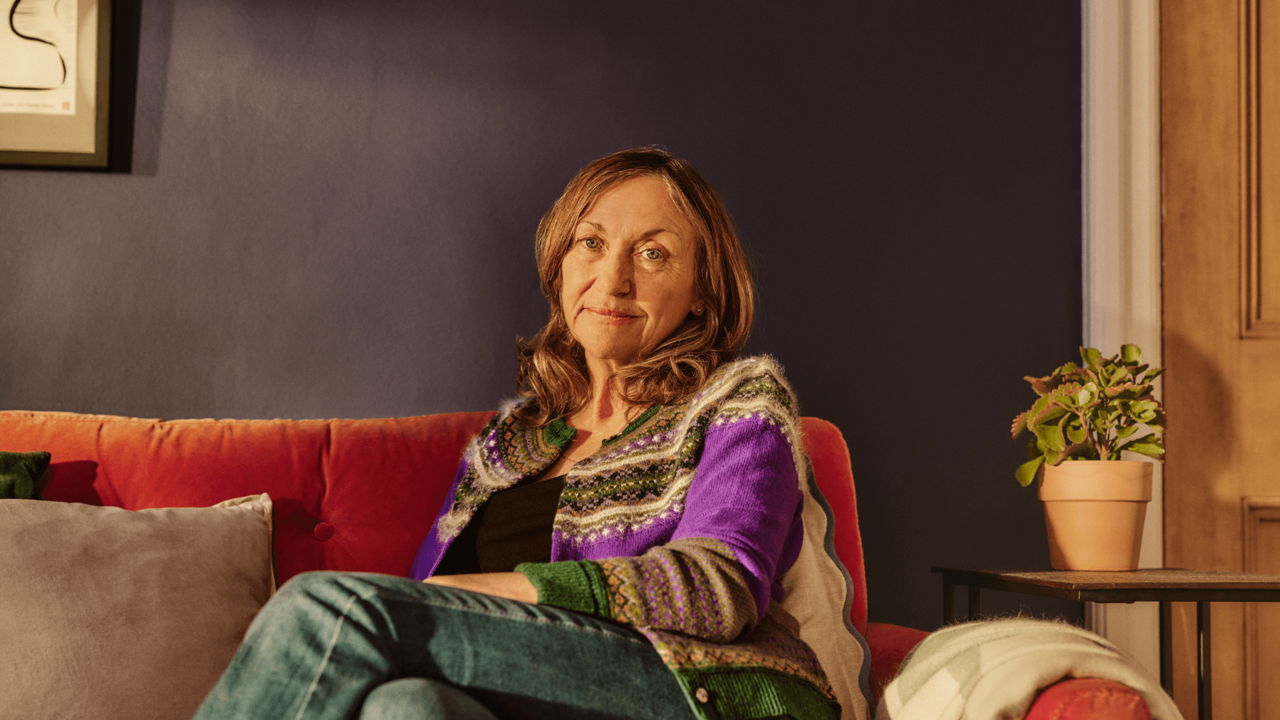
Before her cancer diagnosis, Kay was already dealing with a lot. Her dad died in 2019, and her mum passed away the following year.
“My dad was my mum’s primary carer, so I then became her primary carer, whilst also looking after my then 4 year old.” Not long after, her relationship broke down.
“I split with my daughter’s dad not too long after we buried my mum, because it was just too much at that point.”
She was navigating grief, raising her daughter, and adjusting to a completely different life all at once.
Eighteen months after her mum’s death, Kay noticed something.
"I knew something wasn't right"
“I’d found the lump on my left hip, just because my arm had brushed it, because I’d lost a lot of weight.”
“I was spiralling a little bit and needed a bit of reassurance.”
She got it checked, but over the following months she was reassured there was nothing to worry about. Kay trusted that. She didn’t think it was cancer.
Kay was diagnosed with myxoid liposarcoma during a phone call while her daughter was at gymnastics.
The hospital wanted to see her in person, but with no childcare and a two-hour journey, the news was shared by phone.
“I just said, ‘does this mean I have cancer?’ And he said, ‘yes'. It felt like my whole world had just completely blown apart.”
“My senses were completely overloaded because I couldn’t think. But cancer doesn’t care where you are in your life.”
“I had 26 minutes… to cry, call my brothers, and pull myself together.”
Then she had to switch straight back into being a mum.
“My daughter came over saying, ‘mummy, gymnastics was fantastic.’ And I was like, ‘that’s amazing, baby.’"
Inside, everything felt different.
When she told her daughter a few weeks later, one moment stayed with her.
“The only question she had was if I was going to die. That will haunt me for the rest of my life.”
When your body lets you down
Kay had 25 rounds of radiotherapy followed by surgery to remove the tumour. During treatment, things felt harder than she expected, both physically and mentally.“My mental health had taken a big tumble. A lot of that stemmed from not trusting my body anymore. I felt like I had been let down by my body.” “I was experiencing bad nausea… it was making me really tired… I had really bad skin changes.”
“Separately, I had a lot of pain because my ovary was twisted. I had to have surgery whilst awaiting surgery to remove the tumour. As a result of the delay, I lost a lot of circulation to my ovary. In the end, they had to remove 40% of my ovary because of it.”
Looking back, that was one of the hardest parts. “I spent a lot of time trying to recover from not being believed. I couldn’t articulate myself enough, which is a lot of the reason why I say I want to be the voice that I didn’t have.”
“I was still trying to go to the gym because I felt like everybody was telling me what to do. I wanted to still try and squat 100kg. I failed miserably. I felt weak.”
“Mentally, I really, really struggled because the things I found so easy previously were now difficult.”
The people who stepped in
Without her parents, Kay relied on others around her. “To their credit, they were absolutely brilliant.”
“There was always someone to take me to an appointment. I never went to an appointment alone.”
Her friends and family also supported her daughter, helping to keep her routine as normal as possible by taking her to school or gymnastics.
“I didn’t want her programme to be disrupted because I had cancer.”
That support made a difference. “It was honestly invaluable.”
After treatment ends
When treatment ended, Kay expected some things to feel easier. But not everything went away.
“The fear of recurrence is one that will always stay with me.”
“I’m still very triggered around my appointment times and scans.” There are also parts of the experience that feel less visible.
“My cancer journey made me realise I'd been focusing on the wrong thing. That actually, if you're happy, it doesn't have a size attached to it.
When I was sick, all I wanted to be was healthy. I told myself, when I am better, please just try and be strong.”
Learning to trust her body again
Kay’s relationship with her body changed through cancer. Growing up, fitness wasn’t something she identified with. “If there was a photo of someone in a yearbook that said, ‘least likely to progress into any kind of fitness’, it was going to be me.”
Before her diagnosis, she had found strength in movement. After surgery, there were ongoing physical effects.
“Externally it looks great, but it is still painful. My hip mobility has been affected.”
Getting back to movement hasn’t been straightforward. It has taken time, and it still isn’t easy.
“I always want people to find the joy in fitness-related stuff, because it’s the thing that has kept me sane, if I’m honest.”
“When the sorrow comes, you can manage that a bit better.”