Cancer and your pregnancy care

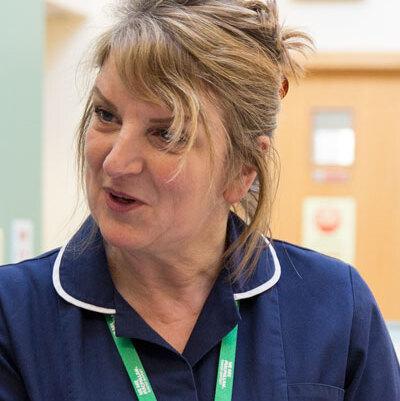
A team of specialists will look after you during your pregnancy. This includes your pregnancy doctor (obstetrician) and midwife, and cancer doctors and nurses.

Created in partnership with Mummy's Star


Pregnancy and cancer pages  


Cancer during pregnancy

During your pregnancy, you will have regular check-ups with your midwife and pregnancy doctor (obstetrician). They will check your baby’s development as well as your health. They will also work closely with the cancer doctors treating you. This helps to co-ordinate your pregnancy care alongside any tests or treatments for cancer.

You will have the usual checks and care that all pregnant women and birthing people have. But the pregnancy team will see you more often. They may do more checks, such as ultrasound scans to look at the baby.

You should still have choices about the birth. Your midwife will talk to you about this and help you make a birth plan.

Most pregnancies will go to full term (over 37 weeks) and have a normal birth. Your pregnancy and cancer teams will work together to try and make sure your pregnancy goes to term. Your natural labour may start earlier than is planned.

But sometimes your doctors may recommend delivering the baby early. This will depend on the type of cancer you have and treatment you are having. Your pregnancy and cancer teams will talk to you if they think this will help in your situation.

Thinking about your baby

Cancer and its treatment can feel overwhelming. You may feel too tired or distracted to focus on being pregnant. There are simple things you can do to help you focus on your pregnancy and bond with your baby.

Spend a few minutes every day thinking about your baby. For example, think about your baby when you are out for a walk or having a bath. You can also try:

  • talking to your baby – as the baby develops it may start to respond to your voice
  • keeping a journal about your pregnancy
  • putting a scan picture somewhere you can look at it, or setting it as the wallpaper or lock screen image on your phone.

Talk to your midwife about any concerns you have about your pregnancy. They can give you lots of helpful advice.

If your baby needs to be delivered earlier

If the baby needs to be delivered early, you will either have:

  • your labour started (induced)
  • a caesarean section (C-section).

Doctors may recommend you have your pregnancy care and give birth in the same hospital you have had your cancer treatment.

Babies born before full term are cared for in neonatal intensive care units (NICUs) or special care baby units (SCBUs). They are looked after by a team of specialist doctors and nurses.

Talk things through with your doctors and nurses before you decide to have your baby early. It is important to make sure you understand the reasons for their advice. This can be hard, but your doctors, nurses and midwives will support you.

There are also support organisations that can support you if you have a premature birth, including:

About our information

This information has been written, revised and edited by Macmillan Cancer Support’s Cancer Information Development team. It has been reviewed by expert medical and health professionals and people living with cancer.

  • References

    Below is a sample of the sources used in our pregnancy and cancer information. If you would like more information about the sources we use, please contact us at informationproductionteam@macmillan.org.uk


    de Haan J, Verheecke M, et al. Oncological management and obstetric and neonatal outcomes for women diagnosed with cancer during pregnancy: a 20-year international cohort study of 1170 patients. Lancet Oncology. 2018. Vol 19 [accessed October 2023]


    Public Health England, Cancer before, during and after pregnancy, National Cancer Registration and Analysis Service 2018 [accessed October 2023]


    Silverstein J, Post AL, Chien AJ, Olin R, Tsai KK, Ngo Z, Van Loon K. Multidisciplinary management of cancer during pregnancy. JCO Oncol Pract. 2020 Sep;16(9):545-557. doi: 10.1200/OP.20.00077. PMID: 32910882. [accessed September 2023]


    Wolters V, Heimovaara J, Maggen C, et al. Management of pregnancy in cancer Int J Gynecol Cancer 2021;31:314–322.

Dr Rebecca Roylance, Consultant Medical Oncologist & Honorary Associate Professor

Dr Rebecca Roylance

Reviewer

Consultant Medical Oncologist & Honorary Associate Professor

University College Hospitals, London

Date reviewed

Reviewed: 01 March 2025
|
Next review: 01 March 2028
Trusted Information Creator - Patient Information Forum

Our cancer information meets the PIF TICK quality mark.

This means it is easy to use, up-to-date and based on the latest evidence. Learn more about how we produce our information.

The language we use


We want everyone affected by cancer to feel our information is written for them.


We want our information to be as clear as possible. To do this, we try to:

  • use plain English
  • explain medical words
  • use short sentences
  • use illustrations to explain text
  • structure the information clearly
  • make sure important points are clear.

We use gender-inclusive language and talk to our readers as ‘you’ so that everyone feels included. Where clinically necessary we use the terms ‘men’ and ‘women’ or ‘male’ and ‘female’. For example, we do so when talking about parts of the body or mentioning statistics or research about who is affected.


You can read more about how we produce our information here.