


Late effects of cancer treatment
Late effects are side effects that do not go away after cancer treatment. They can also be side effects that do not happen until months or years after treatment.
What are late effects?
Although your cancer treatment has finished, you may still be coping with some side effects.
Side effects usually go away after treatment finishes. But some take weeks or months to improve. Sometimes, certain side effects may become permanent. Others may also develop months or years after treatment. These are called late effects of treatment.
Some people may have ongoing treatment, such as hormonal therapy or other types of anti-cancer drugs. In this situation, you may still be dealing with some ongoing side effects.
Always tell your GP, cancer doctor or nurse about side effects or any symptoms you have. There is usually something they can do to improve them. They can talk to you about ways to manage your side effects.
Related pages
Will I have late effects from my treatment?
Your cancer team can tell you about the risk of any late effects of your treatment. They can tell you which signs and symptoms to look out for. You can ask them whether there is anything you can do to reduce the risk of these happening. They may also tell you if there are any regular tests you can have to find problems early.
Tell your cancer team if your side effects do not improve after treatment, or if you get new signs or symptoms. If needed, they can arrange tests to check your symptoms.
Possible late effects include the following.
-
Lymphoedema
Radiotherapy or surgery to the lymph nodes may cause swelling called lymphoedema. This usually affects your arms or legs (limbs). But it can affect other parts of the body, depending on which area was treated.
To reduce your risk, follow the advice from your specialist nurse. This includes looking after your skin in the area that was treated. If you notice any swelling, get it checked by a doctor straight away and tell your cancer team. The earlier lymphoedema is diagnosed, the easier it is to manage and treat successfully.
-
Effects on the heart and lungs
Certain cancer treatments may increase your risk of developing different heart and lung problems in the future. But many people who have these drugs or treatments do not develop any effects. If you are worried, you can ask your cancer team if your heart or lungs are likely to be affected in the long term.
Radiotherapy to the middle of the chest or the left breast may increase the risk of heart problems. Radiotherapy to treat lung cancer may cause lung changes, such as scarring. Newer radiotherapy techniques aim to lower the risk of these problems.
Different cancer treatments may cause heart problems. These problems may include high blood pressure and abnormal heart rhythms. If you are at risk of these side effects, you will usually have checks on your heart before treatment. You may also have checks during and after treatment. Contact the hospital straight away if you have any symptoms.
Chemotherapy drugs such as bleomycin can affect the lungs. Targeted and immunotherapy drugs may cause lung inflammation. This is called pneumonitis. If you have breathlessness or a cough, contact your doctor straight away.
There are things you can do to help look after your heart and lungs. Not smoking is very important. Being physically active, eating healthily and keeping to a healthy weight also help look after your heart and lungs.
-
Effects on the bones
Hormonal therapy to treat breast or prostate cancer can increase the risk of bone thinning – this is called osteoporosis. This may mean you are more likely to get a break (fracture) in a bone.
Radiotherapy to the pelvic area may increase the risk of small insufficiency fractures (stress fractures) in the pelvis, but this is not common.
If you have pain or aching in the bones, tell your cancer team. It can be caused by many different conditions, but it is important to get it checked.
Not smoking, eating a healthy, balanced diet and doing weight-bearing exercises such as walking can help you look after your bones. We have more information about bone health.
-
Effects on the head and neck
Radiotherapy to the head and neck can cause late effects to your mouth and throat. These may include a dry mouth because you have less saliva, thicker or stickier saliva, or a loss of sense of taste.
Using artificial saliva and having frequent sips of water can help with a dry mouth. Using a sodium bicarbonate mouthwash may help clear thick saliva.
It is important to follow any advice you have been given. Keeping your teeth and mouth clean can also help. You will need regular visits to your dentist and oral hygienist.
Surgery and radiotherapy can affect eating and speech. Specialist health professionals can help with any changes to eating and speech. These may include dietitians and speech and language therapists (SLTs).
We have more information about managing the late effects of head and neck cancer treatment.
-
Effects on the bowel and bladder
Radiotherapy to the pelvis can cause late effects on the bowel and bladder. These can often be managed or treated successfully. Some people may need to consult a bowel or bladder specialist for more specialised help. There are different treatments available.
You can often manage late effects on the bowel by changing your diet. This could include reducing how much high-fibre food you eat. You can take medicines to control diarrhoea or constipation.
Pelvic late effects on the bladder may mean you need to pass urine (pee) more often. You may also leak a small amount of urine (incontinence). It is important to drink lots of fluids and avoid things that can irritate the bladder – for example, caffeine and alcohol. Stopping smoking can also help with effects on the bowel and bladder.
If you have problems with bowel or bladder control, ask your nurse for a referral to a continence adviser. They can talk to you about pelvic floor exercises or bladder training to help bladder control. Keeping to a healthy weight will also help. This relieves pressure on your pelvic floor.
-
Second cancer
Certain cancer treatments may slightly increase the risk of developing another cancer in the future. But usually, the benefits of treatment will far outweigh any risk. Your cancer team can give you more information about this.
-
Sex and fertility
Talking to your doctor
Always let your cancer doctor or nurse know if:
- the side effects of treatment do not go away
- you have any new symptoms or problems after treatment.
Some late effects may be similar to symptoms you had when you were diagnosed with cancer. It can be frightening to have symptoms after treatment ends. You may worry that the cancer has come back.
Your cancer team will assess your symptoms and explain whether they could be caused by the treatment. You may need tests to check for other causes, such as the cancer coming back or a new cancer. Sometimes, symptoms are caused by other conditions not related to the cancer or its treatment.
Remember that you can arrange to see your cancer doctor or specialist nurse in between appointments. You can also contact your GP at any time.
Support from Macmillan
Macmillan is also here to support you. If you would like to talk, you can do the following:
- Call the Macmillan Support Line for free on 0808 808 00 00.
- Chat to our specialists online.
- Visit our life after cancer forum to connect with people who have been affected by cancer, share your experience, and ask an expert your questions.
Related pages
What you can do to reduce the risk of late effects
Your cancer doctor or nurse can tell you if there is anything you can do to help reduce the risk of certain late effects. This could include:
- not smoking
- keeping to a healthy weight
- being more physically active.
We have more information about beginning to recover.
Related pages
Booklets and resources
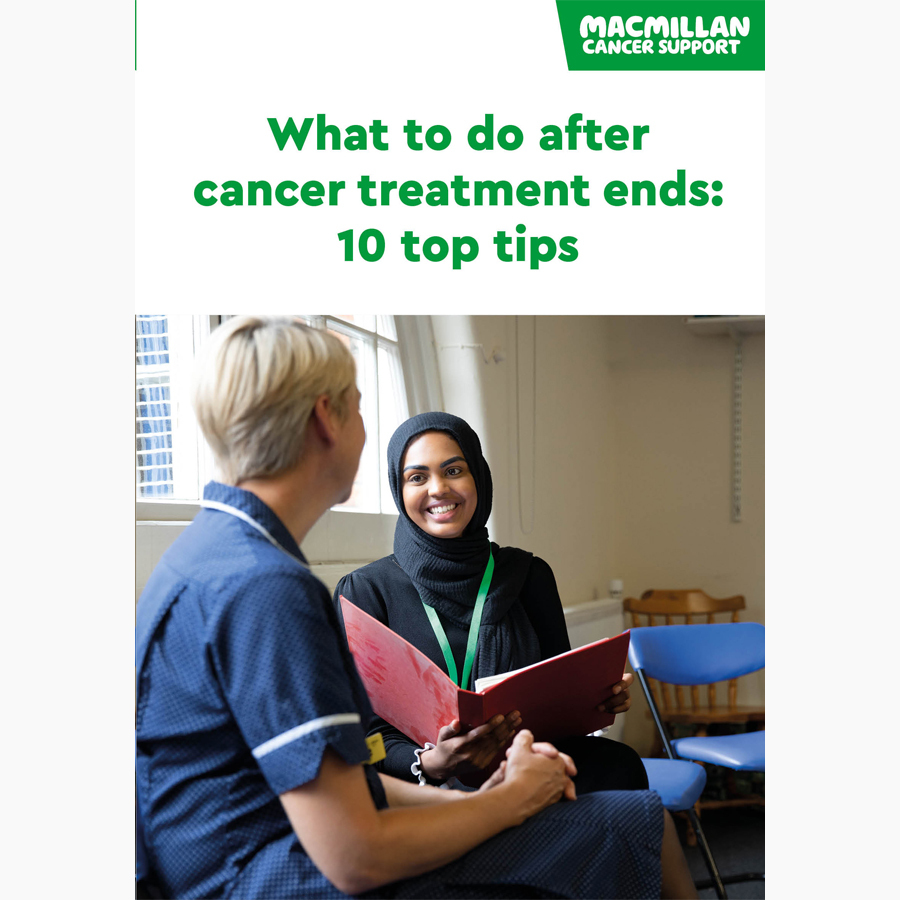
About our information
This information has been written, revised and edited by Macmillan Cancer Support’s Cancer Information Development team. It has been reviewed by expert medical and health professionals and people living with cancer.
-
References
Below is a sample of the sources used in our after treatment information. If you would like more information about the sources we use, please contact us at cancerinformationteam@macmillan.org.uk
ESMO Expert Consensus Statements on Cancer Survivorship: promoting high-quality survivorship care and research in Europe. Published: 10 August 2022. Annals of Oncology (accessed April 2023).
National Comprehensive Cancer Network. Survivorship: Clinical Practice Guidelines in Oncology. Published: October 2018; 16 (10): 1216–1247.


Date reviewed


Our cancer information meets the PIF TICK quality mark.
This means it is easy to use, up-to-date and based on the latest evidence. Learn more about how we produce our information.
The language we use
We want everyone affected by cancer to feel our information is written for them.
We want our information to be as clear as possible. To do this, we try to:
- use plain English
- explain medical words
- use short sentences
- use illustrations to explain text
- structure the information clearly
- make sure important points are clear.
We use gender-inclusive language and talk to our readers as ‘you’ so that everyone feels included. Where clinically necessary we use the terms ‘men’ and ‘women’ or ‘male’ and ‘female’. For example, we do so when talking about parts of the body or mentioning statistics or research about who is affected.
You can read more about how we produce our information here.