


What are phyllodes tumours?
Phyllodes tumours are rare breast tumours. Most phyllodes tumours are non-cancerous (benign). They are made of a mixture of cells from connective (fibrous) tissue and the tissue layer lining the breast (the epithelium).
The 3 main types of phyllodes tumour are:
- benign (non-cancerous)
- borderline (between benign and cancerous)
- cancerous (malignant).
In a borderline tumour, the cells are more abnormal than in a benign tumour. But the cells are not as abnormal as they are in a malignant tumour.
Treatment will cure most benign and borderline tumours. Malignant tumours may also be cured with treatment.
Phyllodes tumours usually only affect 1 breast. Sometimes they affect both breasts. It is uncommon for phyllodes tumours to spread to other parts of the body.
Related pages
Symptoms of phyllodes tumours
The most common symptom is usually a firm, painless lump in the breast. The lump may grow quickly, over a few weeks or months.
Related pages
Causes of phyllodes tumours
Doctors do not know the exact cause of phyllodes tumours. They can affect people of any age. But they are more common before the menopause, in people aged between 40 and 50.
Diagnosis of phyllodes tumours
The tests you have for phyllodes tumours are the same as for any type of breast cancer. You usually have scans. These include:
-
A mammogram
A mammogram is an x-ray of the breast.
-
An ultrasound scan
An ultrasound scan uses sound waves to produce a picture of the breast tissue and the lymph nodes (glands) in the armpit.
-
A breast biopsy
During a breast biopsy, a doctor takes small samples of cells or tissue from your breast. The samples are looked at under a microscope to check for cancer cells.
Related pages
Treatment for phyllodes tumours
Surgery is the main treatment for phyllodes tumours. It is usually the only treatment you need.
Rarely, phyllodes tumour can be malignant and may have spread to other areas. In this case, you may need further treatment, such as radiotherapy. Your cancer doctor will talk to you about what type of treatment you will have.
Hormonal therapy is often used to treat breast cancer. But it is not used for phyllodes tumours. This is because research shows it has no effect on them.
Surgery
You will usually have an operation to remove the lump and some surrounding healthy tissue. This is called breast-conserving surgery. It is sometimes called a lumpectomy or wide local excision (WLE).
After your operation, a doctor called a pathologist looks at the tissue that was removed under a microscope. If there are tumour cells at the outer edge of the surrounding healthy tissue, your surgeon will usually recommend another operation. They will usually remove more tissue from the same area. This reduces the risk of any tumour cells being left behind and the tumour growing back.
If the lump is large compared to the size of the breast, the surgeon may advise removing the whole breast. This is called a mastectomy.
If you need a mastectomy, your surgeon may talk to you about options for breast reconstruction. This is when a new breast shape is made. Some people have breast reconstruction at the same time as a mastectomy. But if you have a mastectomy for a phyllodes tumour, your surgeon will usually offer you reconstruction at a later time. They can talk to you about what type of reconstruction might be suitable for you.
Chemotherapy
Chemotherapy uses anti-cancer (cytotoxic) drugs to destroy cancer cells.
Chemotherapy is rarely used to treat phyllodes tumours. It is only used if the phyllodes tumour is malignant and has spread to another part of the body.
The drugs used to treat malignant phyllodes tumours are the same as those used to treat soft tissue sarcoma. This is because the cells that are abnormal in phyllodes tumours are the same as the cells that are abnormal in soft tissue sarcomas.
You usually have chemotherapy into a vein as an injection or a drip (infusion). Treatment usually lasts 4 to 6 months. You may have a combination of 2 or more chemotherapy drugs.
Radiotherapy
Radiotherapy uses high-energy x-rays to treat cancer cells. If you have a malignant phyllodes tumour, your cancer doctor may recommend having radiotherapy after surgery. This can help to reduce the risk of the cancer coming back.
Clinical trials
Your cancer doctor may talk to you about having treatment as part of a clinical trial. Clinical trials test new treatments or different combinations of treatment.
After phyllodes tumours treatment
After your treatment, you will have regular follow-up appointments with the hospital team. At these appointments, you will have mammograms and breast examinations, and be asked about your general health. You doctor or nurse will explain about your follow up appointments after treatment and how often you will have them.
Sometimes phyllodes tumours come back in the same area. This is called a local recurrence. The risk is higher with malignant tumours.
If you have a local recurrence, your surgeon may advise further surgery. This may mean another wide local excision to remove the tumour. Or you may need a mastectomy. Your surgeon will explain about any further treatment you may need.
You may get anxious between appointments. This is natural. It may help to get support from family, friends or a support organisation.
Macmillan is also here to support you. If you would like to talk, you can:
- Call the Macmillan Support Line for free on 0808 808 00 00.
- Chat to our specialists online.
- Visit our breast cancer forum to talk with people who have been affected by breast cancer including phyllodes tumours, share your experience, and ask your questions.
Related pages
About our information
-
References
Below is a sample of the sources used in our phyllodes tumour information. If you would like more information about the sources we use, please contact us at cancerinformationteam@macmillan.org.uk
Chao X, Chen K, Zeng J, Bi Z, Guo M, Chen Y, Yao Y, Wu W, Liang S, Nie Y. Adjuvant radiotherapy and chemotherapy for patients with breast phyllodes tumors: a systematic review and meta-analysis. BMC Cancer. 2019 Apr 23;19(1):372. doi: 10.1186/s12885-019-5585-5. PMID: 31014268; PMCID: PMC6480723. Available from: https://pubmed.ncbi.nlm.nih.gov/31014268/ [accessed July 2021].
Neron et al. Surgical Margins and Adjuvant Therapies in Malignant Phyllodes Tumors of the Breast: A Multicenter Retrospective Study. Annals of surgical Oncology. 2020. Available from: https://link.springer.com/content/pdf/10.1245/s10434-020-08217-y.pdf [accessed July 2021].
Thind, A., Patel, B., Thind, K., Isherwood, J., Phillips, B., Dhaliwal, K and Remoundos, DD. Surgical margins for borderline and malignant phyllodes tumours. Royal College of Surgeons. 2020. Vol 102, p165-173.
-
Reviewers
This information has been written, revised and edited by Macmillan Cancer Support’s Cancer Information Development team. It has been reviewed by expert medical and health professionals and people living with cancer. It has been approved by Senior Medical Editor, Dr Rebecca Roylance, Consultant Medical Oncologist.
Our cancer information has been awarded the PIF TICK. Created by the Patient Information Forum, this quality mark shows we meet PIF’s 10 criteria for trustworthy health information.
The language we use
We want everyone affected by cancer to feel our information is written for them.
We want our information to be as clear as possible. To do this, we try to:
- use plain English
- explain medical words
- use short sentences
- use illustrations to explain text
- structure the information clearly
- make sure important points are clear.
We use gender-inclusive language and talk to our readers as ‘you’ so that everyone feels included. Where clinically necessary we use the terms ‘men’ and ‘women’ or ‘male’ and ‘female’. For example, we do so when talking about parts of the body or mentioning statistics or research about who is affected.
You can read more about how we produce our information here.
About our information
This information has been written, revised and edited by Macmillan Cancer Support’s Cancer Information Development team. It has been reviewed by expert medical and health professionals and people living with cancer.
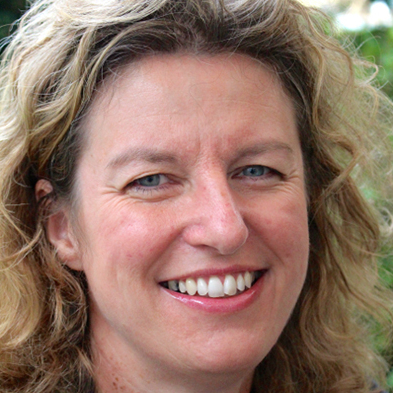
Reviewer
Consultant Medical Oncologist & Honorary Associate Professor
Date reviewed
Our cancer information meets the PIF TICK quality mark.
This means it is easy to use, up-to-date and based on the latest evidence. Learn more about how we produce our information.
The language we use
We want everyone affected by cancer to feel our information is written for them.
We want our information to be as clear as possible. To do this, we try to:
- use plain English
- explain medical words
- use short sentences
- use illustrations to explain text
- structure the information clearly
- make sure important points are clear.
We use gender-inclusive language and talk to our readers as ‘you’ so that everyone feels included. Where clinically necessary we use the terms ‘men’ and ‘women’ or ‘male’ and ‘female’. For example, we do so when talking about parts of the body or mentioning statistics or research about who is affected.
You can read more about how we produce our information here.