


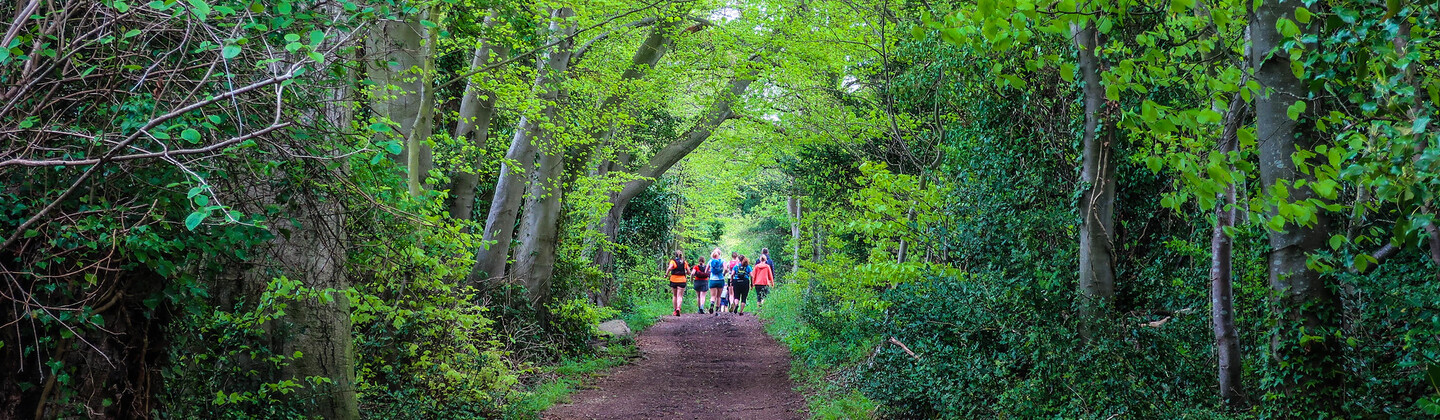
Advice for hiking in warm weather
Hiking in beautiful countryside in spring and summer is one of the most enjoyable outdoor activities you can do in the UK. Whether you travel near or far for your hike, there are countless walks you can do close to home. Read our tips for training and hiking in warmer weather.

Are you looking to hike for Macmillan? Find a Mighty Hike near you!
Hiking at any time of year brings its own unique challenges, and warmer weather is no exception. It’s worth the excitement it brings, but making the right preparations are vital to keeping safe and comfortable.
Think about distance and location
Consider the distance and type of terrain you’re planning to hike in warmer conditions. Woodland provides natural shade and cooler temperatures. You will use more energy if you're hiking up and down hills, and you’re much less likely to find shade if you are on a mountainside and above the treeline. This matters if you are hiking during the hottest part of the day.
Think about your distance in terms of your walking pace. Five hours of walking at 2mph is a 10-mile walk (not including time for rest stops).
What to take when hiking in warm weather
You will not want to carry too much on your back if you’re hiking in warmer weather, but some things are essential. By packing economically, you can find more space for the things you must take – including water. Here’s a list of some of the things we recommend you pack:
- Take a hat. A wide brimmed one is ideal, and if you have something to protect the back of your neck even better.
- Bite cream to deal with all the creepy crawlies in the long grass and woodlands.
- Plasters / anti blister plasters to deal with scrapes.
- Sun cream with a factor appropriate for your skin colour – it’s so important to mitigate risk of harmful UV rays. Read our information about sun safety and cancer treatment.
- Electrolytes to replace all the salt you will lose in your sweat. Some people sweat more than others and it's vital to replace what you have lost. You can find soluble electrolyte tablets in different flavours from most pharmacies.
- Clothing which allows for perspiration and skin to breath. Consider long, loose sleeved garments to protect your arms from direct sunlight and getting bitten by insects and brushing up against nettles.
Hydrate properly
Drinking a couple of pints of water before you hike (sometimes called pre-hydration) allows your body to be hydrated before you set off. This helps your muscles and brain to function properly, meaning you will feel less tired and have a lower risk of injury. While drinking a couple of pints of water before you hike might feel like a chore, have one final toilet stop before you leave to stay comfortable.
How much water you should drink while exercising is debated among athletes. We all sweat different amounts – and not all of this is down to fitness levels. It’s possible to sweat between 0.5 and 2.0 litres for every hour of intense exercise. But this depends on heat, humidity, your fitness levels and genetics. How much imbalance of sodium (salt) you have during or after exercise isn’t about how much you sweat, it’s about how much salt there is in your sweat. Taking on electrolytes in your food or drink helps to address the imbalance.
You can add a bit of science to this, by doing a sweat rate test. Although it’s only so accurate, it can give you an idea if you tend to sweat more or less than an average person during exercise.
It is vital to take plenty of water with you on a hike, particularly if you’re going to be in areas where you’re unlikely to be able to refill easily. Take a few litres of water with you, or whatever you can comfortably carry. Your bag will get lighter as you go along!
It’s better to drink room temperature water if you want to hydrate more efficiently. Your body works harder to absorb cold water into your system. Cold water is great for temporarily reducing your body temperature, but it doesn’t last long! Very cold or icy water can also cause people to have headaches or stomach cramps.
Don’t forget to rehydrate at the end of your hike too!
Need a water bottle or other gear for your hike?
Keeping safe
Check accurate hour by hour weather forecasts through BBC Weather or XC Weather before setting off. Do not hike if the official advice is to not do so – for example, if a heatwave is expected.
Consider avoiding the hottest part of the day when hiking if you can, especially if higher temperatures are forecast. For example, you could get up early and hike from dawn till late morning. Or hike from early evening until nightfall.
Share your walking route plans with friends or family so they know where you’re going and when you’re likely to finish. Ideally, hike with at least one other person so you can look out each other.
Keeping cool
How hot is too hot? There are many factors which influence this, including your fitness, age, and physiology. Any strenuous activity over 32 degrees Celsius (90 degrees Fahrenheit) can be potentially dangerous. But this is only a rough guide. There are many factors which can influence how comfortable you are hiking in hot weather.
Heat exhaustion can quickly become serious. It’s important to know the signs and act quickly. Learn about heat exhaustion and advice on how to tackle it on the NHS website.
Other warm weather tips
- Food.
Although warm weather might supress your appetite, your body still needs fuel. Make sure you have filling and nutritious snacks to keep you going. Take a packed lunch, particularly if you don’t expect to pass by any shops on your way. Small snacks such as nuts, oat bars and bananas are great for keeping you going through those last hard yards. - Take a paper map.
Digital maps are great, but don’t become too dependent on your phone for navigation. Like any technology, it can fail. If you’re entirely dependent on your mobile to find your way, then you risk having no plan B if your phone loses battery, phone signal, or becomes damaged. Navigating using paper maps is a great skill to have, and it’s also fun! - Consider a drop out location.
You might be planning to hike 10 miles but after 7 there’s somewhere you could end the walk. It could be a railway station, or on a bus route that will take you home. Having the flexibility to decide where you want to finish when you’re training will make the experience more enjoyable.
Take on a Mighty Hike!
Choose from 12 stunning locations across the UK and help make a difference in the lives of people living with cancer.
About the author