


Breast cancer
Choose a type
On this page
-
What is breast cancer?
-
Symptoms of breast cancer
-
Causes of breast cancer
-
Diagnosis of breast cancer
-
Staging and grading of breast cancer
-
Receptors for breast cancer
-
Treatment for breast cancer
-
After breast cancer treatment
-
Get this information in another language or format
-
About our information
-
How we can help
What is breast cancer?
Each year, about 55,000 women are diagnosed with breast cancer in the UK. It is more common in women over 50, but it can also affect younger women.
In the video below, Clinical Oncologist, Bernadette Lavery, talks you through what breast cancer is, the main types, risk factors, stages and common treatments available to you.
Breast cancer can be invasive or non-invasive (in-situ). When people talk about breast cancer, they usually mean invasive breast cancer. This is when cancer cells have spread outside the milk ducts or lobules in the breasts where they started, into surrounding breast tissue.
People who have breasts include women, transgender (trans) men and people assigned female at birth.
We have information about non-invasive breast cancer called ductal carcinoma in situ (DCIS). It is the earliest possible form of breast cancer and is usually found during routine breast screening.
Breast cancer in men is rare. We have more men with breast cancer.
If you are LGBTQ+ and living with cancer, we have further information and support.
Booklets and resources
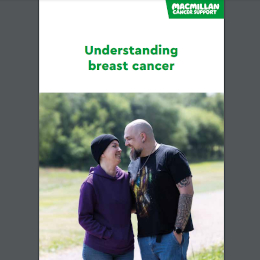

Types of breast cancer
There are different types of breast cancer. Knowing the type you have helps your doctors decide on the best treatment for you.
Related pages
Symptoms of breast cancer
A lump in the breast is the most common symptom of breast cancer. Most breast lumps are not cancer but it is always important to get checked by your doctor.
In the video below Bami talks about the importance of checking your breasts and knowing what is normal for you.
If you have any symptoms or notice anything else that is unusual for you. If breast cancer is diagnosed and treated early, treatment is more likely to be successful
Related pages
Causes of breast cancer
Doctors do not know the exact causes of breast cancer. But there are risk factors that can increase your chance of developing it.
Having one or more risk factors does not mean you will get breast cancer. Also, having no risk factors does not mean you will not develop it.
Breast cancer is likely to be caused by a combination of different risk factors, rather than just one.
Find out more about breast cancer risk factors.
Diagnosis of breast cancer
You usually start by seeing your GP. They will examine you and refer you to a breast clinic to see a specialist.
Or you may be referred through NHS breast screening programmes. This is usually if there are changes on your mammogram. Breast screening is a way of finding breast cancer at an early stage, when it is too small to be felt or seen.
At the breast clinic
At the clinic, you will see a specialist breast doctor or a nurse. You may also see a breast care nurse. They usually ask you if:
- you have had any other breast problems or health problems
- anyone in your family has had breast cancer or ovarian cancer
- you have been through the menopause
- you are taking any medicines – for example, hormone replacement therapy (HRT) or the contraceptive pill.
The doctor or nurse will examine your breast or chest area and the lymph nodes in your armpits and above your collarbone.
Tests
After your examination, your doctor or nurse will tell you what tests you need:
-
Mammogram
A mammogram is a low-dose x-ray of the breast.
-
Breast ultrasound
A breast ultrasound uses sound-waves to build up a picture of the breast tissue. You will also have an ultrasound scan of the lymph nodes in the armpit.
-
Breast biopsy
During a breast biopsy, the doctor removes a small piece of tissue or cells from the lump or abnormal area. The sample is checked for cancer cells. There are different ways of taking a breast biopsy.
Further tests after diagnosis
If the biopsy results show there are breast cancer cells, you will need further tests. You may have the following tests to check your general health:
-
Blood test
You have a blood test to check your general health and how well your kidneys and liver are working
-
Chest x-ray
You will have a chest x-ray to check your lungs and heart.
You may also have tests to find out more about the size of the cancer, or if it has spread anywhere else in the body – the stage of the cancer:
-
MRI (magnetic resonance imaging) scan
An MRI scan uses magnetism to build up detailed pictures of your body. It may be done to find out the size of the cancer and help decide on the operation you have.
-
CT scan
A CT scan takes a series of x-rays, which build up a three-dimensional picture of the inside of the body.
-
Bone scan
A bone scan shows up abnormal areas of bone. You have a small amount of a radioactive substance injected into a vein and wait for 2 to 3 hours to have the scan.
Related pages
Staging and grading of breast cancer
The results of your tests help your doctors find out more about the size and position of the cancer and whether it has spread. This is called staging.
A doctor decides the grade of the cancer by how the cancer cells look under the microscope. This gives an idea of how quickly the cancer might grow or spread.
Knowing the stage and grade helps your doctors plan the best treatment for you.
This information is about stage 1 to 3 breast cancer. If you have stage 4 breast cancer, you may find our information about secondary breast cancer helpful.
Receptors for breast cancer
Breast cancer cells may have receptors on the outside of the cells. Hormones, such as oestrogen, can attach to the receptors and encourage the cells to grow.
Some breast cancer cells have too much of a protein called human epidermal growth factor receptor 2 (HER2) on their surface.
A doctor called a pathologist tests cancer cells taken during a biopsy or surgery for receptors.
The result help you and your doctor decide on the most effective treatment for you.
-
Hormone receptors
Breast cancer that has receptors for oestrogen is called oestrogen receptor positive or ER positive breast cancer. The term ER is used because the American spelling of oestrogen is estrogen.
About 7 in 10 breast cancers in women (70%) are ER positive. Hormonal therapy works well for ER positive breast cancer. Breast cancer cells may also have receptors for the hormone progesterone (PR positive breast cancer). Your doctor will explain whether testing for progesterone receptors is useful in your situation. -
Receptors for HER2
Some breast cancer cells have too much of a protein called HER2 on the surface. This is called HER2 positive breast cancer. The extra HER2 protein encourages the cancer cells to divide and grow.
About 1 in 5 breast cancers (15 to 20%) are HER2 positive.
Specific targeted therapy drugs are used to treat HER2 positive breast cancer. They lock on to the HER2 protein. This helps stop the cells from dividing and growing. -
Triple negative breast cancer
Breast cancer that does not have receptors for either HER2 or the hormones oestrogen and progesterone is called triple negative breast cancer.
If you have triple negative breast cancer, you may be offered genetic testing. This is offered even if you do not have a family history of breast cancer. Most breast cancers caused by a change in the BRCA1 gene are triple negative. Your cancer doctor or breast care nurse can explain more about this to you.
If you are worried about breast cancer in your family, talk to your GP or breast specialist. They can refer you to a family history clinic or a genetics clinic.
Treatment for breast cancer
A team of specialists will meet to discuss the best possible treatment for you. This is called a multidisciplinary team (MDT).
Your doctor will explain the different treatment options and their side effects. They will also talk to you about the things you should consider when making treatment decisions.
The first treatment for breast cancer is often surgery to remove it. Your surgeon will talk to you about having one of these operations:
-
Breast-conserving surgery
Breast-conserving surgery is when the cancer and some surrounding normal breast tissue is removed.
-
Mastectomy
A mastectomy is when the whole breast is removed.
You will usually need some, or all, of the lymph nodes in your armpit removed.
You may be asked to decide if they want surgery to make a new breast shape (breast reconstruction) during the operation. Others may decide to have this done later.
We have more information about having an operation for breast cancer. You may also need support when coping with how your breast looks after surgery.
Treatment before surgery
You may have treatment, such as chemotherapy or hormonal therapy, before surgery. This is called neo-adjuvant treatment.
It may be given to shrink a larger cancer. Doctors may give you neo-adjuvant treatment so you can have breast-conserving surgery instead of a mastectomy. Or you have chemotherapy or targeted therapy before surgery. This is sometimes given for certain types of breast cancer or when the cancer is growing more quickly. It is given to reduce the risk of the cancer coming back.
Treatment after surgery
Your cancer doctor will usually offer you one or more of the following treatments after surgery to reduce the risk of breast cancer coming back:
-
Radiotherapy
Radiotherapy uses high-energy rays. You have it after breast conserving surgery and sometimes after a mastectomy.
-
Chemotherapy
Chemotherapy uses different drugs to treat breast cancer. You usually have it as an injection into a vein or sometimes as tablets.
-
Hormonal therapy
Hormonal therapy reduces the amount of oestrogen in the body. It can prevent breast cancer cells from growing in women who have ER positive breast cancer.
-
Targeted therapy
Targeted therapies interfere with the way cells grow. They can reduce the risk of HER2 breast cancer coming back.
-
Bisphosphonates
Bisphosphonates are drugs that help to protect the bones against some effects of breast cancer treatments. They can also help reduce the risk of breast cancer spreading to the bones.
We have more information in our treatment overview for breast cancer.
After breast cancer treatment
Follow-up
After treatment, you will have regular check-ups with your cancer doctor or regular contact with your breast care nurse.
You will have mammograms every year for 5 years on the other breast. If you have had breast-conserving surgery, you will have mammograms on both breasts. If you have had a double mastectomy, you will not be offered mammograms.
After 5 years, if you are 50 or over, you usually have mammograms through the NHS breast screening programmes. Younger women usually continue to have yearly mammograms after the first 5 years, until they reach 50.
Be aware of changes
Your treated breast will look and feel different. Your nurse can tell you what you to expect and what to check for. It is also important to be aware of what to look out for in your untreated breast. You can read more about symptoms of breast cancer.
You may get anxious between appointments. This is natural. It may help to get support from family, friends or a support organisation.
Macmillan is also here to support you. If you would like to talk, you can:
- Call the Macmillan Support Line for free on 0808 808 00 00.
- Chat to our specialists online.
- Visit our breast cancer forum to talk with people who have been affected by breast cancer, share your experience, and ask an expert your questions.
Lymphoedema
Lymphoedema is a swelling of the arm or hand on the side you had treatment. It sometimes happens after surgery or radiotherapy to the lymph nodes in the armpit. It usually develops slowly, months or years after treatment.
There are things you can do to help reduce your chances of developing lymphoedema. If you notice any swelling in your arm, hand or chest, always ask your doctor or nurse to check it.
If you notice any swelling in your arm, hand or chest, ask your doctor or nurse to check it. The earlier lymphoedema is diagnosed, the easier it is to manage and treat successfully.
Sex and fertility
Breast cancer treatments can have a direct effect on your sex life. In younger women some treatments may also affect being able to get pregnant (fertility).
For example, surgery may affect how you think and feel about your body (body image) which can affect your sex life. It can take time to adjust to changes to your body. If you have a partner, it can help to talk openly with them about your feelings. If any difficulties do not improve, ask your breast care nurse or doctor for advice.
If you have not been through menopause your doctor or nurse will advise you not to use contraception containing hormones. Women thinking of getting pregnant in the future will usually be advised to wait for 2 years.
If doctors think your treatment may affect your fertility, it may be possible to remove eggs from your ovaries before treatment starts. This may mean you can have fertility treatment in the future.
Fertility issues can hard to cope with. You may find it helpful to talk to a trained counsellor.
Early menopause
Some treatments can cause an early or temporary menopause. Hormonal therapy can cause side effects that are the same as menopausal symptoms.
Doctors do not recommend hormone replacement therapy (HRT). This is because it contains oestrogen. This could encourage breast cancer cells to grow. But there are different ways of managing menopausal symptoms.
Early menopause can increase the risk of bone thinning (osteoporosis). We have more information about looking after your bones, including helpful tips on keeping them healthy.
A number of organisations, including the Daisy Network, provide support to women going through the menopause.
Well-being and recovery
Even if you already have a healthy lifestyle, you may choose to make some positive lifestyle changes after treatment.
Making small changes to the way you live such as eating well and keeping active can improve your health and well-being and help your body recover.
Related pages
Get this information in another language or format
We are committed to making our website as accessible as possible, to make sure that everyone can use it.
We have information about breast cancer in over 16 languages, and in other formats including audiobooks, and easy read.
If we don't have what you are looking for, you can ask for information to be translated for free or provided in a format to suit you. Email us at cancerinformationteam@macmillan.org.uk or call us on 0808 808 00 00.
About our information
-
References
Below is a sample of the sources used in our breast cancer information. If you would like more information about the sources we use, please contact us at cancerinformationteam@macmillan.org.uk
ESMO. Early breast cancer clinical practice guidelines for diagnosis, treatment and follow-up. 2019, Vol 30, pp1192–1220. Available from: https://www.esmo.org/guidelines/guidelines-by-topic/breast-cancer/early-breast-cancer [accessed 2023].
National Institute for Health and Care Excellence (NICE). Early and locally advanced breast cancer: diagnosis and management. 2018. Updated 2023. Available from: https://www.nice.org.uk/guidance/ng101 [accessed 2023].
-
Reviewers
This information has been written, revised and edited by Macmillan Cancer Support’s Cancer Information Development team. It has been reviewed by expert medical and health professionals and people living with cancer. It has been approved by Dr Rebecca Roylance, Consultant Medical Oncologist and Professor Mike Dixon, Professor of Surgery and Consultant Breast Surgeon.
Our cancer information has been awarded the PIF TICK. Created by the Patient Information Forum, this quality mark shows we meet PIF’s 10 criteria for trustworthy health information.
The language we use
We want everyone affected by cancer to feel our information is written for them.
We want our information to be as clear as possible. To do this, we try to:
- use plain English
- explain medical words
- use short sentences
- use illustrations to explain text
- structure the information clearly
- make sure important points are clear.
We use gender-inclusive language and talk to our readers as ‘you’ so that everyone feels included. Where clinically necessary we use the terms ‘men’ and ‘women’ or ‘male’ and ‘female’. For example, we do so when talking about parts of the body or mentioning statistics or research about who is affected.
You can read more about how we produce our information here.
Date reviewed


Our cancer information meets the PIF TICK quality mark.
This means it is easy to use, up-to-date and based on the latest evidence. Learn more about how we produce our information.
How we can help