


Pain
People with cancer may have pain for a number of reasons. Different healthcare professionals can help you manage your pain in hospital or at home.
On this page
About cancer pain
Many people with cancer will have pain at some point in their illness. But for most people, pain can be managed using:
- different medicines
- non-drug treatments and complementary therapies
- things you can do yourself.
How much pain someone has is not related to how advanced the cancer is. Pain is very personal and everyone’s experience with pain is different. Two people with the same type of cancer may have different amounts of pain.
Pain does not always get worse as cancer develops. Some people may never have pain. But pain is more common in people with advanced cancer.
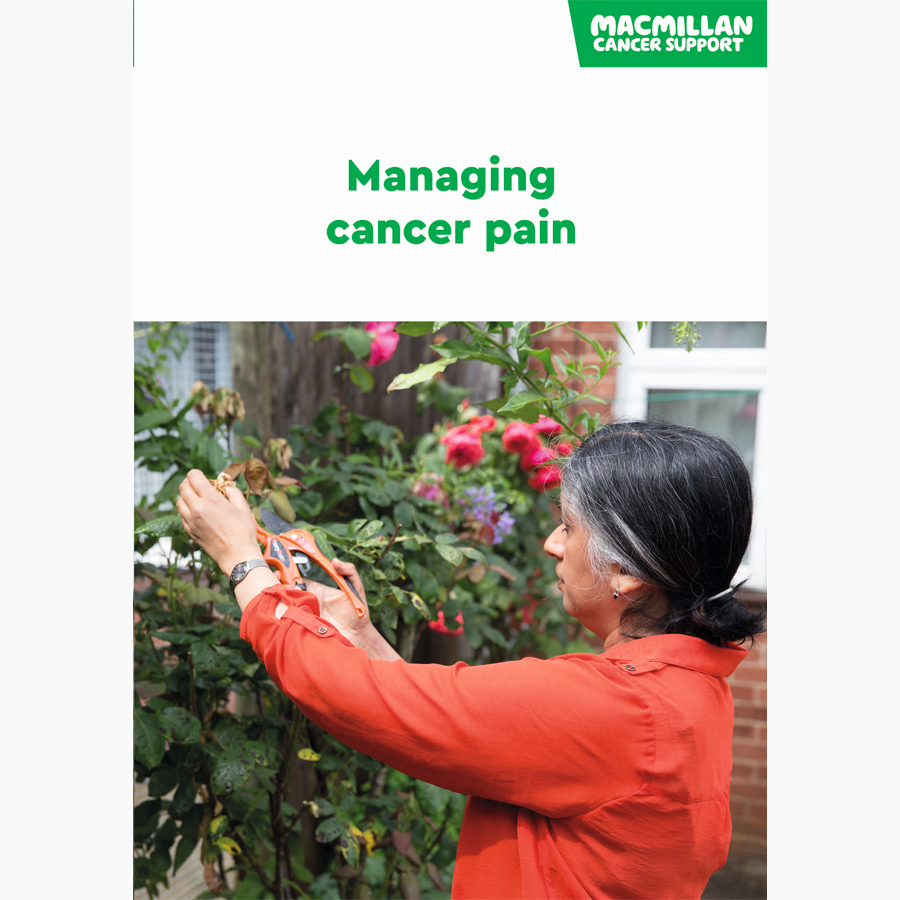
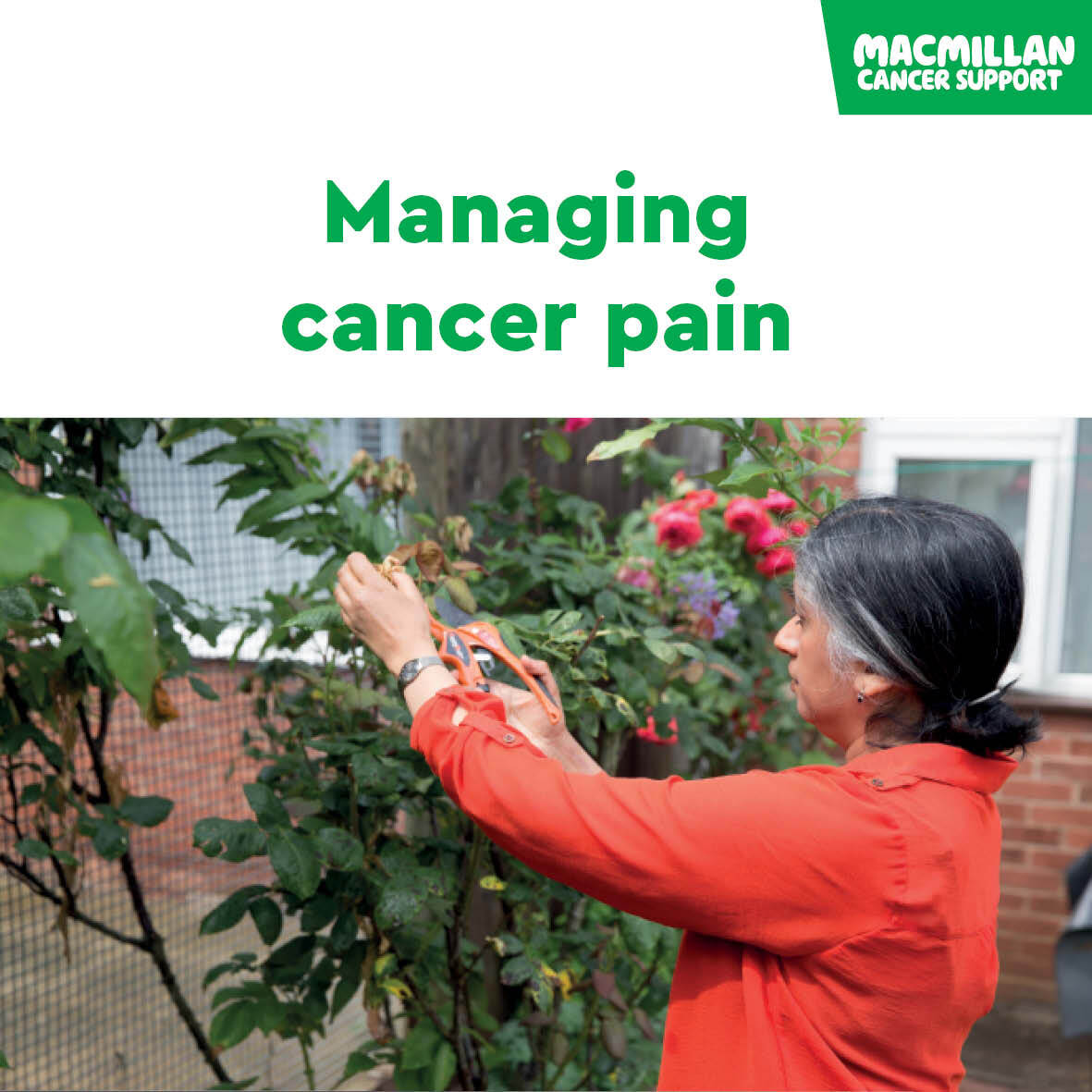
Booklets and resources
Talking to your healthcare team
It is important to tell your healthcare team if you have pain. Different health professionals may be involved in treating and controlling your pain. When pain is well managed, you can keep doing things that are important to you. You may feel more in control and able to enjoy life.
Treating pain involves finding the pain relief that works best for you. Pain control is more effective when it starts as soon as possible. It should continue for as long as you need it. Getting emotional support can also help to relieve pain.
Related pages
What causes cancer pain?
Cancer or cancer treatment
Pain is usually caused by an injury or illness in the body. Anyone with cancer may get pain. There are different reasons why people with cancer have pain.
Pain may be caused by:
- The cancer pressing on tissues or nerves, or on bone or an organ nearby.
- The cancer blocking a part of the body, for example the bowel, and stopping it working normally.
- Surgery causing nerve or tissue damage in the area.
- Radiotherapy damaging the skin or nerves in the treated area.
- Anti-cancer drugs causing side effects such as a sore mouth, nerve damage (peripheral neuropathy), or muscle or joint stiffness or pain.
- Late-effects of treatment – these are side effects that do not improve after treatment or start months or years later.
Pain that is due to treatment will often get better in the weeks after treatment has finished.
If you get a new ache or pain you may worry the cancer has come back, or is getting worse. This is a common worry. But a new pain doesn’t always mean the cancer has returned or got worse.
Always tell your doctor about any new pain or symptom, They can then check what is causing it and treat it.
Other health conditions
Some people have pain from other health conditions such as arthritis or diabetes. Your pain treatment plan should include other conditions that cause pain as well as cancer.
What can make pain feel worse?
Other physical things can affect how we feel pain. For example, pain may feel worse when we are tired.
Our home, social or work life can have a positive or negative effect on pain. For example, not being able to get out and see friends or go to work may make pain feel worse.
Emotions such as anxiety and depression can make pain feel worse. But people may also develop these problems if pain is not controlled.
Types of pain
Your doctors or nurses may talk about your pain in different ways. Pain can be described or grouped depending on:
- how long it lasts
- what makes it worse or better
- the parts of the body that are affected.
There are different types of pain.
-
Acute pain
This often starts suddenly and feels ‘sharp’. It usually lasts days or weeks. Acute pain usually stops when the cause of the pain has been treated, or tissue in the area has healed.
Acute pain can be caused by things such as:
- an operation
- a broken bone
- an infection.
If acute pain is not relieved, it may become chronic pain.
-
Chronic pain
Chronic pain lasts for longer, usually for 3 months or more. It may be caused by the cancer. Sometimes it can be due to an ongoing side effect of cancer treatment or a late effect of cancer treatments. It is sometimes called persistent pain.
-
Breakthrough pain
If you are taking regular painkillers for chronic pain, you may still feel sudden pain. This is called breakthrough pain. It is common and usually feels like the chronic pain, only worse.
Breakthrough pain can last for a short time. It may be treated with a short-acting painkiller. People who take long-acting painkillers will often use short-acting painkillers when they need to. Your doctors may need to increase the dose of long-acting painkillers if their effect is wearing off too soon. -
Bone pain
Cancer that has spread to the bones (secondary bone cancer) can cause pain. The pain can feel different to different people but may be a dull ache that does not go away. It is often worse when you move.
-
Soft tissue pain
This is when there is damage to, or pressure on, your organs or muscles. For example, when the liver is swollen it causes pain and discomfort in the tummy (abdomen).
-
Nerve pain
This is caused by pressure on the nerves or by nerve damage. This may be due to the cancer or cancer treatments. You may have nerve pain at some times but not others. The area may feel numb or sensitive. The pain may be:
- burning or tingling
- stabbing or shooting
- like pricking, tingling or numbness on the skin.
Your doctor can prescribe drugs and other treatments to treat nerve pain.
-
Referred pain
An injury or problem in one part of the body may sometimes cause a person to feel pain in a different part of the body.
For example, someone with a swollen liver may feel pain in their right shoulder. This is because pain messages from the liver travel along the same nerves as messages from the skin of the right shoulder. The brain confuses them and thinks the pain is coming from a different place.
-
Phantom pain
Some people experience pain in a part of the body that has been removed. For example, they may feel pain after having a limb removed (amputated), or a breast is removed (mastectomy).
Phantom pain can cause different pain sensations which are very real to the people who experience it. It can improve with time and may eventually go away. It may be complicated to treat and is usually managed by expert doctors at a pain clinic.
How to talk about your pain
It is important to tell your doctor or nurse if you have pain and how it is affecting you. Relieving pain is an important part of your treatment and care.
Some people may not want to talk about the pain they are having. They may feel they are complaining and should accept having pain. Or they may worry that the pain means the cancer has got worse. But there are many reasons pain happens. Controlling pain will help you do the things you want to do and stay more positive and active.
You can play an active role in managing your pain by:
- being open with your healthcare team about the pain
- describing the pain, where it is and how it affects your life
- telling your healthcare team if the pain gets worse or lessens
- talking to your healthcare team about any worries you have about the different ways the pain can be managed.
Having a pain assessment
Your doctor or nurse will start by asking you different questions about the pain and how it is affecting you. This is called a pain assessment. A pain assessment will help your doctors to give you the best painkillers or treatment.
Your doctors may ask you to describe your pain as:
- mild
- moderate
- severe.
There are different scales that can be used to indicate how bad the pain is. Some people use a number scale.
Your doctor will also usually examine you. If they need to check the cause of the pain, they may arrange some tests for you.
All this information helps your team, you and people caring for you to plan the best way to manage the pain.
Keeping a pain diary
Describing the pain helps your doctors and nurses understand the type of pain you have. This is important to help them find the best treatment for you.
Sometimes keeping a record of the pain can be helpful and show a pattern. It helps to include information such as:
- the date and time you have pain
- how long it lasts
- where it starts
- if it is in just one area of the body, or more than one
- anything you were doing that has made the pain worse
- anything that helps make the pain better.
Your healthcare team may give you a pain chart to use. Or you can use our pain diary. It has a diagram of the body so you can mark where you feel pain. And it gives examples of words that you may find helpful when describing your pain. This information can help you talk about the pain with your doctor or nurse.
Who can help when you have pain
Different health and social care professionals may be involved in managing your pain. It is important that you and the people around you know who to contact if you have problems.
- If you are at home, your GP will usually be your first point of contact.
- If you are in hospital, it is important to talk to the nurses and doctors looking after you.
- If you are having cancer treatment, you may have contact numbers for your cancer nurse or doctor. You can contact them directly if you have problems.
You may have a specialist symptom control nurse who visits you at home. Or you may attend a pain clinic. If you are not sure who you should contact, ask your GP.
The section below describes the different people you can speak to about your pain:
-
GP
When you are at home, your GP can talk to you about medicines or treatments to help control pain. They can prescribe painkillers and check with you to see how well they are working. They can increase the dose of the painkiller or change you to a different drug if needed. Your GP can also contact your cancer doctor or nurse for further advice.
Your GP can arrange for a district nurse to visit. They can also refer you to other health professionals such as a specialist palliative care team or a pain team.
-
Cancer doctor or nurse
If you see your cancer doctor (oncologist) or nurse regularly, it is important to tell them about any pain you have. They can explain what is causing the pain and how to treat or control it. Some people may need tests to find out the cause of the pain.
Your cancer doctor or nurse may ask you to contact them if you have pain, or if it gets worse. It is important to follow their advice.
-
District nurse
A district nurse can visit you at home to help you manage your pain. They can check that your pain medicines and treatment are working. They can advise you about:
- taking your medicines
- different ways of managing the pain
- getting equipment that helps make you more comfortable.
-
Physiotherapist
Seeing a physiotherapist can be helpful in certain situations. They may be able to show you different ways of moving to help manage the pain. If pain is affecting how far you can walk, they can suggest ways to make getting around easier. For example, they can arrange for you to have a wheelchair.
-
Occupational therapist
An occupational therapist can help provide equipment to make you more comfortable. For example, they may suggest special cushions or mattresses. If you have difficulty moving around, they can arrange handrails and ramps for your home to help you move more easily. They can also suggest ways to improve your energy levels and be more active.
-
Pharmacist
A pharmacist can check your prescription, give you advice about your medicines and tell you how they may affect you. Tell your pharmacist if you are buying any over-the-counter medicines. They can tell you whether it is safe to take them with your prescribed painkillers and other drugs.
-
Specialist palliative care team
Specialist palliative care doctors and nurses are experts in managing symptoms such as pain. They also provide emotional support. Specialist palliative care teams work in hospitals, in the community and in hospices. The team may also include a physiotherapist, an occupational therapist and a counsellor or psychologist.
-
Counsellor or psychologist
Some people find it helpful to see a counsellor or psychologist. This is a person who gives advice about managing feelings and behaviours. They can help you understand things that may be causing you pain or making it worse. They can help you find ways of coping with the pain and dealing with any worries or emotions that may be making the pain worse.
-
Pain team
Many hospitals have specialist pain teams. The team includes doctors, nurses and usually an anaesthetist. Some teams also have a psychologist.
Your GP, cancer doctor or specialist palliative care team can refer you to a pain team. This can be very useful if your pain is difficult to control or you need a nerve block or other specialist treatment.
-
Anaesthetist
Some anaesthetists are also experts in pain management and help treat cancer pain. They may be part of a pain team. They can give you specialist treatments, such as a nerve block.
-
Hospices
Sometimes it can help to spend some time in a hospice having your pain, symptoms and other problems treated. This may be for 1 to 2 weeks. Your community specialist palliative care team or GP can arrange this for you.
In the hospice, the doctors and nurses can adjust your medicines to get better control of your pain. They can often do this more quickly than if you were at home. Once your pain is controlled, you can go home again.
Painkillers and treatments to manage pain
Painkillers
Medicines used to treat pain are called analgesics.
There are lots of different painkillers. They treat different levels and types of pain.
You may be given other drugs as well as painkillers to help relieve pain. These include drugs to treat bone pain called bisphosphonates. You may also be given steroids to reduce swelling.
Your doctor or nurse will regularly assess your pain to make sure you are taking the right combination of medicines for you.
We have more information about types of painkillers and ways they are used.
Treatments to manage cancer pain
As well as being on the right painkillers, there are lots of other things that can help manage your pain. These include surgery and medical treatments.
- Surgery
Some people may have an operation to remove part, or all, of a tumour. This can help to relieve pressure on organs or a nerve. Surgery can be used to repair damaged bones. These treatments - Radiotherapy
Radiotherapy is sometimes used to shrink a tumour, and can help reduce pain and other symptoms. It can be used to control pain in the bones. This is known as palliative radiotherapy.
Sometimes, a special type of radiotherapy called radioisotope therapy may be used to help control bone pain. - Chemotherapy and targeted therapies
Chemotherapy and targeted therapies are drug treatments that can shrink tumours, which can often help reduce pain. - Hormonal therapy
Hormonal therapy can be used to reduce pain for some types of cancer, such as breast and prostate cancer. - Nerve blocks
Nerve blocks may help relieve pain by preventing pain messages getting to the brain. Nerves can be blocked using drugs such as local anaesthetics or other chemicals. Nerve blocks are usually short-acting. They are usually carried out by a pain specialist. - Other treatments for bone pain
Radiofrequency ablation (RFA) uses heat to destroy cancer cells. It can help to relieve pain when radiotherapy is not working. It is usually only used to treat small secondary bone tumours.
Non-drug treatments and complementary therapies to help with pain
Some people find non-drug treatments and complementary therapies helpful in managing pain. They can be used with painkillers, or sometimes on their own.
Some treatments, such as talking therapies, aim to relax and destress your mind and body. Some people use physical therapies to help relieve pain.
We have more information about pain management without drugs.
Practical and emotional support
Pain may be harder to deal with if you are concerned about other treatment you are having, or things such as money and work. Pain can also be harder to manage if you are dealing with difficult emotions.
Talk to your doctors and nurses about any concerns you have about treatment and side effects. You can also talk to one of our cancer support specialists on the Macmillan Support Line on 0800 808 0000.
There are some organisations who can provide help and support with practical tasks. There are also organisations that can provide emotional support and offer advice and information about pain.
We have more information about cancer pain and practical and emotional support.
About our information
-
References
Below is a sample of the sources used in our cancer pain information. If you would like more information about the sources we use, please contact us at cancerinformationteam@macmillan.org.uk
Fallon M, Giusti R, Aielli F, et al. Management of Cancer Pain in Adult Patients: ESMO Clinical Practice Guidelines, Annals of Oncology, 2018; 29 (Suppl 4): 166–191. Available from: https://www.esmo.org/guidelines/esmo-clinical-practice-guideline-cancer-pain (accessed Jan 2022)
Pain and symptom control guidelines for adults; Greater Manchester and Eastern Cheshire Strategic Clinical Networks 2019. Available from: www.england.nhs.uk/north‑west/wp‑content/uploads/sites/48/2020/01/Palliative‑Care‑Pain‑and‑Symptom‑Control‑Guidelines.pdf (accessed Jan 2022)
Palliative cancer care – pain. National Institute for Health and Care Excellence March 2021. Available from: cks.nice.org.uk/topics/palliative‑cancer‑care‑pain (accessed Jan 2022)
Scottish Palliative Care Guidelines. Available from: www.palliativecareguidelines.scot.nhs.uk (accessed Jan 2022)
-
Reviewers
This information has been written, revised and edited by Macmillan Cancer Support’s Cancer Information Development team. It has been reviewed by expert medical professionals and people living with cancer. It has been approved by our Senior Medical Editor, Dr Ollie Minton, Macmillan Consultant in Palliative Medicine.
Our cancer information has been awarded the PIF TICK. Created by the Patient Information Forum, this quality mark shows we meet PIF’s 10 criteria for trustworthy health information.
Date reviewed
This content is currently being reviewed. New information will be coming soon.


Our cancer information meets the PIF TICK quality mark.
This means it is easy to use, up-to-date and based on the latest evidence. Learn more about how we produce our information.