


About complementary therapies
On this page
-
What are conventional medical treatments?
-
What does CAM stand for?
-
What are complementary therapies?
-
What are alternative therapies?
-
Types of complementary therapy
-
Advantages of complementary therapies
-
Choosing a complementary therapy
-
Cost of complementary therapies
-
Finding information about complementary therapies
-
Choosing a complementary therapist
-
How we can help
What are conventional medical treatments?
Conventional medical treatments are the medical treatments doctors use to treat people with cancer. They include:
These treatments cure many cancers. Even when they cannot cure a cancer, they can often shrink the cancer. This can help people live for longer or reduce their symptoms.
Conventional medical treatments for cancer are scientifically tested and researched using clinical trials. This means we know how safe and effective they are, and whether they have side effects. This is called evidence-based medicine.
In this information we also call conventional medical treatments ‘cancer treatments’.
What does CAM stand for?
What are complementary therapies?
Complementary therapies are treatments that people may use with, or as well as, conventional medical treatments. Complementary therapies should not claim that they can treat or cure cancer. People may use complementary therapies to help them feel better, physically or emotionally. Or they may use them to help manage cancer symptoms or the side effects of cancer treatments.
There are many different complementary therapies.
Some of these have been scientifically tested to see how safe and effective they are, and whether they have side effects. For some therapies, there is good evidence for their use in certain situations. But there are other therapies where it is not so clear. This is because:
- studies may be small
- studies can give different results
- other factors may be helping with the side effects or symptoms of cancer - this may be instead of, or as well as, the complementary therapy.
Complementary therapies should be used with conventional medical treatments.
In a hospital, complementary therapists may work closely with other professionals to support a person’s well-being while they are having conventional treatments.
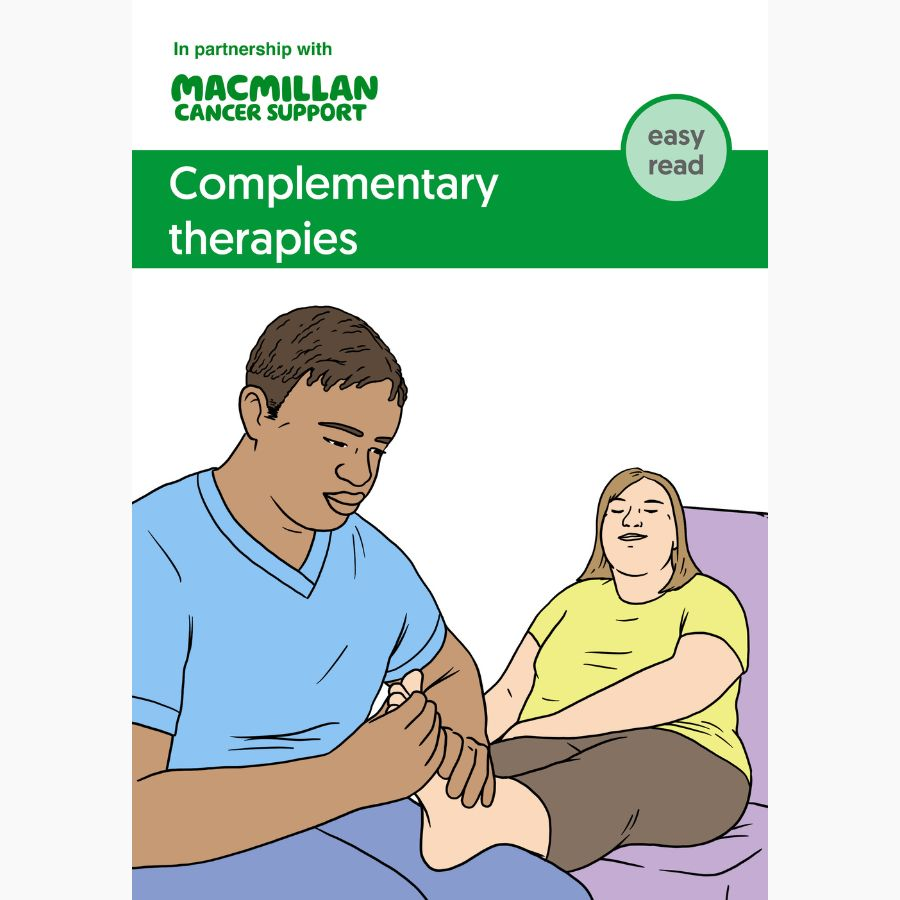
Booklets and resources


What are alternative therapies?
Alternative therapies are treatments that people use instead of conventional medical treatments. Some alternative therapies claim to treat, or even cure, cancer.
Most alternative therapies are not scientifically tested and researched like conventional medical treatments. Some have been tested. But no alternative therapy has been proven to cure cancer or slow its growth. Some may even be harmful.
We do not recommend using an alternative therapy instead of conventional cancer treatment. Doing this could reduce the chances of curing a cancer or living longer with cancer.
Types of complementary therapy
There are many types of complementary therapy.
Therapies can be grouped in different ways. Some may fit into more than one group. The main groups are:
- mind-body therapies
- massage and other touch therapies
- acupuncture
- homeopathy
- therapies using herb and plants
- therapies using supplements or diet.
Many people also find talking, counselling and support groups a good source of support.
Advantages of complementary therapies
There are many reasons why people use complementary therapies. Some people find it helpful to try different therapies to help them feel better while they are having cancer treatment.
Some people find that complementary therapies may help them:
- cope with the stress of cancer and its treatments
- relax and feel better emotionally
- sleep better
- cope with some cancer symptoms
- cope with some side effects of cancer treatments
- feel more in control.
For some people, using complementary therapies can be a positive way of looking after themselves and improving their quality of life.
Some people build a strong relationship with their complementary therapist, which can be another benefit.
You can do some complementary therapies as part of a group. This can be a good way to meet other people with similar experiences, in a positive setting.
Choosing a complementary therapy
When choosing a complementary therapy, it can help to think about:
- what you would like
- how it might benefit you
- where the treatment is available
- any safety issues
- how much it costs
- where you can get more information.
If you would like to know what complementary therapies other people have found helpful, you could try the following:
- Ask your healthcare team about support groups in your area.
- Join our Online Community to read about people’s experiences.
We cannot advise you whether you should use a complementary therapy, or which therapy to use.
Tips for choosing a complementary therapy
People use complementary therapies for different reasons. To help you decide what is best for you, it may help to think about what you want from the complementary therapy. You may want to:
- feel more relaxed
- get help with managing symptoms or side effects
- get help with difficult emotions
- feel generally better
- make a positive lifestyle change.
You may also want to think about:
- how much you have to pay, if anything
- if you want a one-off treatment, or to do something regularly.
Safety
Doctors are usually understanding if their patients wish to use complementary therapies. If you plan to use a complementary therapy, it is important to talk to your doctor or specialist nurse. This is because some therapies may not be suitable if you are having certain cancer treatments.
For example, some herbal medicines, supplements and other products can affect how some cancer treatments work. Just because they are ‘natural’, this does not mean that they cannot interact with a cancer treatment.
Ask your healthcare team whether the treatment you would like could:
- affect your cancer treatment
- make your cancer treatment less effective
- make side effects of your cancer treatment worse.
If you already use a complementary therapy, make sure you tell your cancer doctor about it before you start cancer treatment. This is especially important if you are taking herbs, pills or medicines.
Before using a complementary therapy, it is also important to tell the complementary therapist that you have cancer. This could affect the treatment or advice they give you. Some therapists may not treat someone with cancer if they have not had training to help them work safely with you.
It is important not to use a therapist who claims to treat, prevent or cure cancer with complementary or alternative therapies. No responsible therapist would do this. There is no medical evidence to support these claims.
Cost of complementary therapies
Some complementary therapies are free through the NHS, some cancer information and support centres or large cancer charities. Complementary therapies may be available at your hospital, hospice or GP surgery. You can ask your cancer doctor or specialist nurse about this. Some cancer support groups offer therapies free of charge, or at a reduced cost.
Complementary therapies can be expensive. The costs can vary a lot, so check how much you need to pay before you start treatment, especially if you are having a course of treatment. If you have any form of complementary medicine, you may need to pay for this as well as your time with the therapist.
Some therapists may offer a reduced cost based on your ability to pay.
Finding information about complementary therapies
Make sure you have the information you need about the complementary therapy you are interested in. Talk about it with your cancer doctor or specialist nurse. You can also contact an organisation for people giving the therapy. There are organisations for different complementary therapies.
You could ask to have a meeting with the complementary therapist. They can explain how they think the therapy could help you. You might find it helpful to take a family member or friend with you. It can also help to write down any questions that you want to ask before you go. After you have met the therapist, take time to decide whether you want to go ahead with the therapy.
Call the Macmillan Support Line on 0808 808 00 00 for more information about complementary and alternative therapies.
You can also get information from library books and online. But be careful when choosing what to read or believe on the internet. Some books and websites make claims that are not supported by evidence. Others may be selling products to make money.
Choosing a complementary therapist
When you choose a complementary therapist, it is best to find someone who is on a register. This will help make sure the person you choose meets certain standards.
There are 2 types of register:
-
Accredited register
Membership of these is voluntary. There are many accredited registers for different types of complementary therapies. A therapist on an accredited register may have a quality mark. This may be displayed on a certificate of qualification, or in their place of work.
-
Statutory register
These are regulated by UK law. Health professionals such as nurses, doctors and pharmacists must be on the register for their profession to be able to practice.
People on both of these types of register should meet national standards of practice for issues such as:
- training
- safety
- confidentiality
- complaints.
Everyone on the register must follow the register’s code of conduct. If you have any concerns about the conduct of a therapist, you can contact their register. They should deal with complaints fairly and as quickly as possible.
The Complementary and Natural Healthcare Council (CNHC) has a voluntary register of people working in some complementary therapies in the UK.
Organisations for different therapies may also have registers of therapists in that particular treatment.
The Professional Standards Authority also accredits registers for many complementary therapy organisations.
Tips for choosing a therapist
Before choosing a private therapist, check what services your hospital provides. Remember that some health professionals are trained in complementary therapies.
When choosing a complementary therapist:
- always use a qualified therapist who is on a statutory or accredited register
- ask how many years of training they have had and how long they have been practising
- ask what training and experience they have had with complementary therapies and cancer
- ask if they have indemnity insurance, in case of harm from complementary therapy side effects
- ask how much they charge
- be careful not to be misled by false promises – no trustworthy therapist would claim to be able to treat or cure cancer.
You should feel comfortable with the therapist. Before you have the therapy, they may ask you about your health, diet and lifestyle. This will help them to decide if they need to adapt the treatment to meet your needs. They may ask you to get permission from your cancer doctor before starting treatment.
If you ever feel uncomfortable or unhappy with your therapist, you have the right to stop your treatment at any time.
About our information
This information has been written, revised and edited by Macmillan Cancer Support’s Cancer Information Development team. It has been reviewed by expert medical and health professionals and people living with cancer.
-
References
Below is a sample of the sources used in our complementary therapies information. If you would like more information about the sources we use, please contact us at informationproductionteam@macmillan.org.uk
Balneaves LG, Watling CZ, Hayward EN, Ross B, Taylor-Brown J, Porcino A, Truant TLO. Addressing Complementary and Alternative Medicine Use Among Individuals With Cancer: An Integrative Review and Clinical Practice Guideline. J Natl Cancer Inst. 2022 Jan 11;114(1):25-37. Available from: doi: 10.1093/jnci/djab048. PMID: 33769512; PMCID: PMC8755493. [Accessed September 2023].
Integrative Medicine [Internet]. Memorial Sloan Kettering Cancer Center. 2020. Available from: www.mskcc.org/cancer-care/diagnosis-treatment/symptom-management/integrative-medicine [accessed September 2023].
NICE. Guidance on Cancer Services Improving Supportive and Palliative Care for Adults with Cancer. The Manual National Institute for Clinical Excellence [Internet]. 2019. Available from: www.nice.org.uk/guidance/csg4/resources/improving-supportive-and-palliative-care-for-adults-with-cancer-pdf-773375005 [accessed September 2023].
Overview of complementary, alternative, and integrative medicine practices in oncology care, and potential risks and harm. UpToDate. Available from: www.uptodate.com/contents/overview-of-complementary-alternative-and-integrative-medicine-practices-in-oncology-care-and-potential-risks-and-harm?source=mostViewed_widget [accessed September 2023].

Date reviewed


Our cancer information meets the PIF TICK quality mark.
This means it is easy to use, up-to-date and based on the latest evidence. Learn more about how we produce our information.
The language we use
We want everyone affected by cancer to feel our information is written for them.
We want our information to be as clear as possible. To do this, we try to:
- use plain English
- explain medical words
- use short sentences
- use illustrations to explain text
- structure the information clearly
- make sure important points are clear.
We use gender-inclusive language and talk to our readers as ‘you’ so that everyone feels included. Where clinically necessary we use the terms ‘men’ and ‘women’ or ‘male’ and ‘female’. For example, we do so when talking about parts of the body or mentioning statistics or research about who is affected.
You can read more about how we produce our information here.