Browser does not support script.
Skip to main content
search here
Find out how we produce our information|
It's important to think about how any practical issues may be affecting the relationship between you and your partner.
Cancer and its treatment can affect your ability to work|. Some people can carry on working, either full-time or part-time, during treatment, but you may find that you want or need to give up work.
When either you or your partner has been diagnosed with cancer, you may want to give up work in order to cope with the cancer and its treatment, or to look after your partner. If work has been the major focus of your life it can be difficult for you and your partner to adjust to one of you not working. If you are both at home all day, it will take time to get used to being with each other all of the time.
You may find that you can’t continue working because of the cancer or the treatment. Or you may have to work shorter hours or different days. Cancer is covered by the Equality Act 2010 in England, Scotland and Wales or the Disability Discrimination Act in Northern Ireland. This means that an employer can’t discriminate against anyone who has cancer or has had cancer in the past. Employers have a duty to make reasonable adjustments to workplaces to make sure people with a disability aren’t at a disadvantage to other people. If you’re caring for someone with cancer|, you have the right to request flexible working.
A diagnosis of cancer can affect your finances and may cause money problems. This can put a strain on your relationship and can be hard to cope with, especially when you are already coping with the cancer and its effects. You may find that you need to carry on working as much as possible for financial reasons.
Many people can give you advice on your financial situation. Getting some advice early may save you a lot of time and energy. You can call theMacmillan Support Line| to speak to a benefits adviser.
You can speak to the social worker at the hospital, your local Jobcentre office and your local Citizens Advice. |It may help to contact an independent financial adviser, as they can assess your individual situation and recommend the best course of action.
Cancer and its treatments often change a person’s role in their family. During and after treatment, you may not have the physical energy to do the jobs around the house that you did before. Your partner may feel that they have to take on more or adjust to a new role within the household.
Relatives, friends and neighbours may lend a hand, and sometimes this can leave you with a sense of not being needed or not having control over your life. But it’s helpful to remember that for some people, fulfilling their role as a mum, dad or breadwinner is an important part of their self-esteem.
If you’re the partner of someone with cancer, you may feel tired from having to do more and may even feel resentful at times. This is a normal reaction. You are going through your own experience of the cancer even though it is not you who’s been diagnosed.
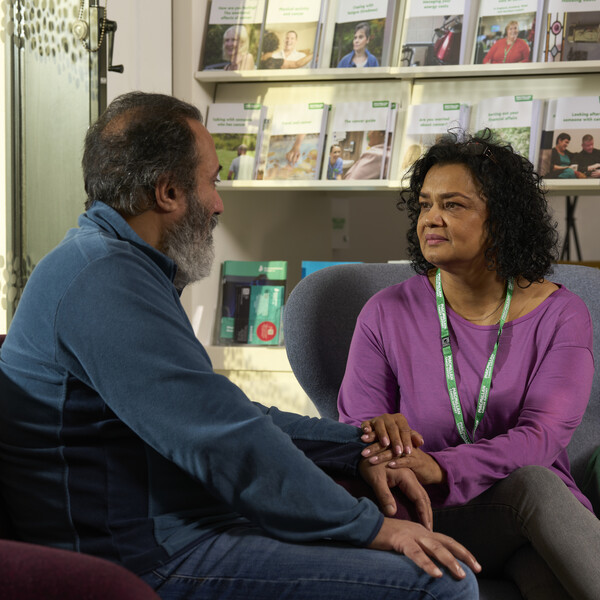
It’s important to talk| to one another about how you feel and what you think is important. Together you can plan what tasks need to take priority and what help you may need.
For answers, support or just a chat, call the Macmillan Support Line free (Monday to Friday, 9am-8pm)
If you have any questions about cancer, need support or just want someone to talk to, ask Macmillan.