Browser does not support script.
Skip to main content
search here
Find out how we produce our information|
This section is for you if you have cancer and it’s likely that you may die within the next few months. You may also find it helpful if you have a relative or close friend who is terminally ill with cancer.
You may find reading about these issues for the first time difficult and distressing. So you may want to wait to read this information when you are somewhere private and know that you will not be disturbed.
Hearing the news that your cancer can’t be cured is always very difficult. It can bring up many feelings and emotions.
You may be aware that your cancer is progressing, but you might find it hard to believe what you’re hearing, or feel that it’s like a nightmare and that you’ll wake up and find it’s not true. The initial shock and disbelief may be replaced after a few hours or days by powerful and often overwhelming emotions. These may make it difficult for you to think clearly. You’re likely to need some time on your own or with your partner, a relative or close friend to deal with the news.
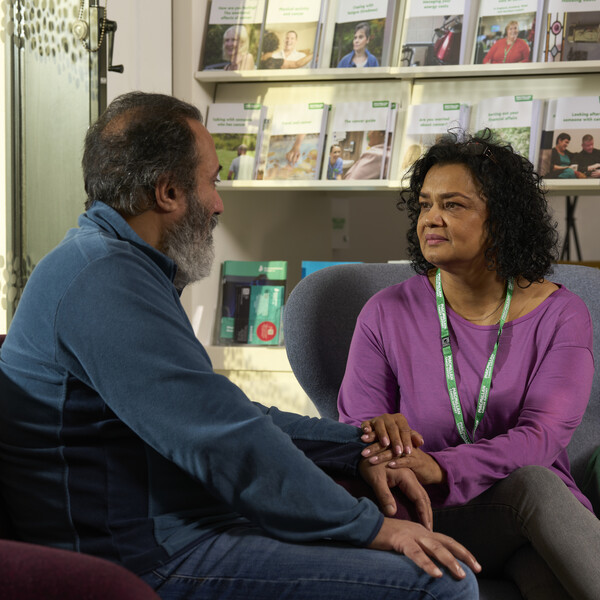
Some people find it easier to talk to someone outside their family. If you think this would be helpful you can contact our cancer support specialists - they will be able to talk things through with you.
‘Sometimes I feel so angry - not with anyone in particular, just with the situation we are in. I keep thinking, why me?’
You may feel very angry - perhaps because you feel more could have been done to prevent your cancer. You may also feel angry with the doctors or nurses for telling you the bad news.
You may feel that it’s very unfair that this is happening to you. You may fear what the future will bring. You may also find yourself tearful and depressed, and unsure of how to cope with all the feelings and emotions you have. Some people are stunned and resentful to see life going on as normal around them when their own world is in such turmoil.
Most people have some, or all, of these emotions, but as time passes people generally find that the distress gets less frequent and intense.
Dying with cancer doesn’t mean that you have less need for love, companionship, friendship and fun. For many people, partners, family and friends become even more important and are a vital source of support and reassurance at this difficult time.
However, people who have cancer sometimes feel that a lot of responsibility rests with them. They may feel that they are the one who has to be strong. They have to start the difficult conversations and help other people to face the illness, even though they are the one who is ill.
If you’re unwell or feeling low it can be very difficult to do this. But if you’re able to talk openly about how you feel, your family and friends will probably be relieved and able to respond. They will learn how best they can help you and what you’d like from them.
You can choose the people who you want to talk to and who you feel will be able to support you. You only need to share as much as you want to, and at a time when you feel ready.
We have information on talking about your cancer|, which you may find helpful.
Serious illness can strain relationships and many people find it difficult to know what to say. You may find that people react in unexpected ways. Some may try to deny the seriousness of the situation by being unrealistically cheerful, and this can make it difficult for you to be able to say exactly how you feel. Other people may try to avoid you, rather than risk saying the wrong thing. Some people may avoid talking about your illness completely, while others may appear to be unsympathetic.
Your partner, children or close friends may irritate you by being overprotective or trying to ‘wrap you in cotton wool’. Sometimes, close family and lifelong friends may feel like strangers, just at the time when you need them most.
Remember that everyone will be shocked by the news. Your family and friends are also dealing with powerful emotions, and may need help and support to deal with them. People’s initial reactions do not necessarily reflect their true feelings. Your family and friends may be struggling to say how they really feel.
However, this can be a time when your relationships improve as you and the people you’re close to realise what’s really important. You may become much closer to some people.
Your illness can also be an opportunity for you and others to get back in touch, or resolve past arguments or bad feelings.
Sometimes partners try to protect each other from the truth by denying it, even though both are aware of what is really happening. Talking openly with each other about your feelings can help support both of you through sadness, anxiety and uncertainty. You may find that your relationship becomes stronger as you face the challenge of your illness together.
It’s important to keep your relationship as normal as possible. So if you’ve always been close and talked a lot, continue to do this. When words fail you, or don’t seem enough, a hug or holding hands can be very comforting. If you’ve always argued a lot, don’t feel that you must try to change this. There are bound to be times when you don’t get on well together. Just when you need each other most, the stresses of an uncertain future or feeling tired or unwell can drive you into arguments.
Anger needs time to settle, so giving yourselves short breaks from each other may help. This can help you think more calmly and recharge your emotional energy. Sometimes talking to someone else can help - a relative or friend, someone outside your own close circle such as a counsellor, or someone from a specialist support organisation|. If you think this might help, you may want to discuss it with your partner first so that they don’t feel excluded or that they have failed you.
There’s no medical reason to stop having sex because you have cancer. Cancer can’t be passed on through sex. In fact, physical intimacy can create warmth, comfort and a sense of well-being which can be very supportive at this time. Gentle touching, holding hands or affectionate kisses can also show how much you care for someone even if you don’t feel like making love.
There’s no easy way to talk to children or grandchildren about your cancer and the fact that you are dying. It’s often best to be as open with them as you can, and give information appropriate to their age.
Children can be very aware of things happening around them. Even if you don’t say anything, they will usually sense that something is wrong. They may become frightened and their fears can sometimes be worse than the reality. If they are then told that everything is fine, they may find it hard to trust you.
Children can feel isolated and excluded, and unable to tell you how upset they are. They may feel that they are somehow to blame for your illness. If you can discuss your cancer with them, you can reassure them that it‘s not their fault.
How and what you choose to tell your children will depend on their age and how much they can understand. For example, children younger than about eight or nine find it difficult to understand that death is permanent. However, children can often discuss death more openly than adults.
It may help to tell children who they can talk to about your cancer. It’s useful if they know that they can share their feelings and get support from other trusted adults, such as grandparents or teachers at their schools. It’s important to talk to those adults too, and prepare them for this role, especially as they will also have their own feelings about the fact that you are dying.
We have information abour talking to children when an adult has cancer|, which you may find helpful.
It can help to warn children how they might be affected by your cancer. For example there will be days when you feel too ill or tired to be able to play with them or join in their activities. And if you talk a bit about your feelings, it may help them to talk about theirs too.
Children can react in different ways to your illness and you may find some of these difficult to deal with. For example:
All of this can be very distressing to cope with, but try to remember that support is available, and you don’t have to deal with this alone.
It may be very hard to keep positive and be optimistic if you live alone. Even though you may value your independence, being ill can make you feel very lonely.
It’s okay to ask for help. People who care about you will want to help in any way they can. Some people will find it difficult to talk about cancer, but may be happy to help in more practical ways, such as doing your shopping or helping with your garden. Other people may be able to keep you company, listen to you and share your worries and fears.
You can ask your GP, district or community nurse about what help and support is available. It may be helpful to have a visit from a specialist palliative care nurse or doctor from your local hospice. Your nurse or doctor can also ask the local social services team to visit. They may be able to give practical help such as meals-on-wheels or home help services.
Befriending services can introduce you to trained volunteers who may be able to give one-to-one help and support if you are on your own.
For answers, support or just a chat, call the Macmillan Support Line free (Monday to Friday, 9am-8pm)
If you have any questions about cancer, need support or just want someone to talk to, ask Macmillan.