


Cancer clinical trials
Some people are offered a clinical trial as part of their cancer treatment. Find out more about this type of research and what it involves.
What are cancer clinical trials?
Clinical trials are a type of medical research involving people. They can include people with different illnesses and conditions. Or sometimes, they include healthy people who volunteer. Trials are done in all areas of medicine. Cancer clinical trials only involve people affected by cancer.
This type of research is important because it shows which treatments are most effective and safe. This helps healthcare teams plan the best treatment for the people they care for.
Testing cancer treatments
Cancer trials often aim to find out more about cancer treatments. These can include:
- cancer treatments, such as radiotherapy or surgery
- cancer drugs, including chemotherapy, hormonal therapies, targeted therapies and immunotherapy.
A trial is the best way to test if a new treatment is more effective than the current treatment. It also gets information about the safety and side effects of the treatment.
Some trials help answer questions about treatments already in use. The trials may test whether combining treatments is more effective. Or they may research different ways to give a treatment so it works better or causes fewer side effects.
Other cancer research
Clinical trials can also be used to research other areas of cancer care, such as:
- how cancer is diagnosed or monitored
- ways to manage side effects or symptoms
- the quality of life for people living with cancer.
Related pages
Cancer clinical trial phases
Clinical trials for treatments are carried out in a number of phases or steps. These are numbered from 0 to 4.
Before these phases, the treatment is tested in a laboratory rather than on humans. To make sure drugs are safe, they are also tested on animals first.
Using animals in research is highly regulated. GOV.UK and Cancer Research UK have more information about this.
Phase 0 and phase 1 trials involve small numbers of people. They aim to find out:
- how much of a drug can be given safely
- what side effects a treatment causes
- whether a treatment has any effect on the cancer.
If phase 0 and phase 1 trials are successful, phase 2 and then phase 3 trials gather more information. These phases involve larger numbers of people.
Phase 2 trials aim to find out:
- what types of cancer the treatment might be used for
- more about the side effects and how to manage them.
Phase 3 trials test whether a new treatment:
- is as good as the standard treatment
- causes fewer side effects.
If a phase 3 trial shows a cancer drug is safe and effective, the company that makes it can apply for a drug license. A license means the drug can be prescribed for certain conditions.
Phase 4 trials test drugs that are already licensed. They aim to find out:
- how well a drug works when it is used more widely
- the long-term harms and benefits of the drug
- more about possible rare side effects and the safety of the drug.
Cancer Research UK has more detailed information about different phases of clinical trials.
Types of cancer clinical trials
Clinical trials are organised in different ways, depending on the information they are collecting. Some trials may involve many stages or treatment groups.
Below are some of the terms used to describe different types of trial. More than one term may be used. For example, a trial can be both randomised and controlled.
-
Controlled trials
In a controlled trial, one group of patients will have the trial treatment. This is called the trial group. Another group will have the standard treatment. This is called the control group.
-
Multi-arm trials
A multi-arm trial is a type of controlled trial that researches more than one new treatment at the same time. Several groups of patients have different trial treatments and one control group has the standard treatment.
-
Randomised controlled trials
A randomised controlled trial means you are randomly (by chance) put in either:
- the trial group, and have the new treatment
- the control group, and have the standard treatment.
Usually a computer programme is used to make the random decision. This is a good way of testing treatments because it avoids any bias. If doctors or researchers decide who should get which treatment, they could be influenced by what they already know. Without realising it, they may put people more likely to respond to a new treatment into the same group. This would affect the results of the trial and make a treatment look better than it is.
-
Placebo and blind trials
A placebo is an inactive treatment. It looks the same as the drug or treatment that is being tested. But it does not have any effect.
Placebos are used in cancer clinical trials when a new drug is added to a standard treatment. One group of patients will get the standard treatment plus the new drug. The other group will get the standard treatment plus a placebo. If you are in this group, it does not mean you will not receive any treatment. The placebo is given along with the standard treatment.
You will not know if you are getting the trial treatment or a placebo. This is called a blind trial. In many trials, your doctors also do not know whether you are getting the trial treatment or a placebo. These are called double-blind trials.
In an emergency, your doctor can find out this information from the trial co-ordinators or the pharmacy department at the hospital.
Blind trials or double-blind trials aim to reduce any bias. For example, knowing you are having a new treatment might make you feel more positive or negative. This could influence what you report to the researchers. Also, your doctor may judge your response differently if they know you are having a treatment that they feel positive about.
You can also find information about types of clinical trial on Cancer Research UK’s website.
Who can join a cancer clinical trial?
All clinical trials have rules about who can take part. These are called eligibility or inclusion criteria. For example, a trial may only include people who have:
Trials also have rules about who cannot take part. These are called exclusion criteria. For example, you may not be allowed to join a trial if you have another health condition or take certain medicines.
These rules make sure:
- people only take part in a trial if it is safe for them to do so
- the results of the trial are as accurate as possible
- the trial is clearly focused on the question it is trying to answer.
If you are eligible to take part, it is always your decision if you wish to join a trial or not. We have more information about taking part in a cancer clinical trial.
Improving representation in clinical trials
It is important that health research and clinical trials include people from diverse backgrounds and ethnicities. People experience health problems and respond to treatments in different ways. If more people are empowered to join trials, this would help us to learn about hard-to-treat cancers in these communities and create better treatments for everyone.
Clinical trials have historically under-represented African, Caribbean and South Asian people. Macmillan Cancer Support, Roche Products Limited, and the NHS Race and Health Observatory (NHSRHO) are working together on a pilot project to address inequity in breast cancer clinical trials, by raising awareness of trials, improving communication with patients, and offering one-to-one support.
Learn more about the project Improving ethnic diversity in breast cancer trials.
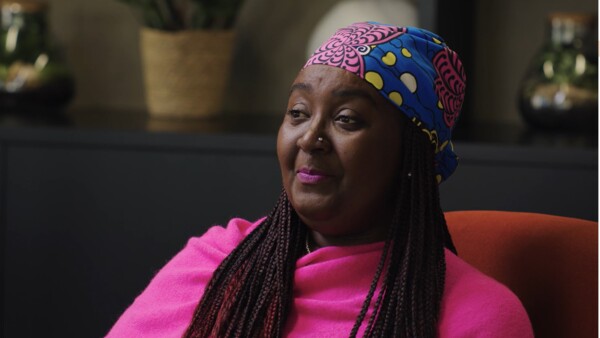
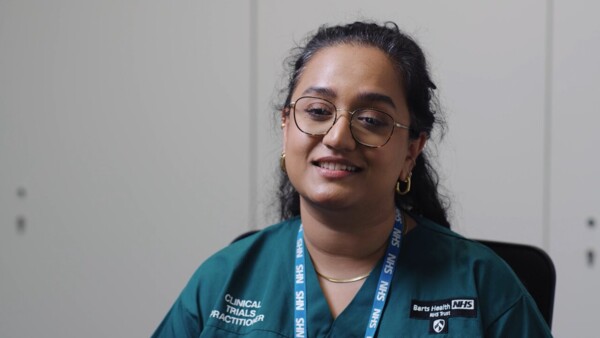
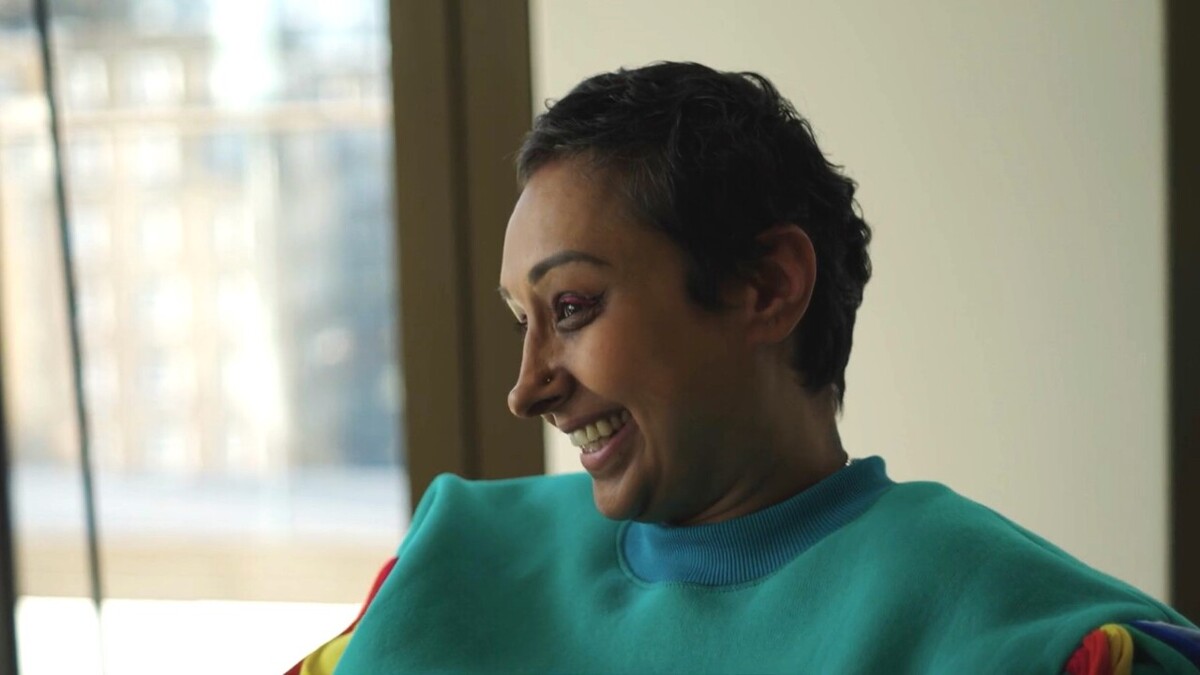
Read stories and watch videos from Martina and Sukhy who took part in a clinical trial for breast cancer treatment, and from Anjali, a clinical trials practitioner.
Booklets and resources
Finding a cancer clinical trial
If there is a trial that your cancer team thinks may be suitable for you, they usually offer you information about it.
For some types of cancer, most people have treatment as part of a clinical trial. These include acute leukaemia and some types of lymphoma.
Even if they have not offered information, you can still ask your cancer team about clinical trials. If you have found a trial you are interested in, they can help you understand what it may involve. For you to take part in any trial, your cancer doctor needs to refer you to the doctor running the trial.
Not all hospitals have the expertise or resources to take part in certain trials. This means for some trials you may have to travel to a different hospital.
Finding trials in the UK
You can search for cancer clinical trials in the UK on websites such as:
You can also talk to one of our cancer support specialists on 0808 808 00 00 for information about cancer trials in the UK.
Finding trials abroad
It is sometimes possible to take part in a trial in a country outside the UK. But this is not common and there are some extra things to think about. You will usually need to pay for the treatment as well as travel costs, which can be expensive. And trials that happen abroad may not be regulated in the same strict way as trials in the UK.
If you find a trial you are interested in, try to get as much information as possible from trustworthy sources and websites. Ask your cancer doctor or nurse for advice.
You should be cautious of trials that are only run by one small clinic rather than a research hospital. Be careful to avoid trials that claim to completely cure serious illnesses like cancer. These may be called miracle cures. A clinical trial that is set up safely to protect the people taking part will not use this description.
You can search for trials abroad on websites such as:
- the European Organisation for Research and Trials in Cancer (EORTC) clinical trials database
- the EU clinical trials register
- the US website National Cancer Institute cancer.gov
- the World Health Organization’s International Clinical Trials Registry.
The National Institute for Health Research also has information about other ways to be involved in health and care research.
About our information
-
References
Below is a sample of the sources used in our cancer clinical trials information. If you would like more information about the sources we use, please contact us at cancerinformationteam@macmillan.org.uk
GOV.UK. Good clinical practice for clinical trials. [Internet] Last updated 28 January 2022. Available from www.gov.uk/guidance/good-clinical-practice-for-clinical-trials (accessed March 2022).
National Institute for Health and Care Research. Clinical trials guide. [Internet] 2019, version 1. Available from www.nihr.ac.uk/documents/clinical-trials-guide/20595 (accessed March 2022).
National Institute for Health and Care Research. Research participant experience survey report 2018-19. [Internet] Published 2019. Available from www.nihr.ac.uk/documents/research-participant-experience-survey-report-2018-19/12109?pr= (accessed March 2022).
-
Reviewers
This information has been written, revised and edited by Macmillan Cancer Support’s Cancer Information Development team. It has been reviewed by expert medical and health professionals and people living with cancer. It has been approved by Chief Medical Editor, Prof Tim Iveson, Consultant Medical Oncologist.
With thanks to: Kelly Leonard, Senior Research Nurse & Team Lead; Sara Herrero Santaolalla, Specialist Clinical Pharmacist; Dr Mangesh Thorat, Researcher, Trialist and Cancer Prevention Expert.
Our cancer information has been awarded the PIF TICK. Created by the Patient Information Forum, this quality mark shows we meet PIF’s 10 criteria for trustworthy health information.
The language we use
We want everyone affected by cancer to feel our information is written for them.
We want our information to be as clear as possible. To do this, we try to:
- use plain English
- explain medical words
- use short sentences
- use illustrations to explain text
- structure the information clearly
- make sure important points are clear.
We use gender-inclusive language and talk to our readers as ‘you’ so that everyone feels included. Where clinically necessary we use the terms ‘men’ and ‘women’ or ‘male’ and ‘female’. For example, we do so when talking about parts of the body or mentioning statistics or research about who is affected.
You can read more about how we produce our information here.
Date reviewed


Our cancer information meets the PIF TICK quality mark.
This means it is easy to use, up-to-date and based on the latest evidence. Learn more about how we produce our information.