Browser does not support script.
Skip to main content
search here
Find out how we produce our information|
New symptoms can sometimes develop during your illness, such as breathlessness or a cough. These may be caused by the growth or spread of the lung cancer to other parts of the body, but they may also have another cause.
For example, some lung cancer cells produce hormones that can upset the body’s chemical balance. If you have any new symptoms, tell your doctor straight away so that you can be treated.
You may find it helpful to read our section on controlling the symptoms of cancer|.
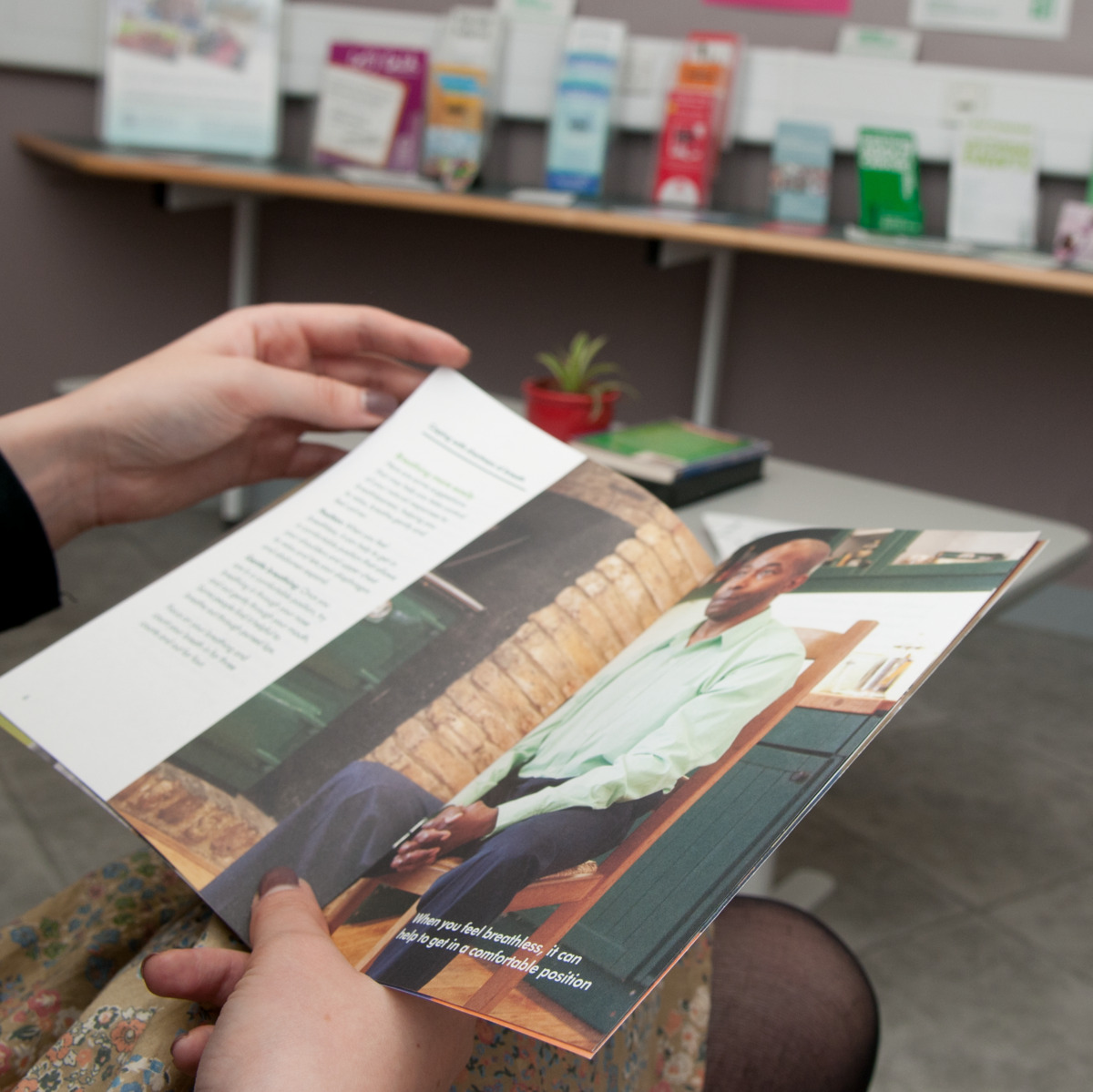
Breathlessness can be a distressing symptom to deal with for many people with lung cancer. There are treatments and exercises that can help to relieve or manage your breathlessness, and things you can do to make living with breathlessness easier. These include different drugs, complementary therapies|, and breathing and relaxation techniques.
About 80% of patients with lung cancer (8 in 10) have a cough, and there are treatments to help ease this. These can include external beam radiotherapy|, palliative chemotherapy or pain-relief medications.
Occasionally, cancer in the lung can cause fluid to build up between the layers that cover the lung ( pleural effusion| ). Your doctor can usually drain the fluid by inserting a needle (cannula) into the area. The needle is attached to a tube and the fluid passes into a drainage bag or bottle. Sometimes, it’s possible to seal the two layers of the pleura together again using drugs, or sometimes talc. This is known as pleurodesis.
Some people with lung cancer experience pain| . This can usually be controlled with painkillers and other methods of pain control. People may also have pain if the cancer has spread to the bones. There are different medications, such as bisphosphonates|, that might help with the pain or your doctor may recommend a short course of radiotherapy|.
In addition to the treatments already mentioned in this section, some treatments can also help to relieve symptoms.
Lung cancer sometimes causes breathlessness by blocking the windpipe (trachea), or one of the main airways that take air from the windpipe into the lungs. If the blockage is caused by a tumour within the airway, it can often be relieved by laser therapy, which burns the tumour out of the airway. Laser therapy doesn't destroy the tumour completely, but it can help to reduce or get rid of breathlessness.
Laser therapy is usually carried out under a general anaesthetic. A bronchoscopy| is done while you're asleep, and a flexible tube is passed through the bronchoscope to aim the laser beam at the tumour. The laser beam burns away as much of the tumour as possible. The bronchoscope is then removed.
There are not usually any side effects from laser therapy. If the treatment has been straightforward, you may be able to go home the same evening or the next day. If you’ve had an infection in your lung, you may need to stay in hospital for a few days for antibiotic treatment and physiotherapy.
If the blockage in the airway comes back, laser treatment can be used again. Sometimes radiotherapy is given as well, to try to make the relief given by the laser therapy last longer.
Sometimes an airway can become blocked by pressure put on it by the cancer, which makes it close. This can sometimes be relieved by using a small device called a stent, which is put inside the airway to hold it open.
The most commonly used stent is a small wire frame. It's inserted through a bronchoscope in a folded-up position, and as it comes out of the end of the bronchoscope, it opens up like an umbrella. This pushes the walls of the narrowed airway open.
Airway stents are usually put in under a general anaesthetic. When you wake up, you probably won't be able to feel that it’s there, but you'll be able to breathe more easily. The stent can stay in your lung permanently and shouldn't cause you any problems.
Stents may also be used if a large blood vessel called the superior vena cava has become blocked by the cancer, causing a feeling of pressure in the upper body. This can usually be relieved by radiotherapy, or by putting a stent in the blood vessel to keep it open. In this case, the stent is a small tube that is inserted through a small cut in the groin, and passed up through the blood vessels to the chest using x-rays to guide it into the right position. The stent can usually be put in under local anaesthetic while you're awake.
For answers, support or just a chat, call the Macmillan Support Line free (Monday to Friday, 9am-8pm)
If you have any questions about cancer, need support or just want someone to talk to, ask Macmillan.