


Changes to your appearance and body image
Cancer and treatments can cause changes to your body. These can affect how you think and feel about your body.
What is body image?
Body image is how we think and feel about how our body looks and works. These thoughts and feelings can affect our behaviour, and how we believe others see us.
Body image is important as it can be linked to feelings of self-worth. It can also affect our mental and physical health.
Body image concerns are different for everyone. Some people may feel uncomfortable or less confident about their bodies. Others may feel anxious and avoid going out or socialising. Concerns about your body may make you feel less feminine, less masculine or insecure about your gender identity.
There are things you can do to improve your body image. There are also different ways to get help and support.
Booklets and resources

Cancer treatments and changes to your body appearance
Cancer and its treatments can cause changes to your body that may make you worry about your body image. Some treatments may affect your skin, nails and hair. Other treatments may affect how a part of your body works.
Changes to your body may be temporary or permanent. They can include changes that:
- can be seen by others, such as hair loss or weight changes
- are not always seen by others, such as a scar that is usually covered up
- are not visible, such as tiredness (fatigue) or infertility.
Anyone can be affected, including people:
- who have had any cancer treatment, or combination of treatments
- of all ages
- of any gender.
Common visible changes include:
- Hair loss — you may lose some or all the hair from your head and sometimes your eyebrows, eyelashes and body hair.
- Skin and nail changes.
- Scarring or losing a part of your body from surgery.
- Changes after surgery, such as having a stoma after bowel or bladder surgery. Or having the voicebox (larynx) removed.
- Losing weight or putting on weight.
- Lymphoedema — swelling of an arm, leg or other part of the body.
- Changes to the inside of the mouth, such as ulceration, tooth loss or other dental changes.
- Changes in the way you speak, eat or breathe, or changes in your movement, balance or co-ordination.
Body changes that are not visible include the following:
- Infertility or having an early menopause.
- Reduced sex drive or difficulties having sex.
- Feeling tired and weak or unable to do activities you did before treatment.
- Late treatment effects that change the way your bladder or bowel work.
- Changes in sensation. For example, numbness in part of your body after surgery, or in your hands and feet after chemotherapy (peripheral neuropathy).
- If you are aware of any smell that makes you feel anxious being around people talk to your cancer team. They can often reassure you or give you advice. Sometimes an ulcerating wound, which is rare, may cause an unpleasant smell. But there are things that can help.
Helping you manage body changes
There are ways to help you to manage your body changes and to help improve your confidence.
Your healthcare team can help you with this. They can give you support and also tell you about other sources of help.
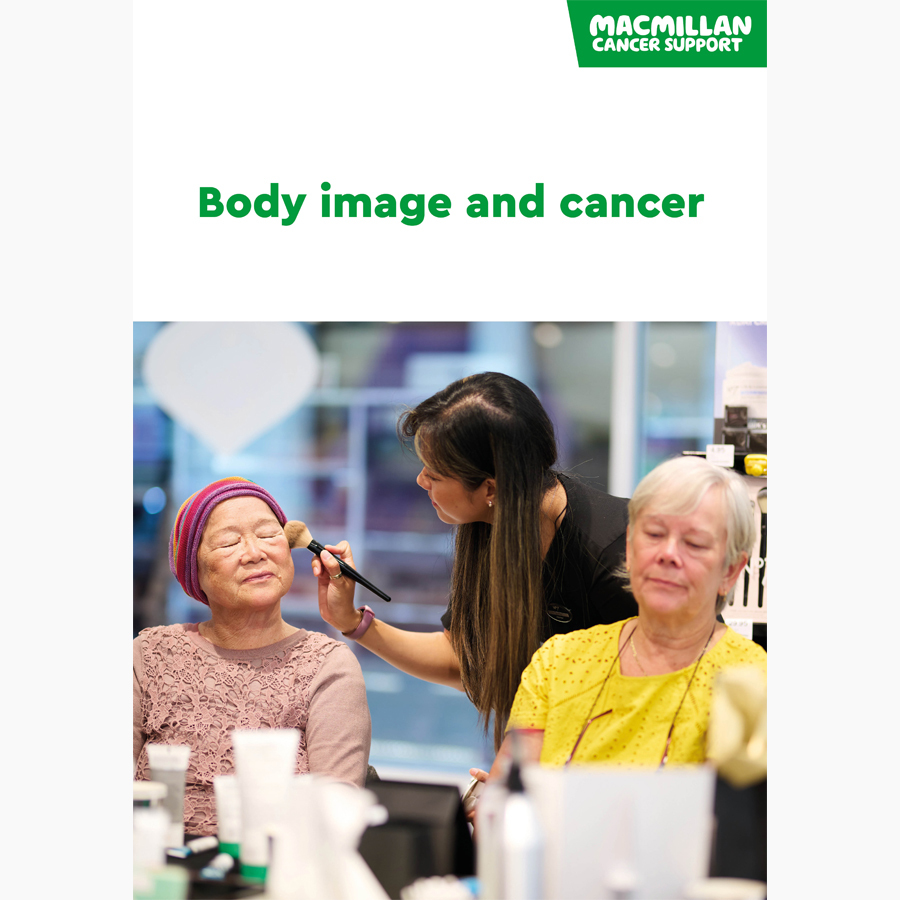
You may want to talk to a No7 Boots Macmillan Beauty Advisor about managing some of the changes to your appearance. These advisors are specially trained by Macmillan and Boots. They give you face-to-face advice about caring for your skin, nails and hair during treatment.
Your feelings about changes to your body image
Body image concerns can sometimes be difficult to cope with. There are many ways to get support to help you manage changes to your appearance and find ways to cope. If you feel anxious or upset a lot of the time, or think you might be depressed it is important to talk to someone from your cancer team.
Talking to people you trust about how you are feeling can be a positive step. If others know how you feel, it is easier for them to support you.
We have more information about managing your feelings about body changes.
Sexuality intimacy and body changes
Changes to your appearance and how your body works after cancer treatment might affect your confidence or ability to have sex. This could:
- cause difficulties with a partner, if you have one
- delay you having sex again after treatment
- affect new relationships
- prevent you from enjoying your own body sexually.
Concerns about your sex life and intimate relationships are normal. If you are in a relationship, you may worry your partner will compare things to how they were before. Or you may worry they no longer find you attractive. But how attractive they find you is linked to different things, not to how a part of your body looks.
If you are not in a relationship, you may worry about how a new partner might react to the changes to your body. Many people with cancer go on to have close and intimate relationships in the future.
You usually need time to recover and adapt to body changes before you feel comfortable about having sex. How long this takes depends on the treatment you had and what feels right for you and a partner, if you have one.
Partners may also have concerns. They may avoid physically touching you because they worry this might risk hurting you. Talking openly with each other can have a positive effect on your relationship. It can make you feel more comfortable with each other.
Even if you do not feel like having sex, you may still want to be close to your partner. Focusing on non-sexual intimacy can help you feel close to each other. This could be spending more time together, holding hands, hugging, kissing or giving each other a massage. This intimacy can help you slowly get back to having sex again.
If difficulties with your sex life do not improve, talk to your cancer doctor, specialist nurse or GP. Try not to feel embarrassed. They are used to giving advice on intimate problems. They can give information on how to improve sexual difficulties. Or they can give advice about different ways of looking at problems. They can also refer you to a psychosexual therapist or counsellor if needed.
We have more information about sex and cancer.
If you are LGBTQ+
If you identify as LGBTQ+, you may worry about being treated insensitively by your healthcare team. Sharing your sexuality or gender identity with the team may help you feel better supported, as they can give you the right information and advice.
We have more information about LGBTQ+ people and cancer treatment.
Developing a better body image
You will need time to recover from treatment and to adapt to the changes in your body, especially if they are more permanent.
Even if your body looks or feels different, you can feel proud about it getting you through treatment. You may find that you appreciate what it does for you every day.
Take time regularly to do nice things for yourself, to remind yourself that you appreciate your body. This could just be having a relaxing bath, going for a massage, or spending time somewhere you find peaceful.
Eating healthily, getting enough sleep and being more physically active are ways of taking care of your body.
Giving up smoking and not drinking more than recommended levels are also important.
We have more information about managing permanent changes to appearance.
Booklets and resources
Managing other people's reactions
If you have visible changes to your appearance, you may find that some people look at you for longer. Usually this is because they are curious and not because they want to upset you.
Learning how to cope in advance with social situations will build up your confidence. This will help you gradually get back to things you did before, such as work, sports or hobbies.
We have more information on managing other people’s reactions to changes in your appearance. This includes suggestions for things you can say.
Cancer and domestic abuse
About our information
This information has been written, revised and edited by Macmillan Cancer Support’s Cancer Information Development team. It has been reviewed by expert medical and health professionals and people living with cancer.
-
References
Below is a sample of the sources used in our information about body image and cancer. If you would like more information about the sources we use, please contact us at informationproductionteam@macmillan.org.uk
Asfour L, Montgomery K, Solomon E, Harries M. PS08: The psychological impact of hair loss and the role of psychological interventions. British Journal of Dermatology. 2021; 185(S1): 172–173. Available from: www.doi.org/10.1111/bjd.20356 [accessed September 2023].
Brook I. Early side effects of radiation treatment for head and neck cancer. Cancer/Radiothérapie. 2021; 25(5): 507–513. Available from: www.doi.org/10.1016/j.canrad.2021.02.001 [accessed October 2023].
Elad S, Cheng KKF, Lalla RV, Yarom N, Hong C, Logan RM, et al. MASCC/ISOO clinical practice guidelines for the management of mucositis secondary to cancer therapy. Cancer. 2020; 126(19): 4423–4431. Available from: www.doi.org/10.1002/cncr.33100 [accessed September 2023].
Riopel L. Goal setting in counseling and therapy (incl. examples). PositivePsychology.com. 2019. Available from: www.positivepsychology.com/goal-setting-counseling-therapy [accessed October 2023].


Date reviewed


Our cancer information meets the PIF TICK quality mark.
This means it is easy to use, up-to-date and based on the latest evidence. Learn more about how we produce our information.
The language we use
We want everyone affected by cancer to feel our information is written for them.
We want our information to be as clear as possible. To do this, we try to:
- use plain English
- explain medical words
- use short sentences
- use illustrations to explain text
- structure the information clearly
- make sure important points are clear.
We use gender-inclusive language and talk to our readers as ‘you’ so that everyone feels included. Where clinically necessary we use the terms ‘men’ and ‘women’ or ‘male’ and ‘female’. For example, we do so when talking about parts of the body or mentioning statistics or research about who is affected.
You can read more about how we produce our information here.