


Side effects of chemotherapy
On this page
-
About chemotherapy side effects
-
Possible side effects of chemotherapy
-
Your bone marrow and blood
-
Hair changes
-
The digestive system
-
Tiredness
-
Skin and nail changes
-
Numb or tingling hands or feet (peripheral neuropathy)
-
Effects on the nervous system
-
Changes in how your kidneys work
-
Changes in hearing
-
Blood clot risk
-
Sex life and fertility
-
Possible late effects of chemotherapy
-
About our information
-
How we can help
About chemotherapy side effects
Any side effects you get will depend on the chemotherapy drugs you are having. Different drugs may cause different side effects. You may get some of the side effects mentioned, but you are very unlikely to get all of them.
Some side effects are mild and easily treated. Your doctor, nurse or pharmacist may prescribe drugs to help control them. It is very important to take the drugs exactly as they tell you. This makes them more likely to work for you.
Other side effects can be harder to manage. These can often be reduced or helped in some way. Your nurse will give you advice about this.
Most side effects stop or slowly go away when chemotherapy finishes. Some side effects can be unpleasant, but the benefits of chemotherapy usually outweigh this.
If you are having a single drug, you may not have as many side effects as someone having a combination of drugs. If you are having high doses of chemotherapy, you may have more side effects.
Steroids are drugs that are often given with chemotherapy treatment. They are usually only given for short periods of time. These also cause side effects. We have more information about steroids.
In this video, Dr Olubukola Ayodele (Consultant Medical Oncologist) and Paige Mitchell (Lead Chemotherapy Sister) explain common side effects of chemotherapy.
Booklets and resources
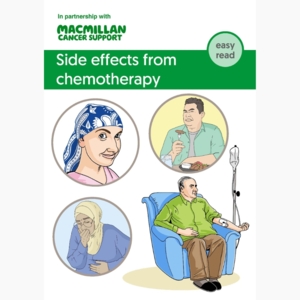
Getting support
Macmillan is here to support you. If you would like to talk, you can:
- Call the Macmillan Support Line for free on 0808 808 00 00.
- Chat to our specialists online.
- Visit our chemotherapy forum to talk with people who have had chemotherapy, share your experience, and ask questions.
Possible side effects of chemotherapy
Your cancer doctor and nurse will explain the side effects that your chemotherapy is likely to cause. The main areas of your body that may be affected by chemotherapy are areas where new cells are quickly made and replaced. This includes:
- bone marrow – where blood cells are made
- hair follicles – where hair grows
- the digestive system
- the lining of your mouth.
Your bone marrow and blood
Chemotherapy can reduce the number of blood cells made by the bone marrow. Bone marrow is a spongy material that is found in the middle of your bones. It makes special cells called stem cells. These develop into the different types of blood cells:
- red blood cells, which carry oxygen to all parts of the body
- white blood cells, which fight and prevent infection
- platelets, which help the blood to clot and prevent bleeding and bruising.
You will have regular blood samples taken to check the number of these cells in your blood. This is called a full blood count.
Risk of infection
Chemotherapy can reduce the number of white blood cells in your blood. These cells fight infection. If the number of white blood cells is low, you are more likely to get an infection or find it harder to fight infection. A low white blood cell count is sometimes called neutropenia.
When are you most at risk of infection?
Your resistance to infection is usually lowest 7 to 14 days after chemotherapy. The number of white blood cells will usually return to normal before your next treatment.
You will have a blood test before having more treatment. If your white blood cell count is low, your doctor may delay your treatment for a short time, until your cell count increases.
Preventing and treating infection
Developing an infection when you have a low number of white blood cells can sometimes be a serious complication of chemotherapy. But most people do not have any serious problems with infection.
Some chemotherapy treatments are more likely than others to reduce the number of white blood cells. Your doctor may prescribe antibiotics and other medicines to take during chemotherapy, to prevent an infection. These are called prophylactic drugs.
Even a mild infection can delay your chemotherapy treatment. Your doctor may wait until the infection has gone and for your blood cell levels to go back up before you have more chemotherapy.
Your chemotherapy nurse will talk to you about infection and show you how to check your temperature.
You can have an infection without having a high temperature. Drugs such as paracetamol lower your temperature, so they can hide or mask an infection.
Contact the hospital straight away on the 24-hour contact number you have been given if:
- your temperature goes over 37.5°C (99.5°F)
- you suddenly feel unwell, even with a normal temperature
- you have symptoms of an infection
- your temperature goes below 36°C (96.8°F).
Symptoms of an infection include:
- feeling shivery and shaking
- a sore throat
- a cough
- breathlessness
- diarrhoea
- needing to pass urine (pee) a lot or discomfort when you pass urine.
Chemotherapy units usually have a policy they follow when someone with low white blood cells has an infection. This is to make sure you get treatment with antibiotics straight away.
Some people may have to stay in hospital to have antibiotics given into a vein (intravenously). After a few days, you can usually have them as capsules or tablets to take at home.
GCSF
After chemotherapy, your nurse may give you injections under the skin of a drug called G-CSF. This encourages the bone marrow to make more white blood cells and reduces the risk of infection.
We have more information about G-CSF and some tips for avoiding infection when your immunity is low.
Anaemia (low number of red blood cells)
Chemotherapy can reduce the number of red blood cells in your blood. Red blood cells carry oxygen around the body. If the number of red cells is low, this is called anaemia. You may have symptoms such as:
- pale skin
- lack of energy
- feeling breathless
- feeling dizzy and light-headed.
Tell your doctor or nurse if you have these symptoms.
If you are very anaemic, you may need a drip to give you extra red blood cells. This is called a blood transfusion. It is the most common way to treat anaemia. Sometimes doctors prescribe a drug called erythropoietin. This helps the body to make more red blood cells. It is given as an injection under the skin. Some people may have erythropoietin and a blood transfusion.
Increased bleeding and bruising
Chemotherapy can reduce the number of platelets in your blood. Platelets are cells that help the blood to clot.
Tell your doctor or nurse if you have any unexplained bruising or bleeding. You may have:
- nosebleeds
- bleeding gums
- heavy periods
- blood in your urine (pee) or stools (poo)
- tiny red or purple spots on your skin that may look like a rash.
Some people may need a platelet transfusion. This is given by drip (infusion). The platelets will start working immediately to prevent bruising and bleeding.
Here are some tips for avoiding injury:
- Wear protective gloves when doing work around the house or in the garden.
- Be careful to avoid bumping into things or tripping.
- Use a soft toothbrush to protect your gums from bleeding and do not floss.
Hair changes
Your doctor or specialist nurse will tell you if the chemotherapy is likely to cause hair loss. Knowing what to expect gives you time to prepare and find ways of coping.
-
Thinning hair
Some drugs do not make your hair fall out but can make it thinner. You might notice your hair becomes dry and brittle and breaks easily. Looking after the condition of your hair can make it less likely to break. We have more information about looking after your hair.
-
Hair loss
Some chemotherapy drugs cause all or most of your hair to fall out. This can be very upsetting. Hair loss usually starts within a few weeks of starting chemotherapy but can start within a few days. You may notice your hair coming out when you brush, comb or wash it. Or you may find hair on your pillow in the mornings.
You may lose underarm, body and pubic hair as well. Some chemotherapy drugs also make the eyelashes and eyebrows fall out.
You may choose to cut your hair short before chemotherapy. This can stop the weight of long hair pulling on the scalp, which can make hair fall out earlier. You may choose to wear wigs, hats, turbans, scarves or bandanas. You can ask your own hairdresser to cut and style your wig for you.
Depending on the type of chemotherapy and type of cancer, you may be able to prevent hair loss by using a cold cap. It may help to reduce the blood-flow and the amount of the drug reaching the scalp. You can ask your doctor or nurse whether using one would be helpful for you. We have more information about scalp cooling.
Your hair will usually grow back over a few months after treatment ends. It will be very fine at first and may be a slightly different colour or texture than before. You will probably have a full head of hair after 3 to 6 months.
We have more information about coping with hair loss and wigs for cancer treatment.
The digestive system
The digestive system is made up of the stomach and bowels. Chemotherapy can affect the digestive system in different ways.
-
Feeling sick (nausea)
Some chemotherapy drugs can make you feel sick (nauseous) or be sick (vomit). Not all drugs cause sickness and many people have no sickness at all. Your doctor and nurse can give you drugs to prevent and control sickness.
If your chemotherapy can cause sickness, you will be given anti-sickness drugs by injection or tablets before your treatment. These may be called anti-emetic drugs. You will also be given tablets to take at home. Take the drugs exactly as your nurse or pharmacist tells you. It is easier to prevent sickness than to treat it after it has started.
If you feel sick, take small sips of fluids often and eat small amounts regularly. It is important to drink enough fluids. If you continue to feel sick, or if you are sick (vomit) more than once in 24 hours, contact the hospital as soon as possible. They will give you advice. Your doctor or nurse may change the anti-sickness drug to one that works better for you.
Try to have a small meal a few hours before chemotherapy but not just before it. If you manage to eat well in between treatments, do not worry if you cannot eat much for a couple of days after chemotherapy. We have more information about managing nausea and vomiting. -
Diarrhoea
Some chemotherapy drugs can cause diarrhoea, usually in the first few days. Diarrhoea means passing more stools (poo) than is usual for you or having watery or loose stools. If you have a stoma, it means having an increased stoma output. Tell your nurse or doctor if this happens. They can prescribe medicine to help.
Make sure you drink plenty of liquid to replace fluid you are losing with diarrhoea. If you have diarrhoea try to drink at least 2 litres (3½ pints) of fluids every day. It can help to avoid alcohol, caffeine, milk products, high-fat foods and high-fibre foods.
Contact the hospital straight away if:- you have diarrhoea at night
- you have diarrhoea more than 4 times in a day
- you have a moderate or severe increase in stoma activity
- the anti-diarrhoea drugs do not work within 24 hours.
You may need to go to hospital to have fluids through a drip.
-
Constipation
Some chemotherapy drugs, anti-sickness drugs and painkillers can cause constipation. Constipation means that you are not able to pass stools (poo) as often as you normally do. It can become difficult or painful.
Try to drink at least 2 litres (3½ pints) of fluids each day. It can help to eat high-fibre foods, such as fruit, vegetables and wholemeal bread. Regular gentle exercise, like going for short walks can also help.
If you have constipation, tell your nurse or doctor. They can give you drugs called laxatives to prevent or treat it. -
Loss of appetite
Chemotherapy can affect your appetite. If you have a poor appetite, try to eat little amounts as often as possible. Keep snacks such as nuts, grated cheese or dried fruit handy to eat whenever you can.
It is important to try to eat well during your treatment. If you are having problems, ask your nurse for advice. You can also ask to see a dietitian. They may give you food or drink supplements. Or they may suggest changes to your diet or eating habits to help.
You can add extra energy and protein to your diet with everyday foods or by using food supplements. We have more information on tips for managing eating problems and building up your diet. -
Taste changes
You may get a bitter or metal taste in your mouth. Sucking sugar-free sweets may help with this. Some foods may taste different or have no taste. Try different foods to find out what tastes best to you. Taste changes usually get better after treatment finishes. Your nurse can give you more advice.
-
Mouth problems
Chemotherapy can cause mouth problems, such as a sore mouth or throat, mouth ulcers or infection. Your chemotherapy nurse will explain how to care for your mouth to reduce the risk of problems.
You may get mouth ulcers about 5 to 10 days after treatment. Mouth ulcers can become infected or you may develop an infection in your mouth.
The most common mouth infection is called thrush or candidiasis. It shows as white spots on your mouth and tongue, or your tongue and mouth lining become red and swollen. Thrush is treated with anti-fungal tablets. Some people are given these tablets to prevent thrush.
Always let your doctor or chemotherapy nurse know if you have mouth ulcers, or any problems with your mouth. They can give you mouthwashes, medicines and gels to heal ulcers and clear or prevent any infection. They may prescribe painkillers to help.
Tiredness
Some people feel very tired during chemotherapy. This is normal. It can be difficult to cope with, especially for people who normally have a lot of energy. It is often worse towards the end of treatment and for some weeks after it has finished.
If you have children, you may be able to ask friends or family for help looking after them while you have chemotherapy, and for a few days after. Some people may need help with childcare – a social worker can usually arrange this for you.
Some people carry on working during chemotherapy. Most employers will reduce your hours and change work duties to make things easier for you.
If you are having difficulty sleeping, we have information about managing sleep problems. If you feel sleepy, do not drive or operate machinery.
The tiredness will get better when chemotherapy is over. But it can be 3 or 4 months until you feel back to normal. Some people find that they still feel tired a year or so afterwards.
We have more information about coping with tiredness.
Skin and nail changes
Some drugs can affect your skin. It may become dry or slightly discoloured. Your skin may also be more sensitive to sunlight during and after treatment. Tell your cancer doctor or nurse if you develop any skin changes or rashes.
Chemotherapy can affect your nails. They may grow more slowly or break more easily. You might notice ridges or white or dark lines across your nails. Sometimes nails can become loose or fall out. When treatment finishes, any changes usually disappear as the nails grow out.
Tell your doctor or nurse if you notice changes to your nails. They can give you advice or arrange for you to see a podiatrist for foot care advice if needed.
Numb or tingling hands or feet (peripheral neuropathy)
It is important to tell your doctor if this happens. The dose of the chemotherapy drug may need to be changed if it gets worse. Usually, peripheral neuropathy gradually gets better when chemotherapy is over, but sometimes it is permanent.
Effects on the nervous system
Some drugs can make you feel anxious, restless, dizzy, sleepy or have headaches. If you have any of these, it is important to tell your cancer doctor or nurse. They may be able to prescribe medicines that can help with some of these effects.
Some people find that chemotherapy makes them forgetful or unable to concentrate during or after treatment. Doctors sometimes call this cancer-related cognitive changes (CRCC) but it is sometimes known as chemo brain. If this happens, it is usually mild.
Changes in how your kidneys work
Some chemotherapy drugs can affect how well your kidneys work. Your kidney function will be checked with a blood test regularly during chemotherapy treatments.
You may be given fluids through a drip (infusion) before and after the treatment. This is to keep your kidneys working normally. The nurses may ask you to drink plenty of fluids. They may also ask you to record how much fluid you drink and the amount of urine (pee) you pass.
Changes in hearing
Some chemotherapy drugs can affect your hearing. You may have ringing in your ears, called tinnitus. You may also not be able to hear some high-pitched sounds. Rarely, your sense of balance may be affected. Any hearing loss and changes in balance may be permanent.
Tinnitus usually improves when treatment ends. You may have hearing tests before, during and after treatment with some chemotherapy drugs. Tell your cancer doctor or nurse if you notice any changes.
Blood clot risk
Cancer and some cancer treatments can increase the risk of a blood clot. Symptoms of a blood clot include:
- throbbing pain, redness or swelling in a leg or arm
- suddenly feeling breathless or coughing
- sharp chest pain, which may be worse when you cough or take a deep breath.
If you have any of these symptoms, contact the hospital straight away on the 24-hour contact number you have been given. If you cannot get through to your doctor, call the NHS urgent advice number on 111.
A blood clot is serious, but it can be treated with drugs that thin the blood (anticoagulants). Your doctor or nurse can give you more information.
Sex life and fertility
Having chemotherapy can sometimes affect your sex life. Side effects like tiredness or feeling sick or weak can reduce your sex drive and make having sex difficult. Feeling low in mood or anxious can also affect your sex life.
Some people continue to enjoy sex and want to keep their sex life as normal as possible. Your cancer doctor or nurse will tell you if you need to make changes to your sex life because of a treatment. For example, if you have had high-dose chemotherapy or a stem cell transplant your doctor may advise you not to have close physical contact with anyone for a while. This is to protect you from infection.
Chemotherapy should not have a long-term effect on your sex life. The side effects usually slowly improve after your treatment finishes.
-
Protecting your partner
Small amounts of chemotherapy, or other drugs, can get into your body fluids. This includes fluid made in the vagina and the fluid that contains sperm. To protect partners, your cancer doctor may advise that for a few days after certain drugs you use a condom for vaginal or anal sex and a condom (or a latex barrier such as a dental dam) for oral sex.
Cancer cannot be passed on to your partner and sex will not make the cancer worse. -
Contraception
Chemotherapy can be harmful to an unborn baby. During your treatment and for a time after, it is important to use contraception if you or a partner could become pregnant.
Even if the chemotherapy is likely to damage your fertility, you may still be able to start a pregnancy. Your cancer doctor or specialist nurse can tell you more about this. We have more information about fertility in men and fertility in women.
During treatment, it is usually best to use barrier methods of contraception, such as condoms or the cap (diaphragms). Ask your cancer doctor or specialist nurse which type is best for you to use. -
Pregnancy and chemotherapy
If you know you are pregnant before starting treatment, or become pregnant during treatment, tell your cancer doctor or nurse straight away. They will explain the possible risks and benefits of having chemotherapy during pregnancy.
It is sometimes possible to delay chemotherapy until after a baby is born, or to have it later in the pregnancy. This depends on the type and stage of the cancer, the drugs you need, and how many months pregnant you are. Your cancer doctor and nurse will explain the different options to you. -
Breastfeeding and chemotherapy
Breastfeeding during chemotherapy is not advised. This is because the drugs could be passed to a baby through breast milk. You may be able to express extra milk before chemotherapy starts and freeze it to use later.
During chemotherapy, you may be able to express milk. You cannot keep or use it, but it may mean that you are still producing milk when your treatment finishes.
You may be able to start breastfeeding after chemotherapy. But this will depend on whether you are having any other treatment that could interfere with breastfeeding. Your cancer doctor and nurse will tell you about this. Having chemotherapy will not affect your ability to breastfeed in the future. -
Early menopause
Chemotherapy may cause an early menopause. Doctors usually say early menopause is before age 45. It can cause symptoms like hot flushes, vaginal dryness, anxiety, mood swings and a reduced sex drive (libido). Early menopause can increase the risk of bone thinning (osteoporosis).
-
Effects on fertility
Some chemotherapy drugs can affect your fertility. This is your ability to get or make someone pregnant. This may be temporary or permanent, depending on the treatment that you have. If you are worried about this, it is important to talk with your doctor before you start treatment. If you have a partner, it is a good idea to include them in this discussion.
It is important to know if your fertility is likely to be affected before chemotherapy starts. You can then decide if you want to be referred to a fertility specialist. They can discuss possible options to help preserve your fertility.
Although chemotherapy can affect fertility, it is still possible to start a pregnancy during chemotherapy. It is important to avoid pregnancy when you are having chemotherapy, as the drugs could harm a developing baby.
We have more information about the effects of treatment on fertility and storing eggs or storing sperm.
Possible late effects of chemotherapy
Sometimes side effects do not go away, or they can develop months or years after treatment. These are called late effects.
Late effects may be minor and not affect your daily life much. Or, they may be more difficult to live with. There are usually things that can help you cope with them. Some late effects improve over time and may eventually go away on their own.
Your cancer doctor or specialist nurse can explain any possible late effects of your chemotherapy treatment. Different drugs cause different late effects. Some drugs may cause an early menopause and infertility. We have more information about how cancer treatment can affect fertility in men and fertility in women.
Numb or tingling hands or feet (peripheral neuropathy)
Sometimes the feeling in your hands or feet can be affected by chemotherapy. This usually gradually gets better after treatment ends. This may take several months or more.
Sometimes nerves do not fully recover and you may continue to have difficulty with fiddly tasks. This could be things like picking up very small objects or doing up buttons.
People generally find these kinds of changes become less noticeable over time as they adapt and find ways of coping with them. We have more information about peripheral neuropathy.
Effects on the heart, lungs or kidneys
Some chemotherapy drugs can increase the risk of heart, lung or kidney problems. Your doctor can give you more information about this. There are things you can do to help improve your general health. We have helpful tips on looking after your heart.
Second cancer
Some chemotherapy drugs can increase the risk of developing some types of cancer later in life. This is rare, and treatments are designed to limit these risks as much as possible. Talk to your doctor if you are worried about this.
About our information
-
References
Below is a sample of the sources used in our chemotherapy information. If you would like more information about the sources we use, please contact us at cancerinformationteam@macmillan.org.uk
Brighton, D. Wood, M. The Royal Marsden Hospital Handbook of Cancer Chemotherapy. Elsevier Churchill Livingstone. 2005.
National Institute for Health and Care Excellence (NICE) Neutropenic Sepsis Guideline CG151. 2012.
Perry, MC. The Chemotherapy Source Book (5th ed.) Philadelphia: Lippincott, Williams & Wilkins. 2012.
UKONS Acute Oncology Initial Management Guidelines Version 3, March 2018. Available from www.ukons.org (accessed June 2021).
-
Reviewers
This information has been written, revised and edited by Macmillan Cancer Support’s Cancer Information Development team. It has been reviewed by expert medical and health professionals and people living with cancer. It has been approved by Chief Medical Editor, Professor Tim Iveson, Consultant Medical Oncologist.
Our cancer information has been awarded the PIF TICK. Created by the Patient Information Forum, this quality mark shows we meet PIF’s 10 criteria for trustworthy health information.
The language we use
We want everyone affected by cancer to feel our information is written for them.
We want our information to be as clear as possible. To do this, we try to:
- use plain English
- explain medical words
- use short sentences
- use illustrations to explain text
- structure the information clearly
- make sure important points are clear.
We use gender-inclusive language and talk to our readers as ‘you’ so that everyone feels included. Where clinically necessary we use the terms ‘men’ and ‘women’ or ‘male’ and ‘female’. For example, we do so when talking about parts of the body or mentioning statistics or research about who is affected.
You can read more about how we produce our information here.
Date reviewed
This content is currently being reviewed. New information will be coming soon.


Our cancer information meets the PIF TICK quality mark.
This means it is easy to use, up-to-date and based on the latest evidence. Learn more about how we produce our information.