


Radiotherapy
On this page
-
What is radiotherapy?
-
Why am I having radiotherapy?
-
How will I have radiotherapy?
-
Before you have radiotherapy
-
Planning your radiotherapy
-
Side effects of radiotherapy
-
Late and long-term side effects of radiotherapy
-
Radiotherapy and your sex life
-
Radiotherapy and your fertility
-
Your follow-up after radiotherapy
-
After radiotherapy
-
Get this information in another language or format
-
About our information
-
How we can help
What is radiotherapy?
Radiotherapy uses high-energy rays called radiation to treat cancer. It destroys cancer cells in the area where the radiotherapy is given.
Some normal cells in the area being treated can also be damaged by radiotherapy. This can cause side effects. These normal cells are usually able to repair themselves, but cancer cells cannot. As the normal cells recover, the side effects usually get better.
Radiotherapy is always carefully planned by a team of experts. Radiotherapy treatment is continuing to become even more accurate. This allows your team to treat the cancer more effectively, while doing as little harm as possible to normal cells.
Booklets and resources

Chemoradiation
Chemoradiation is when you have chemotherapy at the same time as radiotherapy.
The chemotherapy makes the cancer cells more sensitive to radiotherapy. This can help make the radiotherapy work better. This is only used for certain types of cancer, so it is not suitable for everyone. Your cancer doctor or specialist nurse will explain what your course of chemoradiation involves.
If you have chemoradiation, your side effects may be worse than they would be if you were having just one treatment type. Your cancer doctor, nurse or radiographer will tell you how to manage and treat any side effects.
Why am I having radiotherapy?
You may have radiotherapy for different reasons:
Destroy the tumour and cure the cancer
This is sometimes called radical treatment. You may have radiotherapy on its own or sometimes with chemotherapy. This is called chemoradiation. Other treatments may also be given with radiotherapy. This may be as part of a clinical trial.
For some types of cancer, radiotherapy can be given after surgery. This lowers the risk of the cancer coming back. This is called adjuvant radiotherapy.
Sometimes radiotherapy is given before surgery to shrink a cancer and make it easier to remove. This is sometimes called neo-adjuvant radiotherapy.
Treat symptoms (palliative radiotherapy)
If curing the cancer is not possible, you may have palliative radiotherapy. It can help control the symptoms of cancer and sometimes it may help shrink the cancer.
For example, you may have palliative radiotherapy to help:
- control pain caused by cancer that has spread to the bones
- reduce coughing caused by cancer in the lungs
- control bleeding caused by certain types of tumours.
How will I have radiotherapy?
You usually have radiotherapy in a hospital that has a major cancer treatment centre. This means you may have some treatment at your local hospital. But you may have radiotherapy at a different hospital.
There are 2 ways of having radiotherapy:
- External beam radiotherapy is given from outside the body (externally) using a radiotherapy machine.
- Internal radiotherapy is when a radioactive material is placed inside the body. It is called brachytherapy or radioisotope therapy.
How you have radiotherapy will depend on where the cancer is in the body and the type of cancer. Some cancers are treated with both external and internal radiotherapy.
Radiotherapy treatment is planned carefully for each person. This means that even if you know someone with the same type of cancer as you, their radiotherapy treatment may be different.
Radiotherapy masks
For most types of radiotherapy to your brain, head or neck area, you wear a radiotherapy mask during each treatment. The mask helps keep you in position so your treatment is as accurate as possible.
Before you have radiotherapy
Before you start your radiotherapy treatment it needs to be carefully planned by a team of specialists. This makes sure that the radiotherapy is aimed precisely at the cancer, causing as little damage as possible to surrounding tissue.
Your team will explain what is involved and if you agree to treatment you will be asked to give your permission (consent).
There are things you should consider before you start treatment:
-
Pregnancy
It is important that you do not get pregnant or make someone pregnant during your treatment. This is because radiotherapy could harm a developing baby.
Before radiotherapy, you will need to confirm that you are not pregnant – you may need to provide a urine sample for a pregnancy test. You need to also understand you should avoid getting pregnant during treatment. This means you will need to use a reliable form of birth control.
If you think that you may be pregnant at any time during your treatment, tell the doctors and radiographers straight away.If you want to try and get pregnant after radiotherapy treatment, ask your doctors to tell you when it is safe to start trying.
-
Making someone pregnant
It may also be important that you do not make someone pregnant during treatment, and for a few months after it has finished. You can ask your doctors for more information about this.
-
Your fertility
Your ability to get pregnant or make someone pregnant is called fertility. If this is important to you, talk to your doctor or nurse before you start treatment. They can explain if there is a risk of the radiotherapy affecting your fertility. They can also discuss possible options of preserving your fertility. We have more information about fertility for men and women.
Tell your doctor if you have a pacemaker, implantable cardiac device (ICD) or cochlear implant
You must tell your doctor or radiographer before or during your first planning appointment if you have a pacemaker, an implantable cardiac device (ICD) or a cochlear implant (a hearing implant in your ear). Radiotherapy can affect how these devices work so your treatment is planned to allow for them. -
Skin care
Before your treatment starts, your radiotherapy team will give you advice about looking after your skin. This is because radiotherapy may cause a skin reaction. During your radiotherapy, you will need to take extra care of the skin in the area that is being treated.
-
Help at home and travel to the hospital
Feeling tired is a common side effect of radiotherapy, so you may need help with daily tasks.
You may want to drive yourself to hospital for your treatment. But remember, you may feel more tired as your treatment progresses. If you feel tired, it is best to ask a family member or friend to drive.
If you are worried about getting to the hospital, tell the staff in the radiotherapy department. They may be able to arrange transport for you. -
Planning meals and snacks
If you can, plan ahead. Take snacks and drinks with you to the hospital on your treatment days. Shop before your treatments so there is food at home. Choose meals that are easy to prepare or make meals you can freeze for later.
-
Stopping smoking
Research shows that stopping smoking may make radiotherapy work better. It may also reduce the side effects of treatment.
It can be difficult to stop smoking, but you can get support. Many hospitals provide help or advice on how to quit smoking.
If they do not, your GP, a pharmacist or an organisation may be able to help. You can contact your NHS stop smoking service for support. We have more information to help you give up smoking. -
Work and study
If you are working or you are a student, it is a good idea to talk to your employer or tutors. They can make arrangements to support you and organise your time off during treatment.
Planning your radiotherapy
Your first planning visit usually takes 30 to 60 minutes, although it may take longer. Planning your treatment may take more than one visit.
Planning usually involves:
A discussion with your team
Your radiotherapy team will tell you what to expect. They will also tell you if there is anything you need to do to prepare for the appointment and your treatment. For example, before starting radiotherapy you may be asked to follow a special diet. Or you may be asked to drink plenty of water before each treatment.
It is important that you feel involved in your treatment. So, ask as many questions as you need to.
Questions to ask about your radiotherapy
It is important to understand your treatment and the effects it may have on you. Your healthcare team will be able to answer your questions. It can help to write down your questions.
You may be able to take a family member or friend with you to appointments. They can take notes about what is said. You can also ask permission to record the conversation. Then you can listen to it again when you get home.
You might want to ask some of these questions:
- What type of radiotherapy will I have? Does it have any other names?
- Why am I having this type of radiotherapy?
- What are the aims of the treatment?
- What hospital will I have my treatments in? Will I need to travel?
- How long will my course of treatment take?
- How often will I need to have treatment?
- What are the likely side effects of the treatment?
- Could there be any serious, long-term or late effects of the treatment?
- Are there other types of radiotherapy I could have?
- Are there any other treatments I could have instead of radiotherapy?
- How will the treatment affect my life? Will it affect my daily activities, work, sex life or fertility?
- Will I have follow-up appointments? If so, how often and who will they be with?
- Who should I contact if I need more information or have questions about my treatment?
Having a scan of the area to be treated
Before your scan, the radiographer may ask you to:
- change into a hospital gown
- remove any jewellery or objects containing metal from your body
- have either a full or empty bladder.
You will usually have a CT scan of the area to be treated. This helps plan the precise area for your radiotherapy. Some people may have an MRI scan or a PET scan. If you have a mould or mask, it will be carefully fitted to help you lie still during your scan.
It is important to tell the radiographers if you feel uncomfortable so they can make you more comfortable. The radiographers record the details of your position. You need to be able to lie in the same position for all your radiotherapy treatments.
The information from the scan is sent to a planning computer. Your radiotherapy team use this to work out the precise dose and area of your treatment.
Skin markings
You may have markings made on your skin to help the radiographers position you for treatment.
Usually, tiny permanent markings are made in the same way as a tattoo. The marks are the size of a pinpoint and are only made with your permission. It can be a little uncomfortable while they are being made, but it makes sure that the treatment is directed accurately. If you have a mould or mask, the marks may be made on this.
These marks will only be made with your permission. If you are worried about them or already have a tattoo in the treatment area, tell your radiographer. They can discuss this with you.
Side effects of radiotherapy
Your radiotherapy team plans your treatment carefully to reduce your risk of side effects. But most people have some side effects during or after radiotherapy.
The side effects you have will depend on:
- the area of your body being treated
- the type of radiotherapy you have
- other treatments you are also having, such as chemotherapy.
We have more information on the side effects of radiotherapy.
Booklets and resources
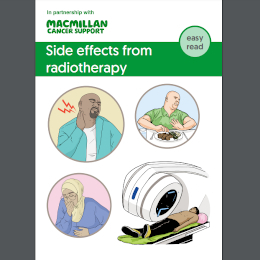
Late and long-term side effects of radiotherapy
After radiotherapy treatment there may be a risk you will have side effects that:
- do not get better after treatment – these are called long-term side effects
- only start months or years later – these are called late effects.
This risk may be higher if you are also having other treatments, such as chemotherapy.
Before you decide to have cancer treatment, your team will explain your risk of developing these side effects. Even if it is not very likely, it is important that you understand and think about these long-term risks.
You can find more about possible long-term effects of radiotherapy in our information about the type of cancer you have. We also have information about the:
- late effects of bowel cancer treatment
- late effects of breast cancer treatment
- late effects of pelvic radiotherapy.
Radiotherapy and your sex life
During and after external radiotherapy, it is usually safe for you and a partner to have sex. For some types of internal radiotherapy, there may be times during and after treatment when you should avoid having sex or close physical contact. Your team will explain more.
If you have any type of radiotherapy, you should use contraception to:
- prevent pregnancy during radiotherapy and for a time after
- protect yourself from infection.
There are many different types of contraception. Ask your team for advice about the safest type to use during your treatment.
Side effects of radiotherapy to any part of the body can change how you feel about having sex.
You can find more information about how radiotherapy may affect your sex life in our information about your cancer type.
It is normal to be less interested in sex if you are tired, unwell or anxious. Changes such as weight loss, hair loss or skin reactions may change how you feel about your body or make you feel less confident.
Radiotherapy to the pelvic area can cause side effects that may make having sex difficult. Before you decide to have treatment, your team will tell you what side effects are likely.
We have information about pelvic radiotherapy and how it effects your sex life.
Related pages
Radiotherapy and your fertility
Radiotherapy to most areas of the body does not affect your ability to get pregnant or make someone pregnant. This is called your fertility.
But your fertility may be affected if you have treatment to:
- the pelvic area – the area between the hips in the lower part of the tummy
- the pituitary gland – a small gland at the base of the brain.
Before you decide to have treatment, your team will explain any risks to your fertility. For some people, radiotherapy causes changes that get better with time. For others, the treatment they have to the pelvic area or pituitary gland causes permanent infertility.
We have more information about radiotherapy and fertility on our side effects of radiotherapy page.
Your follow-up after radiotherapy
After your radiotherapy has finished, your cancer doctor or radiographer will talk to you about what will happen next. Your follow up depends on:
- the type of cancer
- the type of radiotherapy.
Your follow-up care may involve one of the following:
-
Advice and contact details
You may not need follow-up appointments. Instead, you might get advice about problems you should be aware of and the details of someone to contact if you need to.
-
Regular follow-up appointments
You might have regular follow-up appointments at the radiotherapy department or your original hospital. These appointments may be in person, by telephone or video link. They might be with the specialist who recommended the radiotherapy. The first appointment is usually 4 to 8 weeks after treatment has finished.
-
Telephone appointments
A nurse or radiographer may follow-up by telephone. They will check how you are by asking you questions. If needed, they will arrange for you to have an appointment at the clinic.
-
Patient-led follow-up
You may do patient-led follow-up. This means you do not have set appointments but can contact the team and arrange one if you are worried. This may not be suitable for everyone.
As part of your follow-up you may have blood tests, other tests or scans. The tests and scans you have depend on the type of cancer and treatment you have had. Your cancer doctor will tell you more about this.
Follow-up appointments are a good opportunity to talk about any problems or worries you have. It may help to make a list of questions before you go, so you do not forget anything. You may be able to take a friend or family member with you.
Contact your clinical nurse specialist, cancer doctor or the person you have been told to contact if you:
- have any problems
- notice any new symptoms at any time.
Do not wait until your next appointment, just ask for an earlier one.
Related pages
After radiotherapy
You may have mixed emotions when you get to the end of your radiotherapy treatment. You will probably feel relieved, but you may also feel anxious and uncertain. Some people find they feel low after finishing the treatment. It can take time to rebuild your confidence and accept what you have been through.
It may also take time to recover from treatment. You may feel tired for a while and might have emotional changes or side effects to deal with. It is important to give yourself time to recover and adjust.
Complementary therapies may help you feel better and reduce any stress and anxiety. Not all complementary therapies are suitable for people having, or who have just finished having, radiotherapy. It is important to check with your cancer doctor first if you are thinking of having one.
When your treatment is over, you may want to think about making some changes to your lifestyle.
It is important to remember that support is available to help you with any physical or emotional problems you have.
Related pages
Get this information in another language or format
We are committed to making our website as accessible as possible, to make sure that everyone can use it.
We have information about radiotherapy in over 16 languages, and in other formats including audiobooks and easy read booklets.
If we don't have what you are looking for, you can ask for information to be translated for free or provided in a format to suit you. Email us at cancerinformationteam@macmillan.org.uk or call us on 0808 808 00 00.
About our information
-
References
Below is a sample of the sources used in our radiotherapy information. If you would like more information about the sources we use, please contact us at cancerinformationteam@macmillan.org.uk
The Royal College of Radiologists. Radiotherapy dose fractionation. 3rd Edition. 2019. Available from www.rcr.ac.uk/system/files/publication/field_publication_files/brfo193_radiotherapy_dose_fractionation_third-edition.pdf.
Society and College of Radiographers. Practice guideline document. Radiation dermatitis guidelines for radiotherapy healthcare professionals. 2nd Edition. 2020. Available from www.sor.org/getmedia/53bd52ff-679e-48de-82a0-dc8dae570896/2020_version_4_final_practice_guideline_radiotherapy_skin_care_llv1.pdf.
-
Reviewers
This information has been written, revised and edited by Macmillan Cancer Support’s Cancer Information Development team. It has been reviewed by expert medical and health professionals and people living with cancer. It has been approved by Senior Medical Editor, Dr David Gilligan, Consultant Clinical Oncologist.
Our cancer information has been awarded the PIF TICK. Created by the Patient Information Forum, this quality mark shows we meet PIF’s 10 criteria for trustworthy health information.
Date reviewed


Our cancer information meets the PIF TICK quality mark.
This means it is easy to use, up-to-date and based on the latest evidence. Learn more about how we produce our information.
How we can help