search here
username password
Macmillan and Cancerbackup merged in 2008. Together we provide free, high quality information for people affected by cancer through our publications, website and phone service. Find out more| .
How we produce our information|
Surgery|, radiotherapy |or chemotherapy |may be used alone or in combination to treat brain tumours. The choice of treatment will depend on whether it is a primary or secondary brain tumour.
Your doctor will plan your treatment by taking into consideration a number of factors, including the particular tumour and your general health.
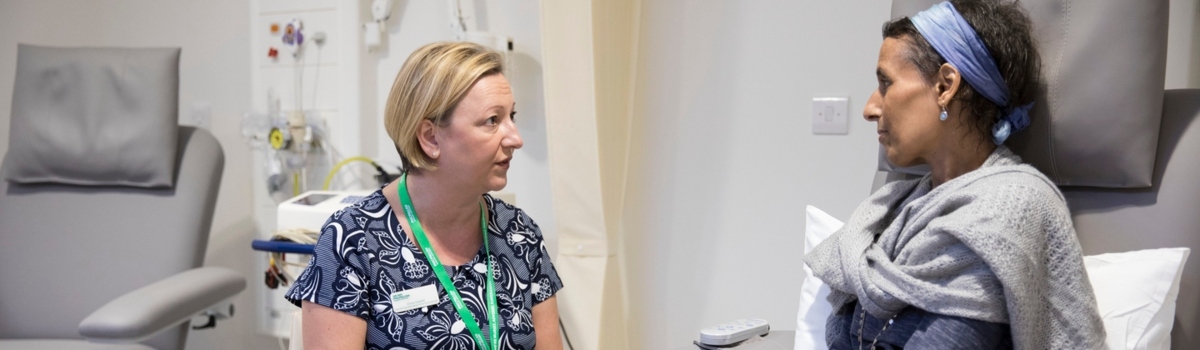
A team of doctors and other health professionals will plan your care. This is known as a multidisciplinary team (MDT) and may include:
The MDT may also include other health care professionals, including a:
Before you have any treatment, your doctor will explain the aims of the treatment to you. They will usually ask you to sign a form saying that you give your permission (consent) for the hospital staff to give you the treatment. No medical treatment can be given without your consent, and before you are asked to sign the form you should have been given full information about:
If you do not understand what you have been told, let the staff know straight away so that they can explain again. Some cancer treatments can be very complex, so it is not unusual for people to need repeated explanations.
It is often a good idea to have a friend or relative with you when the treatment is explained, to help you remember the discussion more fully. You may also find it useful to write down a list of questions before you go to your appointment.
Patients often feel that the hospital staff are too busy to answer their questions, but it is important for you to be aware of how the treatment is likely to affect you. The staff should be willing to make time for you to ask questions.
You can always ask for more time to decide about the treatment if you feel that you can’t make a decision when it is first explained to you.
You are also free to choose not to have the treatment. The staff can explain what may happen if you do not have it. It is essential to tell a doctor, or the nurse in charge, so that they can record your decision in your medical notes. You do not have to give a reason for not wanting to have treatment, but it can be helpful to let the staff know your concerns so that they can give you the best advice.
Many people are frightened by the idea of cancer treatments, particularly because of the side effects that can occur.
Although many of the treatments can cause side effects, knowledge about how these treatments affect people, and improved ways of reducing or avoiding many of these problems, have made most of the treatments much easier to cope with.
Treatment can be given for different reasons and the potential benefits will vary depending upon the individual situation. For some types of brain tumour, surgery can be done with the aim of curing it. Occasionally additional treatments are also given to reduce the risks of it coming back.
If the tumour is at a more advanced stage or in a part of the brain that is difficult to reach without the risk of damage to the brain, the treatment may only be able to control it, leading to an improvement in symptoms and a better quality of life. However, for some people in this situation the treatment will have no effect on the tumour and they will get the side effects without any of the benefit.
If you have been offered treatment that aims to cure your cancer, deciding whether to accept the treatment may not be difficult. However, if a cure is not possible and the treatment is to control the cancer for a period of time, it may be more difficult to decide whether to go ahead with treatment.
Making decisions about treatment in these circumstances is always difficult, and you may need to discuss in detail with your doctor whether you wish to have treatment. If you choose not to, you can still be given supportive (palliative) care, with medicines to control any symptoms.
With most primary brain tumours, surgery| is often the first treatment, if the tumour can be removed without causing harm to the surrounding brain tissue. However, certain tumours may not need to be operated on immediately, or at all. Some low-grade gliomas, for example, may be carefully monitored if they are not causing problems, and others may be treated with radiotherapy| alone. Rare tumours of the brain, such as germinomas or lymphomas, are sometimes treated without an operation, using radiotherapy and chemotherapy|.
Surgery can range from having a biopsy to find out which type of tumour it is, to a major operation where the tumour is completely removed.
If a tumour has not been completely removed, or if there is a chance that abnormal cells may be left behind following surgery, radiotherapy will usually be given after the operation.
When surgery is not possible, or not necessary, radiotherapy, with or without chemotherapy, is used as the main treatment.
The treatment of a secondary brain tumour will depend on the type of primary cancer it has spread from, the size and position of the secondary cancer within the brain and whether or not there are other secondary tumours elsewhere in the body.
Steroids, such as dexamethasone, can often control the symptoms of secondary brain tumours. They are usually taken as tablets and are sometimes the only treatment that is needed.
Radiotherapy (usually to the whole head) may sometimes be given to shrink and control the secondary brain tumour.
Occasionally, if there are only one or two very small areas of secondary cancer, it may be possible to remove them with surgery or give a localised form of radiotherapy called radiosurgery. Radiotherapy is sometimes given after an operation.
Chemotherapy or hormonal therapy may also be helpful, depending on the type of primary cancer the tumour has spread from.
With secondary brain tumours the aim of treatment is to improve symptoms and to prolong a good quality of life. At this stage it is not usually possible to cure the cancer or to remove the tumour altogether, but the steroids, chemotherapy or hormonal therapy may extend some people’s lives for some months.
In both primary and secondary brain tumours, treatment for particular symptoms, such as anticonvulsant medicines to prevent epileptic fits and steroids| to reduce any inflammation and swelling around the tumour, may be necessary.
View Q&As on this topic
Posted by bob jk
Posted by Dianne J
Posted by tessa2
If you have any questions about cancer, need support or just want someone to talk to, ask Macmillan.
Browser does not support script.