Browser does not support script.
Skip to main content
search here
We are currently running a number of inclusion projects to help tackle cancer inequalities.
This project responds directly to the Cancer Reform Strategy (2007),| which outlines what is required over the next five years if England is to deliver cancer outcomes that are the best in the world.
In 2009 Macmillan Cancer Support commissioned brap to undertake a project to develop and evaluate the practical application of a human rights framework for cancer services. brap is a charity established in 1998, and they are leaders in the field of equalities and human rights. They work with a range of organisations to lead equalities practice and provide training.
The aim of the first phase of this work was to test how human rights principles can be given practical expression in the context of service-user and staff experience in three cancer care settings (our test sites) - Bury NHS, Merseyside and Cheshire Cancer Network, and South East London Cancer Network.
The Equality & Human Rights Commission (EHRC) and the Department of Health are also supporting this project.
You can find out about accessing PDFs via a screenreader on the RNIB's website|
This project aims to develop a model of dedicated expert support to communities most at risk of poor services and information support, and whose feelings of confusion and powerlessness can be made worse, leading to poor patient outcomes.
The project will champion person-centred care by ensuring that the right information, all the implications associated with treatment, and the rights of the patient are presented clearly, allowing for any person accessing services and support to confidently make decisions about their own personal care.
The first stage of the project involves conducting background research into informed choice and advocacy, models of informed choice and advocacy, as well as the views and needs of those affected by cancer. Macmillan Cancer Support commissioned the University of the West of England to conduct this initial research. The second phase of this project will be to pilot advocacy models with two test sites in 2010.
An Equality Impact Assessment (EqIA) is an instrument with which we aim to improve the quality of Macmillan’s services. The EqIAs make sure that Macmillan thinks carefully about the likely impact of its services on different communities. It predicts the impact of our services and makes sure any adverse or negative impacts are eliminated or decreased, and positive impact is celebrated and shared as good practice.
The purpose of the EqIA is to improve the way in which Macmillan develops its services, by making sure there is no discrimination in the way that services are designed, developed or delivered, and that wherever possible, equality is encouraged.
|This booklet has been developed by Bunshri Chandaria in partnership with Macmillan Cancer Support. Bunshri is a breast cancer survivor, a photographer, a Cancer Voice for Macmillan Cancer Support and a member of the Asian women’s breast cancer support group.
Her experience of cancer inspired her to produce this book to make a difference to people affected by cancer and to help them heal and access support.
This book takes you through the stories of real women who are living with or have been affected by cancer. The courageous women who have shared their experiences here are living proof that people can live the life they love - both during and after cancer treatment. We hope this book will help family members, carers and friends to better understand, comfort and support those people affected by cancer. We hope, too, that this book will promote a cultural shift and remove the stigma so often associated with cancer.
If you would like any of this information in a different format please contact us: kabbasi@macmillan.org.uk| or call 020 7840 4679.
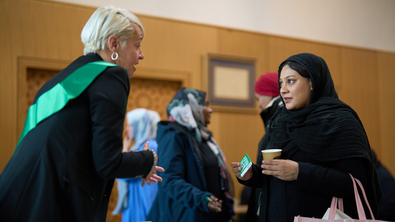
Macmillan’s outreach programme aims to build partnerships with local communities and groups we may not have reached before. The National Diversity Coordinator works in collaboration with Macmillan involvement coordinators from each region - to plan and carry out events raising awareness of Macmillan services among a diverse range of communities.
We listen to excluded communities and find ways to support them, whether that’s through helping them set up support groups, getting them involved through joining Cancer Voices|, or through fundraising| or volunteering| for us.
To find out about events/activities in your local area please contact a local Macmillan Involvement Coordinator.|
As a result of experiencing cancer, I have transformed. I have become more compassionate. I understand people better and appreciate each person’s point of view. Minaxi, Croydon Breast Cancer Support, London
As a result of experiencing cancer, I have transformed. I have become more compassionate. I understand people better and appreciate each person’s point of view.
Minaxi, Croydon Breast Cancer Support, London